Archives for October 2026

College Group Transportation for San Francisco Events

College group transportation for San Francisco events works best when the ride is planned as part of the event, not added after the venue and schedule are already fixed. A dependable plan connects campus, hotels, airports, event venues, and return points while keeping students together and giving coordinators clear control over timing. The right vehicle, pickup plan, and route buffer can make a full day easier for students, chaperones, faculty, and event staff.

Request a Quote for College Event Transportation

What is college group transportation for San Francisco events?

College group transportation for San Francisco events is pre-arranged travel for students, faculty, staff, guests, or athletic groups moving between a campus and one or more event locations. It combines vehicle selection, passenger accountability, pickup coordination, route planning, and event-day communication into one transportation plan.

That coordinated approach is useful for orientation programs, academic conferences, student organization trips, performances, athletic travel, commencement activities, and visits that involve more than one stop. Instead of asking every student to find a separate ride, the group follows a shared schedule with designated loading points and a clear return plan.

Epic Limousine supports this broader planning need through college and university transportation, while the existing college transportation bus rental planning guide covers general campus travel considerations. This guide focuses on the San Francisco event-day details that can affect access, timing, staging, and group movement.

Build the transportation plan around the event schedule

A strong college event transportation plan starts with the complete itinerary, including arrival windows, meal breaks, event check-in, dismissal, and the final return point. Planning those details first helps the transportation provider recommend a workable vehicle and route rather than simply quoting a point-to-point trip.

  1. Define the passenger group: Count students, faculty, chaperones, guests, performers, athletes, and any staff who will ride. Note whether the group will travel together or split across several vehicles.
  2. List every stop: Include the campus departure point, hotels, SFO or other airport arrivals, event venues, rehearsal spaces, meal locations, and the return destination. A route with several stops needs more coordination than a direct transfer.
  3. Set an arrival standard: Decide whether the group must arrive early for registration, security screening, equipment setup, or seating. The desired arrival time should leave room for unloading and walking from the vehicle staging point.
  4. Assign pickup leaders: Give one person responsibility for the passenger roster and one person responsibility for communication with the driver or transportation coordinator. Students should know where to gather and who to contact if they are delayed.
  5. Plan the return: Confirm whether the group leaves together, departs in waves, or needs a later vehicle for students finishing a performance, game, or meeting.
  6. Identify special requirements: Share accessibility needs, sports equipment, instruments, luggage, mobility devices, or other items that may affect seating and storage.
  7. Prepare a communication plan: Give the provider one current itinerary and one primary day-of contact. Send changes through that contact so the driver receives a consistent plan.

For a deeper route-building framework, see Epic’s guide to building a group transportation itinerary in San Francisco. The goal is not to schedule every minute without flexibility. It is to make the important handoffs visible before event day.

Choose a vehicle plan that matches the group

The best vehicle plan matches the passenger count, luggage or equipment, route length, accessibility needs, and event format. A smaller vehicle may suit a faculty delegation or guest group, while a larger charter bus can keep a full student organization or athletic group together.

Event transportation need Good-fit approach Planning emphasis
Campus group traveling to one venue One appropriately sized group vehicle One loading zone, roster check, and scheduled return
Students arriving from several hotels One vehicle with planned hotel pickups or coordinated vehicles Pickup order, luggage space, and room for route changes
Athletic or performing arts group Vehicle plan that accommodates people and gear Equipment storage, loading time, and post-event departure
Conference or multi-venue program Shuttle rotation or a scheduled group transfer Staging locations, repeated loops, and a day-of coordinator
Small faculty, speaker, or guest delegation Smaller luxury vehicle matched to the group Privacy, schedule precision, and direct venue access

Review the available Epic Limousine fleet with the itinerary rather than choosing by vehicle name alone. The useful question is whether the vehicle provides the capacity, storage, comfort, and access needed for the actual trip.

How should colleges plan San Francisco routes and timing?

Colleges should plan San Francisco routes by mapping the actual pickup points, venue access instructions, expected loading time, and return schedule before selecting departure times. A route that looks short on a map can still require additional coordination when a group must gather, load, walk to an entrance, or move through a busy event area.

  • Use a specific campus loading point: Identify a curb, lot, or entrance where a group vehicle can safely meet passengers. Avoid leaving the location as a general campus address.
  • Build in group loading time: Students do not board like individual passengers. Allow time to check the roster, stow bags, settle seats, and confirm that no one is still walking from a distant building.
  • Separate arrival from check-in: The bus arrival time is not the same as the time the group is seated, registered, or ready for the event. Include the walk from the vehicle to the venue.
  • Map the return before departure: Confirm where the driver will meet the group after the event. A return pickup can be different from the arrival location.
  • Coordinate airport transfers: If students or guests arrive through SFO, pair flight information with a meeting point and a realistic baggage window. Epic also provides a planning resource for student airport transfers for Bay Area schools.
  • Protect the schedule from changes: Keep the transportation coordinator informed about changes to the event agenda, not just changes to the address.

For events that involve several campuses or Bay Area cities, the itinerary should show which passengers are on each vehicle and where each vehicle waits. That simple detail helps prevent a last-minute search for a group that was expected at a different entrance.

San Francisco event access needs its own pickup plan

San Francisco event transportation needs a pickup plan that accounts for curb access, loading restrictions, pedestrian traffic, and the distance between the vehicle and the venue entrance. The event organizer or venue should confirm the approved loading area before the group arrives.

When an event affects a public street or curb, organizers may have separate city requirements to review. San Francisco Municipal Transportation Agency guidance notes that special event street closure conditions are tied to the approved event plan and that changes may need to be reviewed. Read the SFMTA special event permit conditions and confirm current requirements with the event organizer or the relevant city department.

Transportation planners should also share practical access information with the provider:

  • Venue name and exact entrance, not only the venue’s mailing address
  • Whether the group needs a curbside unload or can walk from a nearby staging point
  • Any event security, credential, or loading-window instructions
  • Whether equipment or luggage must remain on the vehicle during the event
  • Who will meet the vehicle and direct students after they unload
  • Where the return pickup will occur and how the group will be notified

These details matter for conferences, performances, festivals, athletic events, and student gatherings. Epic’s public events and festivals transportation and convention shuttle service pages offer useful starting points for event formats that require repeated movement or coordinated arrivals.

What safety questions should a college transportation planner ask?

College transportation planners should ask about the carrier, vehicle fit, driver qualifications, operating plan, communication process, and emergency procedures before confirming a group trip. The Federal Motor Carrier Safety Administration’s charter bus safety guidance recommends checking a carrier’s safety performance and understanding the requirements that apply to group travel.

A useful provider conversation covers more than whether a vehicle is available. Ask:

  • Which vehicle type is proposed for the group size and equipment?
  • How will passenger counts, pickup points, and itinerary changes be communicated?
  • What is the driver’s role during loading, unloading, waiting, and return travel?
  • How are accessibility needs and mobility devices handled?
  • What happens if the event schedule changes or a vehicle needs assistance?
  • Where will the vehicle stage while the group is inside the venue?
  • Who is the transportation provider’s day-of contact?

Epic’s academic bus rentals and charters page provides a relevant service path for school and college planners. When the trip includes a team, band, or performance group, the athletics and team travel service page can help frame questions about equipment, timing, and group coordination.

Match the plan to the type of college event

Different college events create different transportation problems, so the plan should reflect the audience, schedule, equipment, and number of stops. A single campus transfer is not planned the same way as a conference shuttle or an evening student organization trip.

  • Orientation and campus programs: Plan for students who may not know the campus loading area or the city route. Use clear meeting instructions and a visible trip leader.
  • Academic conferences: Coordinate campus, hotel, and venue transfers, especially when attendees arrive at different times. Epic’s corporate event transportation resource covers related event coordination principles.
  • Athletic competitions: Allow room for uniforms, bags, and equipment. Confirm arrival timing for warmups, check-in, and post-event departure.
  • Performances and showcases: Build in time for instruments, costumes, and group staging. Confirm whether the vehicle waits, returns later, or uses a separate pickup.
  • Student organization events: Keep the passenger roster and return plan simple. A defined pickup point is especially important when students leave at different times.
  • Commencement and formal events: Coordinate family or guest groups separately from students when their schedules and access points differ.
  • City visits and educational outings: Use a route with realistic stop timing and a central communication plan. The educational bus transportation and student travel resource can support this type of planning.

A college can also combine service types when one event has several audiences. For example, a student group may need a larger vehicle while faculty guests use a smaller vehicle, with both schedules coordinated around the same venue.

Plan Your San Francisco College Event Transportation

What should a college include in a transportation quote request?

A quote request should include the information needed to understand the full trip, not only the number of passengers. Providing a complete brief helps the transportation team recommend the right vehicle and identify access or timing questions before the itinerary is finalized.

  1. Event date and expected start and end times
  2. Passenger count, including students, faculty, chaperones, guests, and staff
  3. Campus departure point and each planned stop
  4. Venue name, entrance, loading instructions, and event contact
  5. Airport, hotel, or off-campus pickup details when applicable
  6. Equipment, luggage, instruments, athletic gear, or accessibility requirements
  7. Whether the vehicle waits, runs a shuttle loop, or returns at a later time
  8. Desired arrival time and the deadline for the group to be back on campus
  9. Primary planner contact and day-of contact

It is also helpful to explain what the group is trying to protect: a conference check-in, a performance call time, a game start, a student headcount, or a coordinated return. The more clearly that priority is described, the easier it is to evaluate vehicle size and schedule choices.

Epic’s group and private events transportation page is another relevant service path for planners whose event does not fit one academic category. For a broader look at charter planning, review the charter bus rental guide.

Request a Quote for Your College Group Event

Frequently Asked Questions

What is the best transportation for a college event in San Francisco?

The best transportation depends on group size, stops, equipment, access needs, and the event schedule. A charter bus or coordinated group vehicle can keep students together, simplify supervision, and provide one shared itinerary instead of many separate rides.

How far in advance should a college reserve event transportation?

Reserve transportation as early as the date, passenger count, and event location are reasonably known. Earlier planning gives the provider more time to match the vehicle, confirm loading access, coordinate multiple stops, and adjust the plan if the event schedule changes.

Can one transportation plan cover campus, hotel, and event pickups?

Yes. A single plan can include campus departures, hotel pickups, airport arrivals, venue transfers, and return trips. Share the complete sequence, pickup windows, passenger counts, and exact meeting points so the route can be evaluated as one itinerary.

How do colleges transport students with athletic gear or performance equipment?

Colleges should describe the equipment before selecting a vehicle. The transportation plan may need additional storage, a longer loading window, or a vehicle arrangement that keeps people and gear organized. The return schedule should also account for post-event loading.

What information does a provider need for a college transportation quote?

A provider needs the date, passenger count, departure point, destination, stops, arrival goal, return plan, equipment, accessibility needs, and planner contact. Include venue loading instructions and explain whether the vehicle waits, makes repeated loops, or returns later.

How can a college keep students organized during event transportation?

Use one roster, one primary trip leader, a defined gathering point, and clear arrival and return instructions. Assign separate contacts for the group and the transportation provider, and communicate itinerary changes through those contacts rather than multiple informal messages.

Plan college group transportation for your San Francisco event

College group transportation is easier to manage when the vehicle, route, pickup point, event access, and return plan are considered together. A complete itinerary helps students stay organized and gives coordinators a clearer way to protect the event schedule.

Request a Quote for Your College Group Event
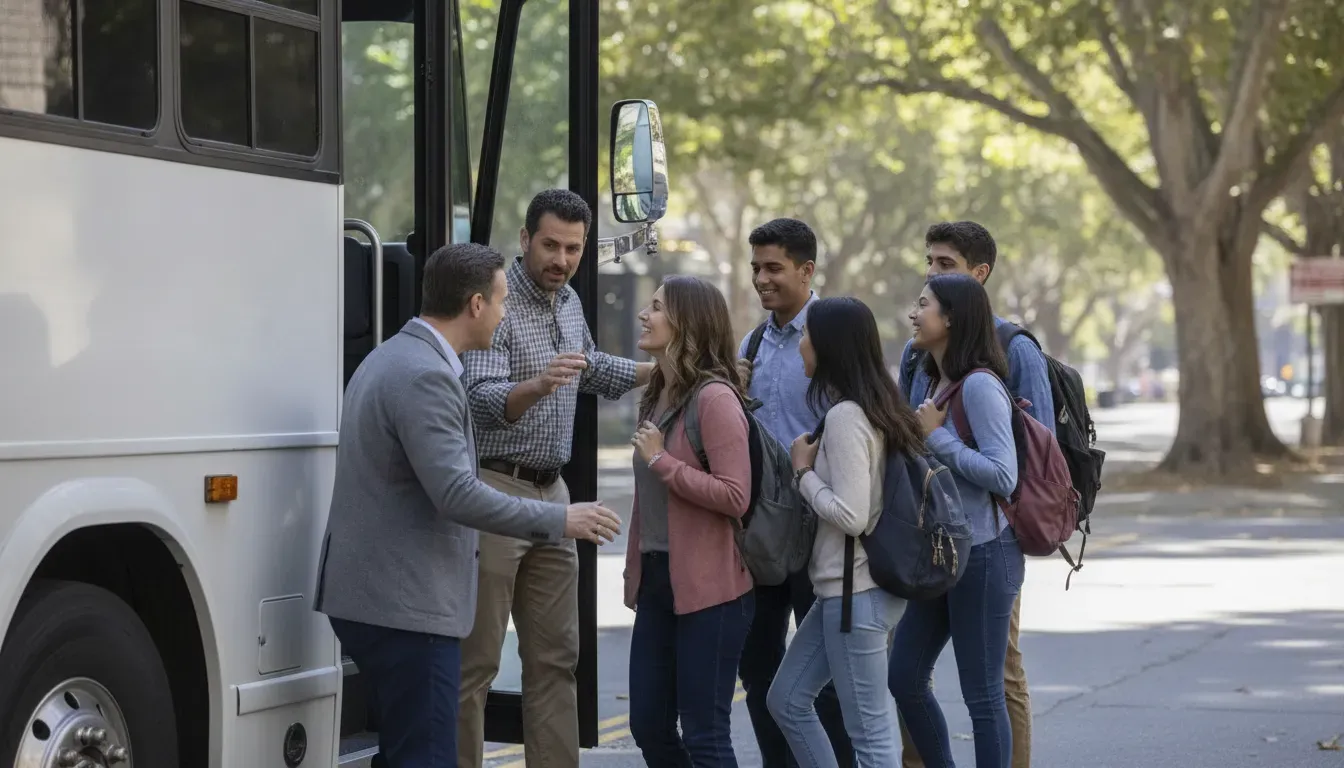
College students boarding a charter bus with trip coordinators for a San Francisco event

Charter Bus Sunnyvale: Corporate and Group Travel Guide

A charter bus in Sunnyvale can make office travel, campus transfers, conferences, and group outings easier to coordinate by keeping passengers on a shared schedule. Choose the vehicle and pickup plan around your headcount, luggage, stops, and arrival deadline. Confirm the exact address and loading instructions before travel day so the group knows where to meet.

Request a Quote and discuss your Sunnyvale trip with Epic Limousine. Call (415) 799-2744 for assistance.

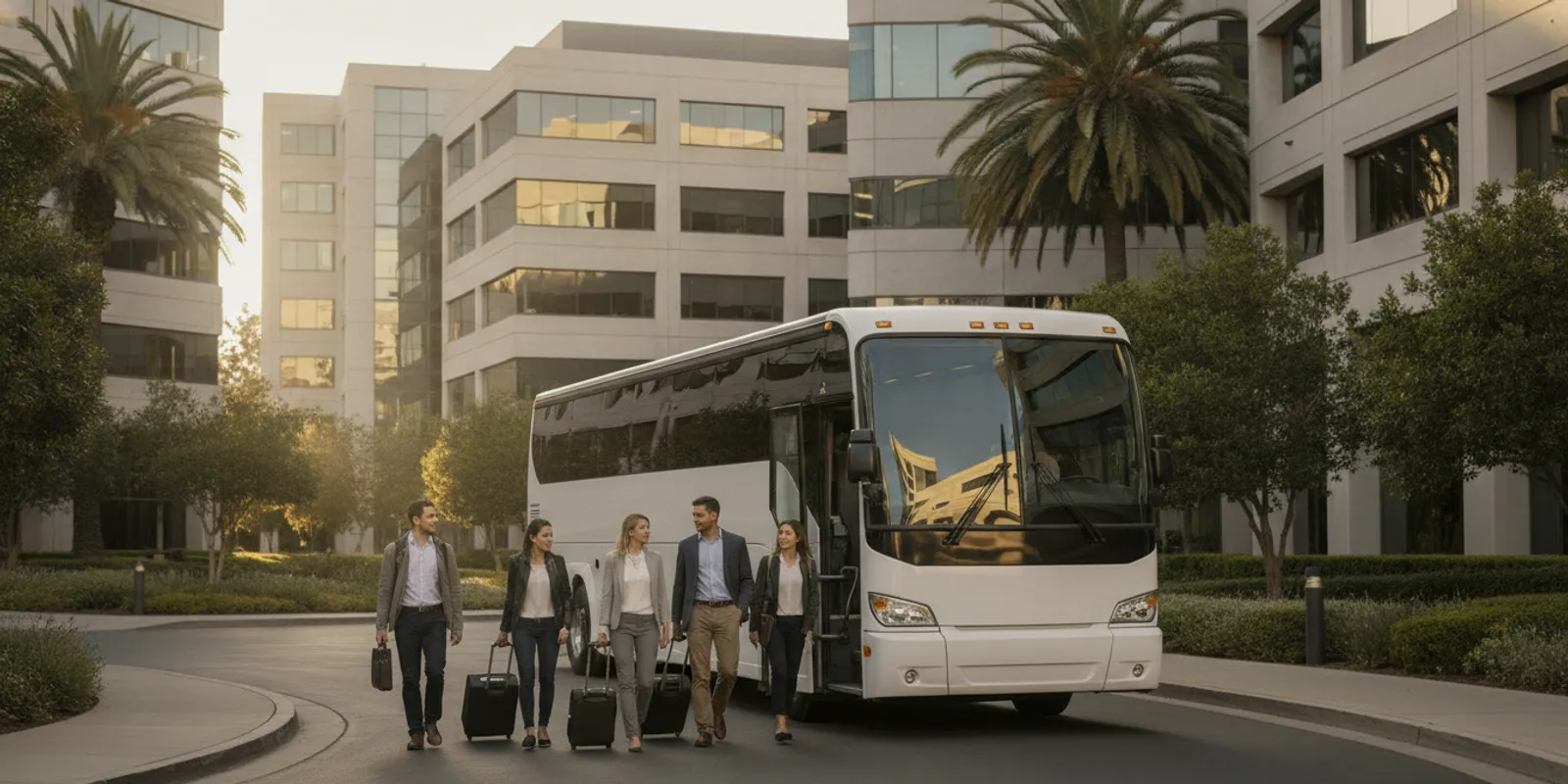
Charter bus waiting near a modern Sunnyvale office campus with passengers preparing to board

Start with the purpose of your Sunnyvale trip

The best bus plan starts with the trip’s job, not simply the passenger count. Corporate commutes, conference transfers, school trips, and private events have different timing, luggage, and pickup needs.

Sunnyvale groups may be traveling between an office, hotel, meeting venue, campus, airport, or an event elsewhere in the Bay Area. Write down every required stop, the time people must arrive, and whether the bus should wait or return later. For recurring office transportation, note the days, shifts, and pickup windows; for a one-day gathering, identify the event start and end times.

For technology-company travel, coordinate the route around actual employee origins and worksite access rather than assuming everyone starts at one central location. A shuttle might bring employees from a designated transit or parking meeting point, move attendees among a hotel and conference venue, or carry a team to an off-site. For a larger event, first confirm the destination’s loading access, stop order, and boarding window. A convenient map pin does not always identify an approved bus loading zone, so ask a site contact where a full-size vehicle can safely enter and wait. For repeat service, a brief site review can surface access questions before the first operating day. Also identify one organizer who can authorize schedule changes and communicate them to passengers. An organizer considering a recurring campus or company route can review the employee shuttle planning guide for useful route and communication questions.

Campus travel calls for the same clear plan. Decide whether students or guests need a single drop-off or several stops, and give the driver an approved entrance and staging location. For college and university groups, compare the trip needs with college and university transportation options. School groups can also review field trip bus planning.

Be specific about the purpose when asking for a quote. “A bus for our office” leaves open whether you need one departure, an all-day shuttle loop, or service across several shifts. Instead, describe who is traveling, what locations they need to connect, and what time constraints cannot move. For a campus visit, identify whether the group is a class, a prospective-student group, employees, or conference guests; each may have different boarding and supervision arrangements. For an event, decide whether the bus is simply a transfer or whether it needs to remain available between the outbound and return trips.

Choose a vehicle by usable capacity and trip pattern

Choose a vehicle that can carry the full group comfortably with its luggage, equipment, and planned route. Ask about passenger capacity for the specific vehicle, not just a broad vehicle category.

Passenger count is only one part of the decision. A work team with backpacks may fit differently from airport travelers with rolling suitcases, and a sports group may have bulky equipment. A single direct transfer usually has different needs from an all-day itinerary with several pickups. Review the available fleet and share the complete trip details when requesting a recommendation.

Trip pattern Vehicle planning focus Details to confirm
Small executive or project team Comfortable seating for a compact group and workday bags Passenger total, pickup sequence, and whether there are multiple stops
Conference or office shuttle Capacity and boarding flow for repeated runs Peak passenger volume, service window, stop order, and wait times
Airport group transfer Seats plus space for each traveler’s luggage Flight schedule, airport, terminal instructions, and bag count
School or campus trip Capacity that accommodates the group and its trip requirements Student count, adult supervision plan, approved loading point, and schedule
Private event or day trip Group size, personal belongings, and time spent aboard Event access, return time, stops, and where passengers will gather

For a larger group, a motor coach group trip may be a relevant option to discuss. If you are comparing vehicle sizes and rental structures, the charter bus price guide and motor coach rental pricing guide can help you identify questions to include in a quote request. Actual pricing depends on your trip details; request a tailored quote rather than relying on a generic estimate.

Think of capacity as a planning range, not a number to fill to the last seat without considering comfort or belongings. Ask whether the quoted capacity refers to passenger seats, and explain whether riders will bring luggage, presentation materials, sports gear, or other bulky items. For a round trip with different passenger counts on the way back, share both numbers. If the group is still growing, state the current headcount and the date you expect to finalize it. That gives the provider a clearer basis for discussing a suitable vehicle and whether a later update may change the plan.

Also distinguish between the size of the full invited group and the number riding on any one trip. A conference may have many registered attendees but only a portion using the shuttle at once. A team outing may have everyone departing together, then splitting into smaller groups for separate return times. These differences affect vehicle use and schedule design, so include the peak load and any split departures in your request.

Plan office shuttles and conference transfers around real demand

Office and conference transportation works best when the schedule reflects when people will actually travel. Build the plan around arrival waves, meeting times, and the time needed to board at each stop.

For an employee shuttle, establish the service days, operating hours, pickup locations, and expected passenger volume for each run. Consider whether demand is heavier at the beginning and end of the workday, and tell the provider if the number of riders may vary. A recurring shuttle plan should also specify who updates the schedule and how riders learn about changes. Epic Limousine’s employee shuttle service information can be a starting point for discussing a recurring arrangement.

For conferences, set out which hotels or meeting points the service will connect, when sessions begin, and when attendees are likely to return. A loop with several stops needs enough time for traffic, loading, and passengers who arrive just after a departure. Make the route and timetable easy to share, and identify a day-of contact who can relay a change. See the corporate event transportation guide or the conference shuttle planning guide for additional planning prompts.

When estimating shuttle frequency, start with the arrival time people need to meet, then work backward. Include time for a vehicle to reach the pickup point, load passengers, and complete the route. Do not assume that a bus can make a loop instantly because two locations look close on a map. Ask the organizer or venue about event access and loading flow, then discuss a schedule that leaves room for ordinary delays. If arrivals are spread over a long period, a series of planned runs may be easier for riders to understand than an informal, continuous loop.

For a recurring commuter service, treat the schedule and passenger communications as one plan. Share a standard timetable, name the person responsible for updates, and set a clear cutoff for same-day changes. If a pickup is temporarily unavailable or a stop moves, issue one revised set of instructions through the agreed channel. Keep the passenger-facing message short: date, stop, departure time, and what changed. For conferences, post a concise route and departure timetable where attendees can find it, and give staff a copy so they can answer basic questions consistently.

Coordinate airport transfers and pickup points carefully

Airport group transfers need a firm passenger count, a flight-aware schedule, and precise instructions for where the group meets. Confirm the airport, terminal, arrival or departure time, luggage volume, and pickup procedure before finalizing the itinerary.

Sunnyvale trips may connect with SFO, OAK, or SJC, depending on travelers’ flights and plans. Avoid planning a single pickup around an assumed arrival time if the group is landing on different flights. Provide flight details where available, decide whether travelers will meet at one agreed location, and clarify how the group will communicate if a flight changes. For a coordinated group ride, explore group airport shuttle transportation and Oakland airport transportation information.

For arrivals, set an agreed check-in point and communicate how the organizer will confirm that the group is assembled. If travelers arrive on separate flights, decide whether to group them into waves or plan separate pickups instead of asking early arrivals to wait without a clear update. For departures, build the route backward from the required arrival time, allowing time to gather passengers and load bags. At an office, hotel, school, or venue, give passengers a recognizable meeting point and the exact address. Tell the transportation provider about gates, loading zones, security procedures, or restrictions you already know. If a location has more than one entrance, state which one the group should use. Add a short buffer for boarding and traffic instead of scheduling the vehicle to arrive at the same minute as the meeting begins.

For a group departure, decide who will verify that everyone is present before the bus leaves. One person can check names against a simple passenger list while another watches for late arrivals, but the roles should be assigned before travel day. Keep flight details and pickup instructions in the same itinerary document so the organizer does not have to reconcile separate messages. If some travelers are meeting the group at the airport and others are boarding in Sunnyvale, show both boarding points and their planned times clearly. Share what passengers should do if their flight changes, but avoid promising a pickup adjustment until the revised plan has been confirmed.

A campus destination may have its own visitor guidance, entrances, and event procedures. For general destination context when arranging a Bay Area campus visit, the University of California, Berkeley provides visitor information about student life; confirm transportation access and bus loading directly with the specific destination. That distinction matters: general visitor information can help guests prepare for a visit, but it does not substitute for a transportation or loading approval.

Make pickup and travel-day instructions easy to follow

A simple day-of plan reduces confusion for both passengers and the organizer. Send one set of instructions with the pickup address, time, vehicle identification details when available, stop order, and a contact person.

Use this checklist before confirming your Sunnyvale charter:

  • Confirm the total passenger count and identify any likely changes.
  • List every pickup, drop-off, return trip, and planned stop in order.
  • Share exact addresses, entrance details, and approved loading locations.
  • Estimate luggage, equipment, and other items that need room.
  • Set arrival times and include practical boarding and traffic buffers.
  • Name one organizer and share a day-of contact method with the group.
  • For repeat service, confirm operating days, hours, and the process for schedule updates.
  • For airport rides, share the airport, flight details, and group meeting instructions.
  • Identify any passengers who need specific boarding assistance and discuss logistics in advance.

For school trips, define who is responsible for student supervision and verify the school’s own travel procedures. For any group, decide how the organizer will handle late arrivals, forgotten belongings, or a passenger who needs help finding the meeting point. Share a single itinerary version, especially when plans change, so passengers do not follow conflicting pickup times. If several people are coordinating different legs, give each person the same final schedule and the same day-of contact details. A brief reminder shortly before departure can restate the departure time and location without burying those essentials in a long itinerary. For events, explain where passengers should wait after the program and how the return departure will be announced. When a trip includes leisure stops or sightseeing, consider the group’s schedule alongside city tour transportation options. A broader charter bus planning guide may also help organizers prepare their questions.

Make the meeting place easy to describe to someone who has never visited the site. “Front entrance” may be ambiguous at a large office or campus. Add a building name, street-side landmark, gate, or approved loading area, and include a map pin only as a supplement to the written address. If the vehicle cannot wait at the curb, tell passengers where to gather and how they will be notified when boarding begins. Share these instructions in the same format with every rider, rather than relying on one person to forward a chain of messages.

It also helps to identify a backup communication method. A group chat may work for some trips, while a school or company may have a required channel. Decide who monitors replies and who can contact the provider if the route or schedule needs attention. Give passengers a realistic arrival instruction, such as being at the designated point before the planned departure, and explain whether the vehicle will leave at the stated time. Clear expectations help prevent the whole group from waiting while an organizer searches for one late passenger.

Request a quote with enough detail to plan the trip

A useful quote request describes the itinerary, schedule, and group—not just the pickup city. Sharing details early makes it easier to discuss a vehicle and service plan that fits the trip.

Organizers can make the request more actionable by separating fixed requirements from preferences. For example, a meeting start time and an approved entrance may be firm, while a hotel pickup or sightseeing stop may still be under consideration. State which details are final, which are estimates, and when you expect to confirm the rest. For shuttle service, distinguish the total number of employees from the number expected on each run; for a one-time event, distinguish the invited group size from the riders who need transportation. This context helps surface capacity, timing, and route questions before the itinerary is set.

Include your travel date, start and end times, passenger count, origin and destination addresses, intermediate stops, and whether the bus is needed for a one-way transfer, round trip, hourly charter, recurring shuttle, or multiple-day schedule. Add luggage or equipment estimates and any known venue or airport loading instructions. If details are tentative, say what is confirmed and what may change.

Before submitting, check that the itinerary answers a few practical questions: Is the vehicle needed to wait, or should it return at a later time? Does the group need one pickup or several? Is a return trip included, and will it leave from the same place? Are there a few riders with unusually large bags or equipment? If you do not yet know an answer, label it as open rather than leaving it out. That lets the provider distinguish a missing detail from a detail that is still being decided.

Epic Limousine serves the San Francisco Bay Area with transportation options ranging from luxury sedans to motor coaches. Review Epic Limousine’s transportation services, then share your requirements to discuss a suitable arrangement. You can also learn more about Epic Limousine and its service approach.

Request a Quote for your Sunnyvale group itinerary. Call (415) 799-2744 for assistance.

Frequently asked questions

How far in advance should I request a charter bus in Sunnyvale?

Request a quote as soon as you know the date, schedule, and approximate passenger count. Earlier planning gives you more time to confirm the vehicle, pickup locations, and any venue or airport requirements. For recurring shuttles, share the expected service period and operating schedule.

What information should I provide for an office shuttle quote?

Provide service days and hours, pickup and drop-off locations, expected riders per run, route order, and whether the schedule repeats. Include shift or arrival patterns and identify how you expect to communicate schedule changes. If ridership is still being estimated, explain that in your request.

Can a charter bus handle an airport transfer for a group?

Yes, a group transfer can be planned around the airport, flight schedule, passenger count, and luggage. Tell the provider whether the group is arriving together or on separate flights, and agree on a meeting location and pickup procedure in advance.

How do I choose the right vehicle size?

Start with the number of passengers, then account for luggage, equipment, and how many stops the trip includes. Ask about the capacity and available space of the specific vehicle being considered. The fleet overview can help you discuss options.

Can I plan several stops or a return trip?

Share every stop and the expected time at each location when requesting a quote. State whether the vehicle should wait, make a later return, or run a repeated loop. A complete itinerary is more useful than a single origin and destination.

What should passengers know before pickup?

Send the exact address, meeting point, departure time, stop sequence, and organizer’s contact information. Explain how early passengers should arrive and what to do if they are delayed. For a large group, share the same written instructions with everyone.

Request a quote for your Sunnyvale group trip

Whether you are coordinating a company shuttle, conference transfer, airport ride, campus visit, school outing, or private event, a clear itinerary is the foundation of a smooth trip. Epic Limousine can discuss the vehicle and service pattern that match your group’s plan.

Request a Quote for charter bus service in Sunnyvale, or call (415) 799-2744 to discuss your transportation needs.

Confirm the passenger list, addresses, timing, and day-of contact before the trip so everyone knows where to go and when to be ready.

School Athletic Tournament Transportation Checklist

A school athletic tournament transportation checklist should cover the roster, vehicle capacity, itinerary, adult supervision, pickup instructions, and a day-of communication plan. Start those decisions before requesting a quote, then confirm who owns each task and what happens if the schedule changes. That preparation helps players, coaches, and school staff travel as one coordinated group.

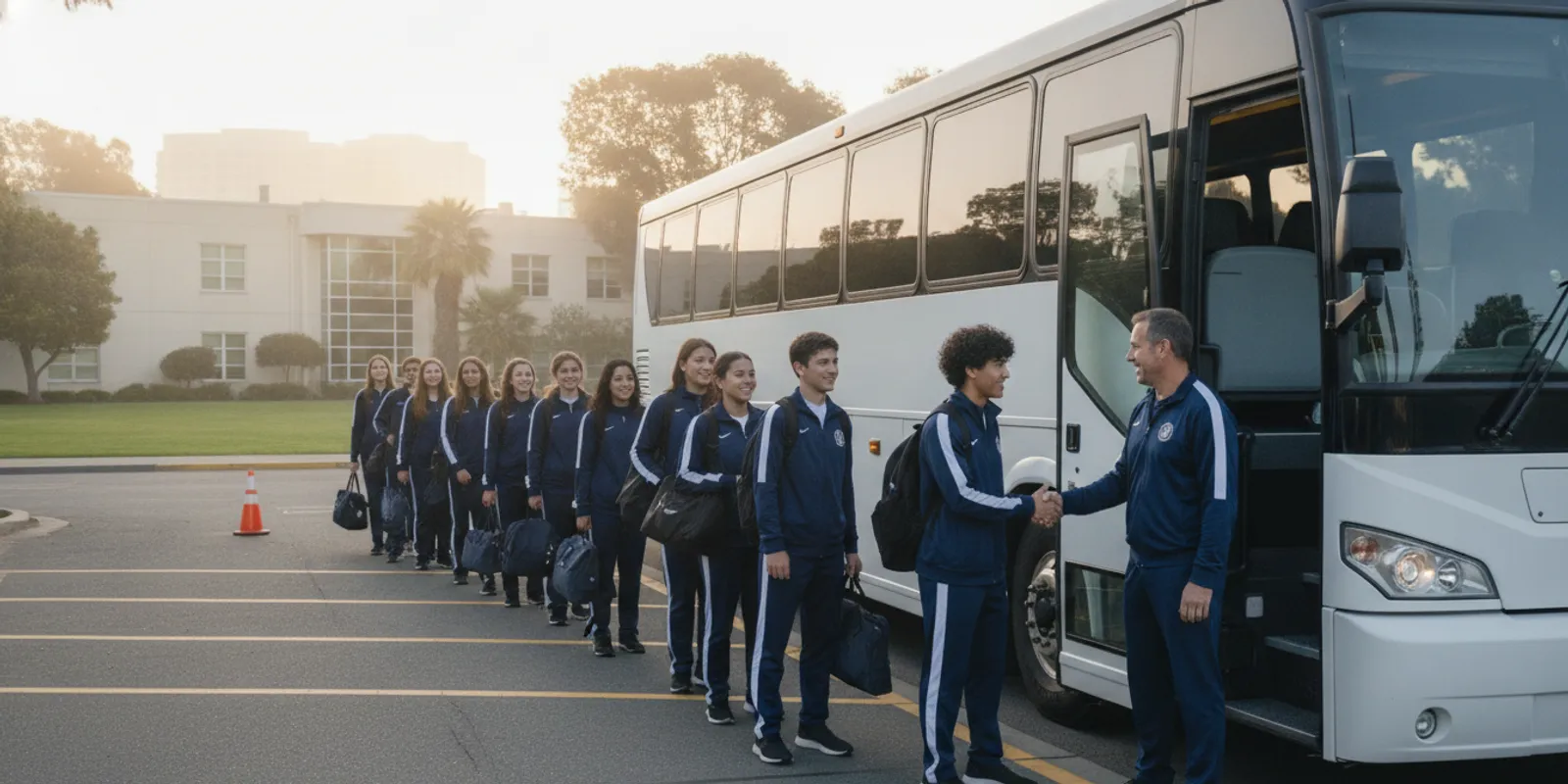
School athletes boarding a charter bus with coaches before a tournament

Request a Quote for your team’s tournament transportation. Call (415) 799-2744 with questions.

What should the school decide before booking tournament transportation?

Confirm the group size, trip purpose, schedule, and school approval process first. These basics shape the vehicle, pickup plan, service hours, and information a transportation provider needs to prepare a useful quote.

Begin with one trip owner, such as the athletic director or trip coordinator. Coaches can provide the team’s needs, while the school’s designated staff member confirms approvals, payment, and required documentation. A school athletic handbook example describes a head coach assisting with scheduling and transportation for contests and tournaments; your school should use its own current policies and approval process. See this school athletic handbook for that example.

  • Identify the event, venue, date, and tournament contact.
  • Confirm the team roster, coaches, managers, and any other approved passengers.
  • Ask the school who authorizes the trip, signs agreements, and approves spending.
  • Determine whether the trip is one-way, round-trip, or includes local transfers between venues.
  • List equipment, luggage, accessibility needs, and any planned stops.
  • Set a decision deadline for choosing the transportation plan.

Do not estimate capacity from the number of athletes alone. Coaches, managers, medical or support staff, and equipment may affect how much room the group needs. Assemble a working headcount, then update it when attendance is confirmed. For a quick overview of group vehicle considerations, see the charter bus guide and the vehicle fleet overview.

How do you choose a vehicle for athletes and gear?

Choose based on the complete passenger count, equipment volume, route, and comfort needs, not on the team roster by itself. Ask the provider to help match the group to an appropriate vehicle and to clarify what storage is available.

A small squad with limited gear has different needs from a full team traveling with coaches, bags, and bulky equipment. Make a list of what will travel, including balls, protective gear, uniforms, coolers, and any items that must stay accessible. Do not assume all equipment can be carried in a passenger area or stored in the same way on every vehicle.

Planning option May fit when What to confirm
School-arranged vehicles or multiple cars The group is small and the school permits separate travel arrangements Driver approvals, passenger assignments, parking, arrival coordination, and who accounts for students
Smaller charter vehicle The roster and equipment are limited and the trip needs a dedicated group ride Passenger capacity, gear storage, pickup access, and whether all passengers travel together
Charter bus or motor coach A larger group needs coordinated transportation to one or more venues Usable seating, luggage or equipment capacity, itinerary, service hours, and venue access
Shuttle or repeated trips Passengers need scheduled transfers between a hotel, school, or event location Trip frequency, wait times, passenger counts per run, and the final return time

This table is a starting point, not a substitute for checking the exact vehicle and school rules. Ask whether the proposed vehicle can accommodate the confirmed party and gear, and whether the trip plan includes all the travel legs you need. Epic Limousine describes its fleet as spanning luxury sedans through 56-passenger motor coaches; the right choice depends on availability and trip details. For athletic-team-specific questions, review the coach bus rental guide for athletic teams or sports team bus planning guide.

How should you build the itinerary and pickup plan?

Work backward from the tournament’s required arrival time, then include realistic loading, traffic, parking, and check-in buffers. Share one written itinerary with the coach, trip coordinator, driver or dispatcher, and relevant school contacts.

Begin with the address and arrival instructions provided by the tournament organizer. A venue may have separate entrances, bus staging areas, or restrictions on where a group can unload. Confirm those details in advance rather than relying only on a map pin. If the team has several games or venues, map the complete sequence, including time to unload equipment and regroup.

  1. Record the home pickup address and the exact meeting location on campus.
  2. Set a student arrival time that allows for attendance, equipment loading, and a headcount.
  3. Work backward from the team’s check-in or warm-up time, not just the game start.
  4. Confirm the venue’s vehicle entrance, unloading point, parking or staging instructions, and any access restrictions.
  5. Add travel time between games or sites, plus a plan for delays and schedule changes.
  6. Write down the return departure time, destination, and who may authorize a change.
  7. Send the same final itinerary to all trip leads and families using the school’s approved channel.

For a single game, a simple round-trip plan may be sufficient. A weekend tournament can require multiple legs, waiting time, or a separate hotel transfer, so spell out each segment and when the vehicle is needed. Make sure the quote request reflects the complete schedule; an incomplete itinerary can make comparisons misleading. The bus rental planning guide and motor coach group booking page offer additional context for organizing a group trip.

What supervision and communication plan should accompany the ride?

Assign named adults to attendance, boarding, student questions, and communication with the transportation contact. Follow the school’s established supervision and student-release policies, and make sure every chaperone understands the plan before departure.

Transportation planning is not a replacement for school supervision. Decide who is responsible for the roster at each transition: before boarding, after arrival, when leaving a venue, and at the final drop-off. Give families and students instructions through the channels the school already uses. Keep sensitive student information within the school’s approved systems rather than placing it in a general itinerary.

  • Name a lead adult and a backup contact for the trip.
  • Decide who takes attendance before departure and after each major transition.
  • Share the approved meeting point and a clear description of the vehicle or pickup area.
  • Explain how students should notify an adult if they are delayed or cannot find the group.
  • Confirm who communicates schedule changes to families and school administrators.
  • Keep emergency contacts and any relevant student information in the school’s approved format.
  • Set a procedure for a late passenger, missed pickup, or unexpected venue change.

Ask the transportation provider how the trip coordinator should reach the appropriate contact on travel day and what information is useful if timing changes. Keep the school’s own emergency and escalation process in place. If the group has special needs or accessibility considerations, raise them while planning so the provider can discuss the available arrangement rather than trying to solve them at the curb.

What should you include when requesting a transportation quote?

Send a complete, consistent trip brief so the provider can assess the same needs the school will actually have. Include the date, passenger estimate, full schedule, addresses, equipment, and any special requirements.

Quote comparisons are only useful when each provider is pricing the same service pattern. For example, a quote for a direct round trip is not equivalent to one that includes waiting time, multiple stops, or several venue transfers. Ask what is included and which assumptions the estimate uses. Epic Limousine uses customized, quote-based pricing, so the trip details are important to the request.

Use this copy-ready checklist in your request:

  • School or organization name and the trip coordinator’s contact details.
  • Sport, tournament name, event date, and expected passenger count.
  • Pickup and drop-off addresses, plus the requested pickup and arrival times.
  • All intermediate stops, game locations, and expected waiting periods.
  • Return time and whether the plan may change based on game results.
  • Equipment and luggage description, including unusually bulky items.
  • Accessibility needs or other arrangements the provider should discuss.
  • School approval, billing, and document requirements that affect booking.
  • The date by which the school needs a proposal or confirmation.

Then ask specific questions: What vehicle type and capacity are proposed? Does the itinerary include every leg and the expected wait? What is the process if the game schedule changes? What information or school documents are needed to confirm the reservation? Request a written description of the plan so the school can review it before committing. See the charter bus price breakdown and motor coach pricing guide for factors that may affect group transportation estimates; actual pricing depends on the trip.

How do you compare transportation proposals and confirm the plan?

Compare proposals against the same itinerary and service assumptions, then confirm the selected arrangement in writing. A lower quote may reflect a shorter service window or a different set of trip legs, so check what each proposal actually covers.

Keep a simple comparison sheet with the proposed vehicle, passenger capacity, trip schedule, pickup and drop-off points, wait time, and stated terms. Mark any item that is missing or unclear and ask for clarification before the school makes a decision. If the tournament schedule is not final, identify which details remain tentative and ask how changes should be communicated. Do not treat an estimate as a confirmed reservation until the school has completed its approval process and the provider has confirmed the booking.

  • Check that all providers received the same addresses, dates, headcount, and stops.
  • Verify the proposed vehicle and whether the passenger and equipment plan fits.
  • Compare the included hours, waiting period, transfers, and return service.
  • Ask how to handle schedule changes, additional stops, or a delayed end time.
  • Confirm which school documents, approvals, and payment steps are still required.
  • Save the written itinerary, proposal, and booking confirmation in the school’s approved location.

Once selected, distribute the confirmed version to the coach and trip coordinator, and tell families which details may still change. Epic Limousine provides transportation for academic groups; the academic bus rental and charter service page is a relevant starting point for schools discussing a group trip.

How can the team prepare for tournament travel day?

Reconfirm the schedule, vehicle arrival location, passenger count, and communication contacts before travel day. Give students and families one concise instruction set and have the trip lead carry the final itinerary.

Use the last school day before departure to close open questions. Verify that the venue has not changed its arrival instructions, that the roster is current, and that the planned vehicle arrangement still matches the passenger and equipment count. If a game schedule is provisional, clarify how the trip coordinator will pass updates to the provider and who can approve a change.

  • Reconfirm the pickup time and exact meeting point with the school and provider.
  • Check the final roster and account for coaches, managers, and approved chaperones.
  • Tell passengers what they may bring and how gear should be organized.
  • Review attendance responsibilities, meeting points, and the late-arrival procedure.
  • Share the trip lead’s contact method with the appropriate school contacts.
  • Keep the written itinerary available to adults coordinating the trip.

At pickup, the designated adult should check that the correct group has assembled, address last-minute changes through the agreed contact, and complete the school’s attendance process. At the destination, follow the same routine before leaving the vehicle or venue. For school-specific bus planning background, compare the school bus versus charter bus guide and school field trip bus guide; athletic trips may have different timing and equipment needs.

Request a Quote for your school athletic tournament trip.

Frequently asked questions

These answers cover common decisions schools face when coordinating a team’s tournament ride. Confirm school-specific policies and trip details before booking.

When should a school start planning tournament transportation?

Start as soon as the event date, likely roster, and venue are known. Earlier planning gives the school time to approve the trip, compare a complete transportation plan, and resolve venue or equipment questions. Confirm the booking timeline with the provider, especially for dates when the schedule is still changing.

What information should a coach provide to the trip coordinator?

Provide a realistic passenger estimate, team and staff list, equipment needs, game schedule, venue instructions, and any likely changes. The coordinator can then consolidate the details, confirm approvals, and send one consistent itinerary for the quote and school review.

How do we know whether a charter bus is the right fit?

Compare the total number of passengers and gear with the available vehicle capacity, then consider the route, trip duration, and need to keep the group together. Ask the provider to recommend an option based on the final count and full itinerary. Do not choose by seat count alone if equipment also needs to travel.

Should the transportation plan include time between games?

Yes, if the vehicle is expected to wait, make another transfer, or carry the team between venues. Provide the known game schedule and explain which times are firm or tentative. Ask how a schedule change affects the service plan and who is authorized to make the adjustment.

What if the tournament schedule changes after booking?

Use the change process agreed with the provider and the school. Identify one adult who can communicate the revised timing, and make sure the trip coordinator knows which changes need school approval. Ask about the provider’s procedures and any effect on the itinerary or quote before the trip.

Can a school request transportation for more than one team?

It can ask for a plan that covers multiple groups, but each team’s passenger count, schedule, equipment, and pickup needs should be clear. The provider can then assess whether a shared vehicle, separate vehicles, or another arrangement is appropriate. Avoid assuming teams can share a ride when their schedules or supervision plans differ.

Request a Quote for your school athletic tournament trip.

Request a quote for your school team’s tournament trip

A clear transportation plan starts with a confirmed headcount, complete itinerary, equipment list, and named school trip lead. Share those details when you request a quote, and ask questions about capacity, timing, and schedule changes before confirming. Epic Limousine serves academic groups across the Bay Area. Request a Quote to discuss your tournament transportation needs.