
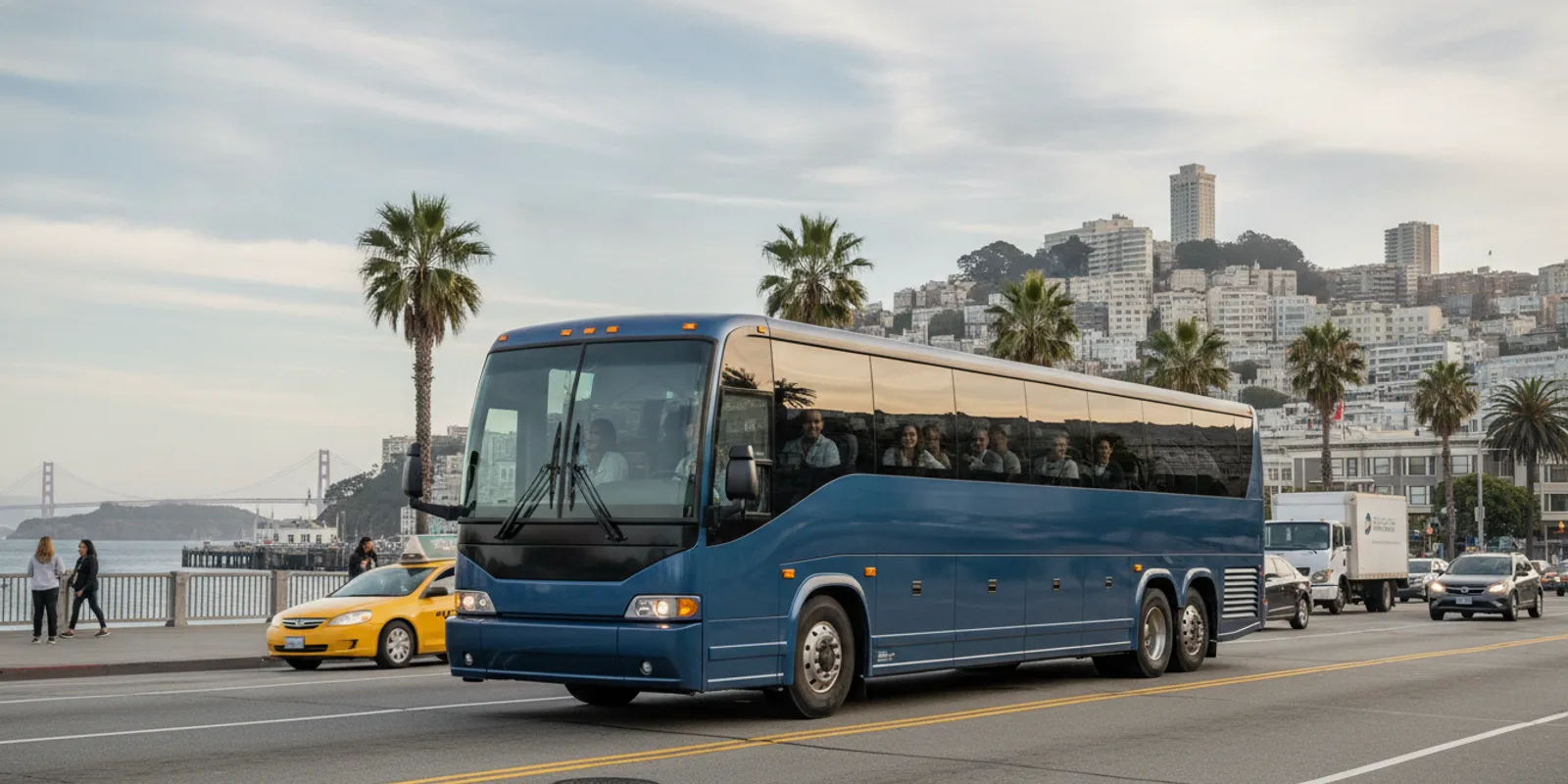
To build a group transportation itinerary in San Francisco, start with the group’s exact pickup and drop-off points, then arrange stops in a sensible geographic order and add realistic time for boarding, traffic, and unloading. Match the vehicle to your headcount and luggage, confirm accessibility needs, and share one written schedule with everyone before travel day.
Start with the trip’s purpose and passenger list
A useful itinerary begins with the people and purpose, not a list of attractions. Clarify what the group needs to accomplish, who is traveling, and what each passenger needs to board and travel comfortably.
Write down the basics before you choose stops or request a vehicle:
- Trip purpose: sightseeing, a conference, a school visit, a celebration, airport transfers, or a combination.
- Passenger count, including organizers, chaperones, interpreters, or other accompanying staff.
- Pickup location and the expected time the group will be ready to leave.
- Final destination and any required return time.
- Mobility, boarding, or other accessibility requirements to discuss with the transportation provider.
- How much luggage or equipment the group will bring.
- Whether the itinerary needs one vehicle, several pickups, multiple days, or recurring service.
Headcount is a starting point rather than a complete vehicle plan. Bags, sports equipment, presentation materials, and mobility devices can affect the space needed. Epic Limousine’s fleet page describes the range of vehicle options, while its motor coach and group booking page is the relevant place to discuss a larger group’s needs.
Map the day around geography, not a wish list
Group days work better when nearby activities are grouped together and the schedule avoids unnecessary backtracking. Plot every pickup, stop, meal, and drop-off before assigning times, then check whether the route still makes sense for the group.
San Francisco’s hills, busy streets, special-event activity, and changing traffic can make a tightly packed itinerary difficult to follow. Use a map to cluster stops by area, but treat estimated drive times as planning inputs rather than promises. Leave room for the group to board, collect belongings, use restrooms, and gather again after each activity.
For example, a day might be organized into a morning activity in one area, a planned meal nearby, and an afternoon visit in another area, instead of crossing the city repeatedly between every stop. If a visit has a fixed start time, make it the schedule’s anchor and arrange flexible activities around it. Put addresses, entrance or meeting-point details, and an on-site contact into the itinerary so the driver and group lead are working from the same information.
Review each location’s own visitor guidance before locking the route. A venue may have a preferred entrance, a designated loading area, security procedures, or a specific arrival window. Ask the organizer or venue contact which details matter for a motor coach or group vehicle; do not assume passenger drop-off works the same way as a private car. If two activities are far apart or the group has a long walking route between pickup and entrance, make that transition explicit in the schedule. These small checks reduce last-minute confusion and help you decide whether the order of stops should change.
For transit connections or destinations near transit, check current public transportation information through SFMTA. Schedules, service conditions, and access details can change, so confirm them close to the travel date rather than relying on an old itinerary.
Build realistic time buffers into every leg
Plan for the whole movement between activities, not only the time shown by a map app. A group needs time to reach the vehicle, board, settle, exit, and regroup—and those steps can take longer as the party grows.
For each leg, account for:
- Walking from the activity or meeting point to the vehicle’s agreed pickup location.
- Boarding, counting passengers, and stowing bags or equipment.
- Road travel, with a buffer for congestion, construction, or a busy curb.
- Safe unloading and walking from the drop-off point to the destination entrance.
- Time for the activity to end, passengers to return, and the group lead to confirm everyone is present.
Do not make every transfer a hard deadline if you can avoid it. Protect essential appointments with extra time, and identify which later activity can be shortened or skipped if an earlier stop runs long. A schedule with a little breathing room is easier to use than one that assumes every passenger will be waiting at the curb at the exact minute.
Choose a vehicle and service pattern that fit
The right vehicle depends on passenger count, luggage, route, schedule, and the type of experience you want. Compare options by capacity and operating pattern, then discuss the final fit with the provider rather than selecting a vehicle based on passenger seats alone.
| Transportation approach | Works well when | Plan for |
|---|---|---|
| One group vehicle | Most passengers share the same pickup, stops, and finish time. | Confirm passenger and luggage capacity, pickup access, and a schedule with time for boarding. |
| Multiple pickups or drop-offs | Travelers begin or end at different locations. | List every address in order and allow time for each additional stop. |
| Hourly or point-to-point service | The itinerary needs several stops or only specific transfers. | Clarify planned service hours, wait time, and what happens if the schedule changes. |
| Recurring or multi-day transportation | A conference, program, or trip needs repeated journeys. | Provide each day’s schedule, passenger pattern, and any differences in pickup locations. |
Epic Limousine offers point-to-point and hourly charter options as well as multi-day and recurring service. You can review the company’s charter bus overview, compare general bus and shuttle planning considerations, and explore its motor coach guide. These resources can help frame questions; the final vehicle and quote depend on the itinerary details.
Set clear pickup, meeting, and communication instructions
A transportation plan needs one dependable source of truth. Give passengers and trip leaders the same itinerary, with clear meeting directions, a way to reach the designated organizer, and a process for handling late arrivals or schedule changes.
For every pickup, include the street address, a recognizable meeting point, the scheduled departure time, and how early passengers should be ready. Avoid vague directions such as “meet downtown” or “near the hotel.” If the location has multiple entrances or a busy curb, specify the one your group will use and confirm that the vehicle can access it.
Name one trip lead who can communicate with the driver or transportation coordinator. The lead should have the final passenger list, a copy of the itinerary, and a way to reach participants. Share the plan in a format people can open on a phone, and consider a printed backup for school groups or events where participants may not be checking messages.
If plans change, tell the designated contact promptly rather than sending conflicting directions through several passengers. For event planners, Epic’s guide to shuttle service for events offers additional prompts for organizing event-day movements.
Plan for airports, venues, and special group needs
Airport transfers and venue trips require details beyond a pickup time. Confirm which terminal, entrance, or meeting location the group will use and agree on how the organizer will communicate if arrival times or event schedules change.
For airport travel, gather flight and arrival information from the group, but build the pickup plan around a confirmed location and a clear procedure for delays. The San Francisco airport shuttle guide and group airport shuttle guide can help you think through shared transfers. For a group arriving at Oakland, see the Oakland Airport transportation page.
For academic trips, organizers may need to coordinate chaperones, student counts, permission procedures, and school-specific requirements. Epic provides academic bus rentals and charters and a practical field trip bus guide. Schools should confirm their own policies and any applicable transportation requirements with the appropriate administrators.
For conferences or business groups, identify the venue’s designated loading area and meeting point before the day of travel. Epic’s convention shuttle service page is relevant when attendees need planned transfers between locations.
Use this sample structure to assemble the itinerary
A practical itinerary states what happens, where the group meets, and how much time is reserved. Treat this as a fill-in framework rather than a fixed San Francisco route or a guarantee of travel times.
- Before departure: Share the meeting address, ready time, lead contact, and passenger checklist.
- Pickup and boarding: Confirm the vehicle location, load luggage, count passengers, and review the first destination.
- First scheduled activity: Allow time to unload and walk to the entrance; include the activity’s confirmed start and finish.
- Meal or regrouping break: Choose a location that fits the route and tell the group when and where to meet afterward.
- Second activity: Keep the next stop geographically sensible, with a buffer before any fixed reservation.
- Return or final drop-off: State the final address, expected arrival window, and any planned intermediate drop-offs.
- After travel: Have the trip lead confirm that all passengers and belongings are accounted for.
Before distributing the schedule, review it as a passenger would. Can someone who has never visited the city understand where to go? Are the pickup point and destination entrance specific? Is there enough time for the slowest boarding situation in the group? If the answer is unclear, make the instructions simpler before travel day.
Request a quote with enough detail to plan accurately
A useful quote request gives the transportation provider enough information to assess the service pattern and vehicle fit. Share the details you already know and identify estimates clearly instead of presenting them as final.
Include the travel date, approximate passenger count, pickup and drop-off addresses, stop sequence, timing needs, luggage or equipment, accessibility considerations, and whether the trip is one-way, round-trip, hourly, recurring, or multi-day. Mention any schedule deadlines and explain which times are flexible. Epic Limousine uses customized, quote-based pricing, so do not assume a published flat amount for a trip without receiving a quote.
For examples of what affects a bus quote, consult the charter bus rental cost guide and shuttle service quote guide. If you are ready to discuss the itinerary, the group transportation booking page is the appropriate starting point.
Frequently asked questions
These answers cover common itinerary decisions; confirm trip-specific details with your provider and destination venues.
How far in advance should I plan group transportation in San Francisco?
Start as soon as you have a date, approximate headcount, and basic route. More lead time gives you room to settle the itinerary, confirm vehicle availability, and communicate logistics; busy dates and complex multi-stop trips may take more coordination.
How many stops should a group itinerary include?
There is no universal number. Choose stops based on the group’s purpose, available time, and the distance between locations. A shorter schedule with time to board and enjoy each activity is usually easier to manage than a packed list with little margin.
Should I give passengers exact times or time windows?
Give firm times for meeting, scheduled reservations, and departures when the group must move together. For travel legs affected by traffic, communicate a realistic arrival window and identify the next confirmed check-in time.
What information should I provide for a group vehicle quote?
Share the date, passenger estimate, addresses, stop sequence, timing, luggage or equipment, accessibility needs, and whether you need a one-way, round-trip, hourly, recurring, or multi-day service. The more complete the route, the easier it is to discuss the appropriate option.
Can the itinerary include multiple pickup locations?
It can, but each additional pickup affects the route and schedule. Provide all addresses in the requested order, give the expected number of passengers at each stop, and allow time for boarding at every location.
What should I do if the schedule changes on the day?
Choose one group lead and one communication path before travel. The lead should contact the transportation provider about changes and relay the confirmed plan to passengers, rather than letting several people issue different instructions.
When your trip outline is ready, share the route, timing, passenger count, and special requirements to discuss a vehicle and service plan. Request a Quote for your San Francisco group itinerary.