
Oakland Coliseum event transportation planning works best when the group has a clear primary plan and a simple way to adapt it. Before event day, confirm access instructions, allow time for weather-related delays, name one decision-maker, and tell passengers exactly how they will receive any change.
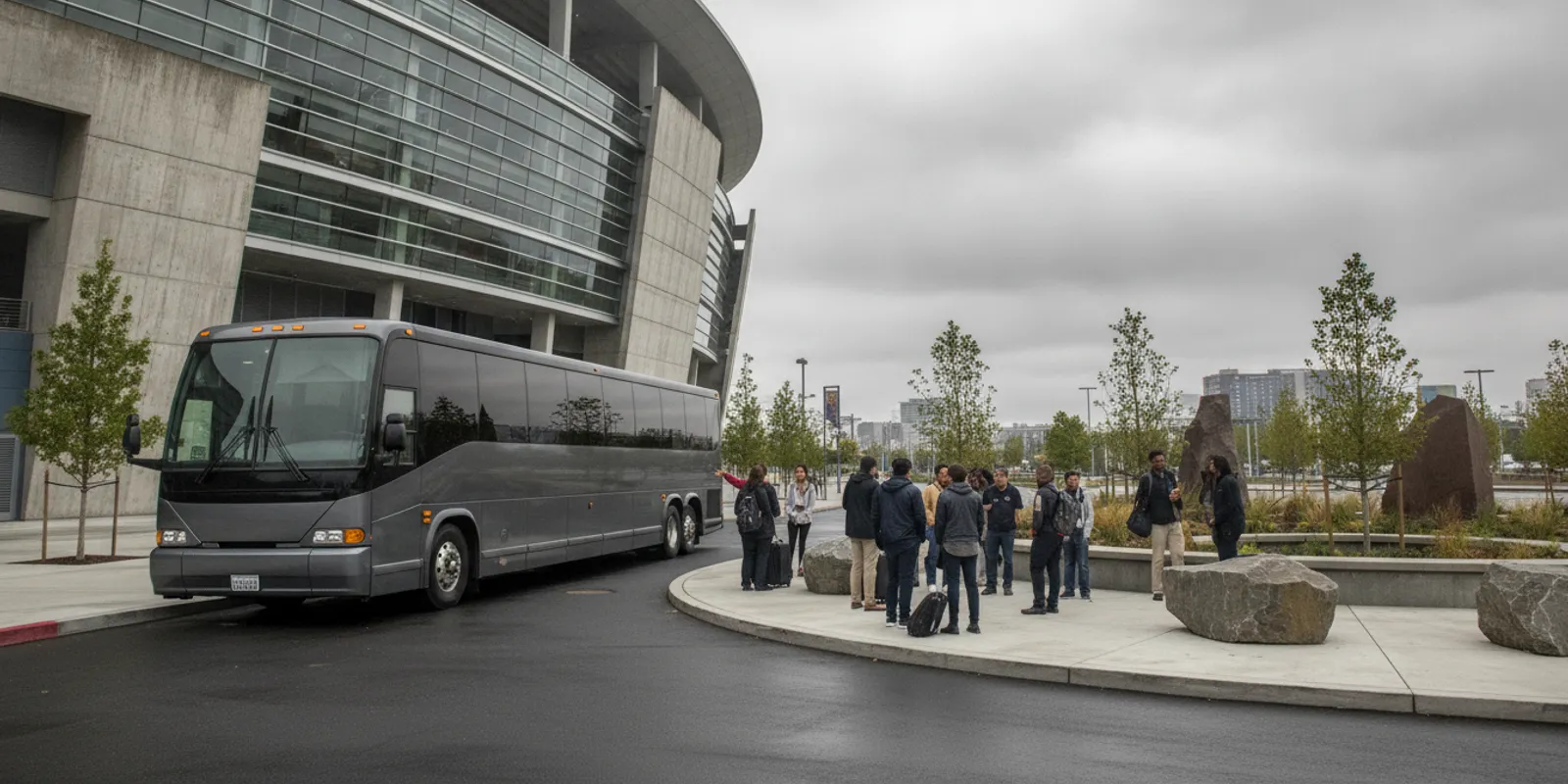
What should organizers plan before event day?
Begin with four decisions: who leads, where everyone meets, when the group leaves, and how updates will reach passengers. Putting those choices in writing gives organizers a shared reference when weather or venue access changes.
For Oakland Coliseum event transportation planning, verify the event’s current vehicle access and passenger pickup instructions rather than reusing an old plan. Event operations can change by date. Confirm details close to departure and share updates with the transportation provider. A prior event’s curb, gate, or staging arrangement may not apply this time.
- Name one transportation lead and a backup decision-maker.
- Keep the passenger roster and provider contact details accessible to both.
- Choose a primary passenger meeting point and a practical alternate.
- Set a departure deadline that includes gathering and boarding time.
- Choose one channel for confirmed updates, such as a group message.
- Ask passengers to follow only the named lead’s confirmed instructions.
Record these details in one short itinerary: event date, pickup address, landmark, passenger arrival time, departure time, venue access notes, and return plan. If several people are coordinating different subgroups, give each one the same version. Avoid separate message threads with slightly different instructions.
Groups considering an event shuttle service can include anticipated headcount, pickup windows, and the event schedule in their inquiry. Organizers evaluating group capacity can review motor coach and group travel options and discuss the itinerary with the provider.
How can weather affect the transportation plan?
Weather can affect driving time, the walk to a vehicle, and how long boarding takes. Plan for the conditions that could change the sequence of the trip, not only the forecast at the event’s start time.
Rain may slow a group moving between a meeting point and a vehicle, and wet conditions can make loading more disorderly. Heat can make exposed waiting uncomfortable, so limit the time passengers need to stand outside. Strong winds or severe weather may bring official advisories or venue instructions that affect access. Follow current public safety guidance and event directions; do not assume a contingency plan means an event or trip will proceed.
| Situation | Possible effect | Useful preparation |
|---|---|---|
| Steady rain | Slower walking and boarding | Confirm a workable loading point, allow more time, and tell riders where to wait. |
| High heat | Long outdoor waits become uncomfortable | Coordinate a clear arrival window and reduce time spent waiting at the curb. |
| Traffic or access change | Vehicle may not reach the expected curb | Confirm an alternate meeting point and who can activate it. |
| Event schedule shift | Return time may no longer fit the original plan | Assign a lead to confirm a revised time with the provider and group. |
| Severe-weather notice | Official directions may change the trip | Use current authority and venue guidance, then discuss options with the provider. |
The Federal Highway Administration’s transportation planning guidance describes contingency plans as a way to mitigate disruptions in transportation systems. For event organizers, the useful principle is to identify likely interruptions, assign responsibility, and make the backup instructions easy to follow.
Translate the table into triggers rather than vague intentions. For example, decide that an official closure or venue direction prompts the lead to contact the provider and assess the alternate pickup. A forecast alone might instead trigger a check-in and reminder to allow more walking time. State the difference so passengers do not interpret every weather update as a location change.
How should you choose pickup points and timing?
Choose a meeting point passengers can recognize and a vehicle can reach under current event rules. Build time for gathering, attendance checks, and boarding without assuming that the nearest curb is available.
At a large venue, a nearby-looking location may be restricted, crowded, or hard to find. Check the current approach and walking route. Use a specific landmark and share a plain-language description, not just a pin that may be difficult to open. If signal coverage is poor, the landmark and written directions still help the group reunite.
- Confirm the current event transportation and access instructions.
- Choose a primary passenger meeting point with a visible landmark.
- Choose an alternate point that does not depend on the same restricted approach.
- Set a passenger arrival deadline before the vehicle’s departure time.
- Add time for walking, weather, attendance checks, and boarding.
- Assign a person to count passengers and report when the group is ready.
- Share return pickup instructions before people enter the event.
Make the time buffer concrete. If the group needs to gather in several places, count the walk from each place, not just the drive to the venue. If a roster check or equipment load is needed, include it before the departure deadline. A short delay at the start can affect arrival plans, so tell the provider the desired venue arrival time and the group’s actual boarding needs.
Capacity planning should include people and belongings. Review vehicle categories and give an accurate headcount, including equipment. A charter bus overview explains the basic group-transport format; the bus and shuttle comparison can help you think through repeated stops and passenger flow.
What should a useful backup plan include?
A useful backup plan names a trigger, a decision-maker, an update method, and the next action. It should be brief enough to use under pressure but specific enough that passengers do not have to guess.
Consider a group whose primary pickup is at a designated venue-side location. The organizer can state that only a venue instruction, access closure, or provider-confirmed safety concern activates the alternate point. The lead verifies the change with the provider, sends one message with the new landmark and time, and asks subgroup contacts to confirm receipt. This avoids competing instructions based on rumors or unverified social posts.
Include a time-based check as well. Set one check-in before departure and another before the return trip. At each checkpoint, the lead reviews the current event schedule, access directions, and relevant public notices. If conditions are stable, the group proceeds with the original plan. If an instruction changes, the lead contacts the provider before redirecting passengers.
Separate changes that organizers can make from decisions that depend on others. The lead can consolidate passenger updates and confirm headcount. The provider must assess operational feasibility of a route or pickup change. Venue personnel and public authorities set their own access and safety instructions. A contingency plan coordinates those inputs; it cannot override them.
For school or youth groups, include supervision and passenger handoff steps in the plan. Epic’s academic transportation information and school trip planning guide offer related group-planning context. Sports organizers should share equipment volume and loading needs early and can consult the sports team bus guide.
What details should you give the transportation provider?
Give the provider enough information to assess the vehicle, route, timing, passenger needs, and possible changes. A complete first request makes it easier to discuss a workable plan instead of filling in essential details on event day.
- Event date, venue, and expected start and finish times.
- Pickup addresses, meeting landmarks, and desired arrival time.
- Estimated passenger count, including any likely changes.
- Bags, instruments, sports gear, or other equipment to load.
- Whether the trip has one pickup or multiple stops.
- Mobility or accessibility considerations to discuss in advance.
- Return timing and the person who will confirm the group is ready.
- Known access instructions and the alternate pickup trigger.
- Lead and backup contact methods for event-day coordination.
Be candid about uncertainty. If headcount may change, provide a range and the date by which you expect to confirm it. If event timings are provisional, label them as provisional. If the group may need a later return, explain the possible range and ask what options can be discussed rather than assuming that a vehicle can wait or that the itinerary can change without notice.
For a multi-stop trip, list each stop in order and estimate how long passengers need at each one. For an event with a fixed start, share the time by which the group wants to arrive, not only the event start time. Organizers of corporate gatherings can review the corporate event bus guide; a charter bus rental planning guide can help shape the inquiry. The transportation services overview is another starting point for matching a trip to a service conversation.
How can organizers rehearse the event-day plan?
A short rehearsal reveals missing details before passengers are waiting in the weather. Walk through the plan as if the primary pickup is unavailable, the schedule shifts, or a subgroup is late.
Use a five-minute tabletop check with the lead, backup, and subgroup contacts. Read the itinerary aloud and ask each person to explain their role. The lead should be able to answer: where do passengers meet, what event changes trigger action, who confirms a vehicle adjustment, and how does everyone learn the new plan?
- Check that everyone has the correct itinerary version.
- Verify that the lead and backup can reach each other.
- Confirm how subgroup contacts report attendance.
- Practice a single concise change message with location and time.
- Identify what to do if a passenger cannot receive a group message.
- Review who has authority to confirm a provider or venue instruction.
A sample update might say: “Use the alternate meeting point at the west-side landmark at 5:20 p.m. The transportation lead confirmed this with the provider after the access instruction changed. Reply to the lead when you arrive.” Keep the message factual and complete; avoid forwarding unverified reports without context.
For a large group, assign subgroup contacts to relay the same message in person. Ask each contact to confirm receipt, and keep the original meeting point in the message so late arrivals know what changed. If someone is separated from the group, the lead can use the agreed contact method rather than asking every passenger to improvise a new destination.
Frequently asked questions
How early should our group be ready to board?
Set a passenger arrival deadline that leaves time to gather, check attendance, and board before the planned departure. The right allowance depends on group size, pickup layout, weather, and access instructions, so review the schedule with the provider.
Should we choose an alternate pickup location?
It is useful to identify one when traffic or venue access could affect the primary point. Confirm that the alternate is practical, state who can activate it, and tell passengers how they will receive the change.
What should we do if event timing changes?
Have one organizer verify the revised schedule and communicate with the provider. Send passengers one confirmed update with the new time and meeting instructions rather than relying on informal messages.
Does a weather contingency mean the trip can continue in every condition?
No. A plan helps organizers respond, but it does not override safety instructions, official advisories, venue rules, or provider operating decisions. Follow current guidance and discuss available options with the provider.
How should we choose a vehicle size?
Start with the expected passenger count, then account for bags and equipment. Share those details when you request a quote so the provider can discuss an appropriate vehicle category.
What should we include in a quote request?
Provide the date, pickup and destination points, passenger count, itinerary, timing, and access or mobility considerations. Explain the possible alternate pickup trigger and who will make event-day decisions.
Plan the trip with a confirmed handoff
Good event transportation depends on clear instructions before the vehicle arrives and a named person to coordinate changes. Confirm the meeting point, schedule, passenger update method, and backup decision process with your group and transportation provider before event day.