
Archives for October 2026

Campus Shuttle Planning for Bay Area Colleges: A Practical Guide

Campus shuttle planning for Bay Area colleges starts with a clear picture of who needs a ride, where they are going, and when they need to arrive. Map the actual trip, build schedules around class and event peaks, choose a vehicle for expected demand, and confirm pickup, accessibility, and communication details before service begins.

Request a Quote

Start with the campus transportation need

The best shuttle plan begins with a specific job to solve, not a vehicle choice. Define the trip and the riders first, then set the operating pattern around that need.

A campus shuttle may connect remote parking with a main quad, link separate academic buildings, move students between a residence area and campus, or carry a group to an off-campus destination. A one-day orientation transfer has different timing and stops from a recurring weekday route. A regular shuttle that supports employees or students may need a predictable timetable, while a special event service may need several vehicles arriving in waves.

Write a short service brief before contacting providers. Include:

  • The reason for the service and the dates it will operate.
  • Who will ride, including students, faculty, staff, visitors, or event attendees.
  • Expected passenger counts by trip or time period, not only the total number invited.
  • Every start point, destination, and stop that riders will use.
  • Required arrival times, class or program schedules, and any return trips.
  • Whether service is continuous, scheduled, on-demand, or limited to specific windows.
  • Who will coordinate updates and answer rider questions on campus.

That outline helps distinguish a shuttle service from other group transportation patterns. It also gives a provider enough context to discuss a practical operating plan rather than guessing at demand.

For campus shuttle planning for bay area colleges, how do you map a useful route?

A useful route connects real rider origins and destinations with stops that are easy to find and safe to use. Keep the route simple enough to explain, then check it against campus access rules and the day’s timing.

Start by marking the places people need to reach: parking areas, transit connections, residence halls, academic buildings, event venues, and accessible entrances. Then identify places where a vehicle can safely stop and where passengers can wait without blocking traffic or pedestrian paths. The shortest route on a map may not be the easiest route to operate if it requires a difficult turn, has no suitable loading area, or conflicts with campus traffic restrictions.

Test the route at the time of day the shuttle will run. Bay Area campuses can have different traffic and pedestrian conditions at class changes, event arrivals, and commuter peaks. Allow room for loading, mobility-device boarding, traffic variation, and a driver to reach the next stop without rushing. If a campus has controlled gates or restricted roadways, confirm access and operating instructions with the responsible campus office before service starts.

For a campus with several destinations, compare a direct loop with a hub-and-spoke pattern. A loop can make service easy to understand when stops are close together. A hub-and-spoke pattern can make sense when riders need to transfer at a central point, but it adds a connection and a possible wait. Keep the route legible: name stops consistently, publish them in the same order everywhere, and avoid adding stops that do not serve a clear group of riders.

Review the route plan with campus partners and share a map or written stop list with the transportation provider. If you are organizing a school or academic outing rather than recurring campus service, the field trip bus planning guide and school trip booking guide cover related group-trip decisions. A shuttle can complement, rather than replace, regional transit connections. UC Berkeley’s first-year tips discuss BayPass for Bay Area public transit, a reminder to consider where riders begin and how they connect to campus; confirm current programs and eligibility with the relevant transit or campus authority. Read UC Berkeley’s campus tips.

For campus shuttle planning for bay area colleges, how should you set frequency and service hours?

Set frequency according to when riders need to travel and how many are likely to arrive together. A realistic schedule includes time for the full trip, passenger loading, campus traffic, and recovery between runs.

Build a demand profile by time window. A morning arrival period may have a concentrated rush, while midday travel can be lighter and more spread out. Evening classes, athletic activities, and special events can create a separate return peak. Use registration counts, enrollment information, parking use, past event attendance, or another available planning record to estimate demand; then state clearly which figures are estimates and which are confirmed.

Do not calculate frequency from the route distance alone. Estimate a full round trip, including time at each stop and expected traffic. If one complete loop takes longer than the interval between departures, the service may require more than one vehicle to maintain the planned frequency. Ask the provider to review the schedule assumptions and explain what is operationally feasible.

Consider these scheduling choices:

  • Fixed timetable: Useful when riders need a known departure time, such as a connection before classes or an event start.
  • Frequent loop: Useful for a short route with steady passenger demand and multiple nearby stops.
  • Peak-only service: Can focus service on morning, afternoon, or event surges instead of operating all day.
  • On-demand trips: May suit low-volume periods, but riders need clear instructions about how to request a ride and how long to wait.
  • Event waves: Can move larger groups in stages when attendees arrive or leave within a limited window.

Publish service hours and expected waits in plain language. Do not promise a precise arrival time if campus traffic or a variable pickup makes it unreliable. A clear service window and a contact method are more useful than an overly ambitious timetable.

Which vehicle and service pattern fit the group?

Choose a vehicle based on the number of passengers traveling at the same time, the route, and the service pattern. Compare the actual capacity and configuration available with your expected peak, not just the daily rider total.

For example, a recurring route that carries small groups throughout the day has different needs from an orientation session that releases hundreds of attendees at once. A larger vehicle can consolidate passengers, while smaller vehicles may offer more flexibility for separated pickup points or narrower campus roads. Ask about the vehicle’s passenger capacity, luggage or equipment needs, boarding arrangements, and any route restrictions before confirming a plan.

Service option May fit when Planning trade-off
Scheduled campus loop Riders use a repeat route between several campus stops. Simple to communicate, but the schedule must allow a complete loop and boarding time.
Point-to-point transfer A defined group needs to move between two locations at set times. Direct and easy to coordinate, but less flexible for riders outside the planned trip.
Event shuttle waves Attendees arrive or depart in concentrated time windows. Can handle surges in stages; requires clear staging, dispatch, and rider instructions.
Recurring shuttle service A college needs transportation on a repeated schedule or over an extended period. Supports a consistent routine, but service hours, route assumptions, and demand should be reviewed together.

Epic Limousine describes a fleet ranging from sedans to 56-passenger motor coaches, so colleges can ask about vehicle categories suited to their group size and trip. Review the available fleet information and the motor coach group booking page when your plan involves larger groups. The school bus versus charter bus comparison can also help frame the questions to ask; the right choice depends on the trip, schedule, and vehicle availability.

What should you confirm about accessibility and rider needs?

Identify accessibility and passenger needs early, and confirm how the proposed vehicle and stops will accommodate them. Do not assume a route, boarding area, or vehicle configuration will work without checking the specific requirements.

Ask the college’s accessibility or transportation office about applicable policies and what riders need to know when booking or boarding. Confirm whether the planned stops have a safe, accessible path to the destination, and whether a different pickup point is needed. If riders use mobility devices or need other boarding assistance, discuss those details with the provider in advance so the operating plan can account for them.

Also consider the everyday rider experience. Are signs or stop markers visible? Is there shelter or a safe waiting area? Can a first-time visitor identify the correct shuttle? Are instructions available in the formats and channels riders typically use? These details reduce confusion and help service begin smoothly.

For a campus program with a broader academic travel component, the charter bus planning guide and charter bus overview offer more context for evaluating group transportation. Discuss the specific vehicle and trip requirements directly rather than relying on a general label.

How can colleges coordinate safety and communication?

Set one clear operating contact, a shared schedule, and a plan for service changes. Riders, campus staff, and the transportation provider should know whom to contact and what to do if a pickup point or timing changes.

Before service begins, confirm who is responsible for the following:

  • Approving campus access, stop locations, and any vehicle staging areas.
  • Sending the final route, service hours, and rider instructions to the campus community.
  • Notifying the provider about event changes, closures, or unusual passenger volumes.
  • Communicating delays or revised pickup instructions to riders.
  • Coordinating dispatch and campus contacts during operating hours.
  • Reviewing any incident or recurring service issue and deciding who follows up.

Keep the published rider information consistent across the college website, event messages, and signs at stops. Include a route map or stop list, service hours, operating dates, fare or eligibility information if applicable, and a contact channel. If the college is providing a one-time transfer, say whether the vehicle waits for late arrivals or departs at a set time.

Colleges arranging transportation for a conference or campus event may also find the conference shuttle planning guide useful. For a recurring commute route for employees, the employee shuttle guide and employee shuttle rental overview provide related planning considerations.

How should the college launch and review shuttle service?

Use the first operating period to check whether the route, schedule, and rider instructions match real campus conditions. Track a few practical measures, review them with the provider, and make adjustments through a clear approval process.

Before the start date, confirm the final schedule, stops, campus access instructions, and a contact path for service questions. If timing allows, distribute the route and rider instructions in advance and give campus partners time to flag unclear stops or conflicting events. On the first day, make sure the campus coordinator and operating contact can reach each other quickly.

During service, note what actually happens rather than relying only on the original estimate. Useful observations include:

  • Approximate boardings by stop and time window.
  • Whether riders arrive in groups or spread across the service interval.
  • Actual trip and dwell time at busy stops.
  • Recurring delays, missed connections, or locations that are hard to find.
  • Questions or confusion that show rider instructions need revision.
  • Any schedule changes, campus closures, or event conditions that affected service.

Review the observations at an agreed interval with the campus team and transportation provider. A change to frequency, stops, or operating hours may affect the rest of the route, so assess the full plan before changing one piece. Tell riders what changed, when it takes effect, and where to find the current information. For a short event shuttle, a brief debrief after the event can capture lessons before the next program; recurring service benefits from scheduled reviews as campus needs shift.

What information belongs in a campus shuttle quote request?

A useful quote request includes the trip pattern, dates, passenger estimates, locations, and desired schedule. The more clearly you describe the operation, the easier it is to discuss options and identify missing details.

Include this information when you contact a provider:

  1. Dates and hours: List each operating date, the first pickup, the last return, and any breaks in service.
  2. Trip purpose: Explain whether service supports regular campus travel, orientation, an event, athletics, or another program.
  3. Stops and route: Provide addresses, campus entrances, stop names, maps, and any access or staging instructions you already know.
  4. Passenger counts: Estimate riders by run and time window, and distinguish confirmed registrations from projections.
  5. Schedule: Share class, program, or event start times and the planned frequency or departure windows.
  6. Vehicle considerations: Note passenger, luggage, equipment, and accessibility needs so the provider can discuss appropriate options.
  7. Operating contact: Name the campus coordinator who can answer questions and approve changes.
  8. Budget and service constraints: Share any internal purchasing process, required documentation, or decision deadline.

Ask how the proposed service will handle a delayed run, an unexpected demand peak, or a campus closure. Request clarification on what is included in the operating plan and what assumptions affect the quote. Pricing for transportation is often dependent on the itinerary and service details, so avoid comparing a simple hourly estimate with a different route or operating window as if they were identical. The shuttle quote and cost guide and large-group bus rental cost guide can help you prepare questions without substituting for a trip-specific quote.

Request a Quote

Frequently asked questions

These answers address common decisions about timing, routes, passenger estimates, accessibility, and combining recurring service with event transportation.

When should a college start planning shuttle service?

Start once you know the program dates, likely passenger groups, and key destinations. Earlier planning gives campus teams time to confirm access, stops, schedules, and purchasing requirements. For recurring service, review the plan before each operating period because enrollment, events, and campus conditions can change.

How many stops should a campus shuttle have?

Use only the stops that serve a clear rider need and can be operated safely. A short, easy-to-understand route is usually simpler to explain and schedule. Add a stop when it provides meaningful access without making the route too long or disrupting dependable service.

Should a college use a fixed schedule or frequent shuttle loops?

Choose based on demand and how precisely riders need to arrive. Fixed departures work well for known class or event times. A frequent loop may be more convenient on a short, steady route, but its frequency must match the time required to complete the trip.

What passenger count should we use for planning?

Estimate the number of people who may ride on the busiest run, not just the total number expected over a day. Separate confirmed riders from estimates and note when groups are likely to travel together. A provider can use those assumptions to discuss vehicle and schedule options.

What accessibility details should be included in the plan?

Share known boarding and mobility needs, check the access conditions at each stop, and coordinate with the college office responsible for accessibility. Confirm the proposed vehicle and pickup arrangements directly with the provider before service is finalized.

Can one transportation plan cover a recurring route and a special event?

It may be possible to coordinate both, but the service requirements can differ. A recurring route needs reliable timing throughout its operating period, while an event often has arrival and departure surges. Describe each operation separately so the schedule and quote account for its actual conditions.
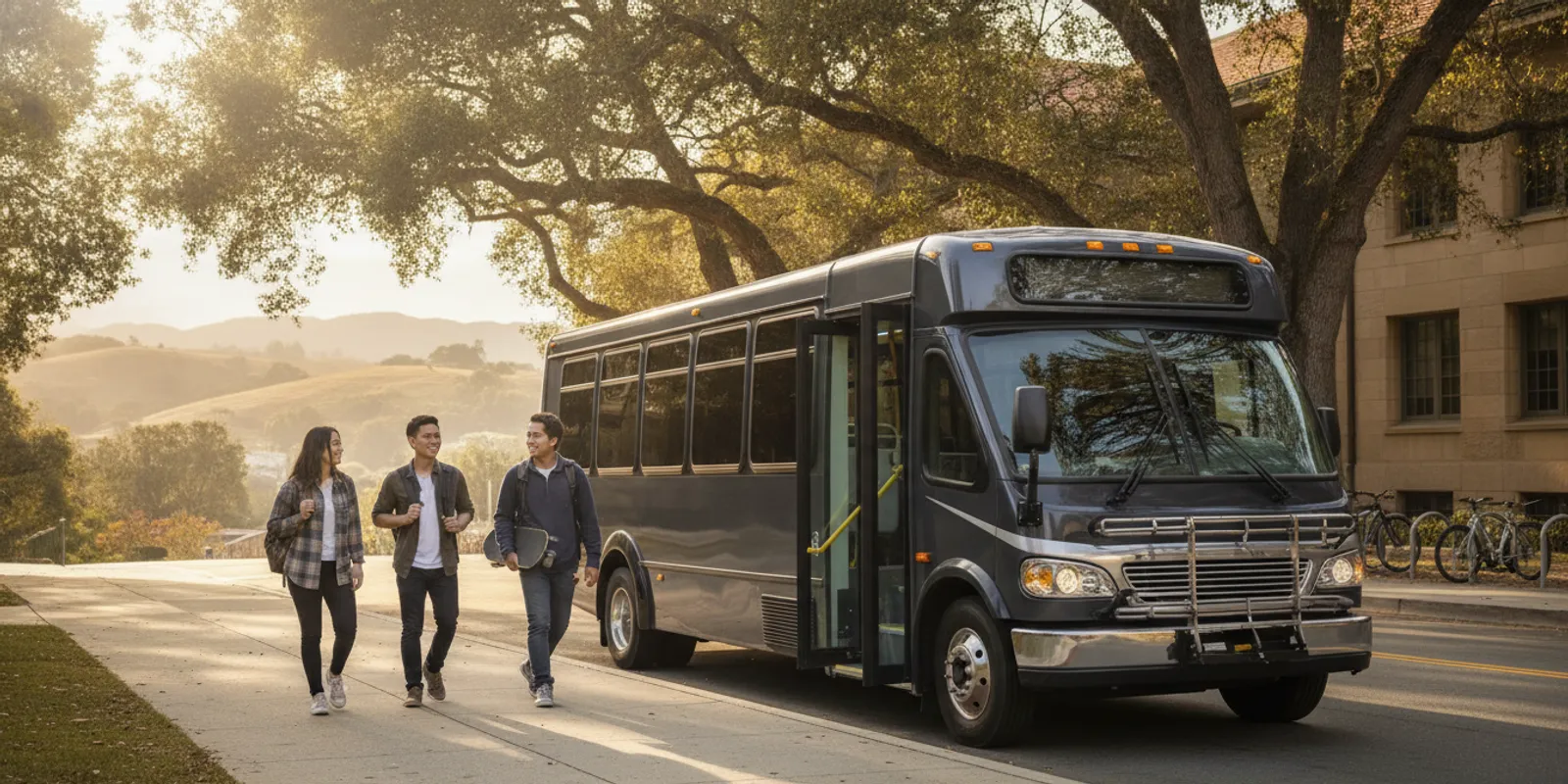
A campus shuttle bus waiting near a university walkway in the San Francisco Bay Area

Plan your campus shuttle with the trip details in hand

A thoughtful campus shuttle plan connects passenger needs, an understandable route, realistic timing, and the right vehicle discussion. Gather your dates, stops, peak passenger estimates, and campus access requirements, then request a group transportation quote from Epic Limousine or call (415) 799-2744 to discuss your transportation plan.

Charter Bus Santa Clara: Group Transportation Guide

Charter bus waiting for a group outside a modern Santa Clara venueA charter bus Santa Clara group trip works best when you match the vehicle and service plan to the passenger count, schedule, and pickup conditions. Decide whether your group needs a one-way transfer, multiple stops, or an hourly charter, then confirm access, loading instructions, luggage, and timing before requesting a quote.
Request a Quote for your Santa Clara group trip. Call (415) 799-2744.

Plan your charter bus Santa Clara trip around the group

The right charter plan depends on the trip purpose, not just the destination. Corporate groups, school groups, event guests, and airport travelers have different timing, supervision, and luggage needs.

For a corporate meeting or conference, begin with arrival windows, the number of hotel or office pickup points, and whether guests need a return trip at a set time. For recurring employee movement, a shuttle pattern may be a better fit than a single charter; review Epic Limousine’s transportation services and its employee shuttle planning guide to compare service patterns. A group traveling together to one meeting may instead want a single departure and coordinated return.

School, university, and youth groups need a plan that makes headcounts, chaperone roles, and loading instructions clear. The trip organizer should confirm which vehicle and provider requirements apply to the institution and trip. UC Santa Cruz’s transportation purchasing guide, for example, distinguishes covered services by trip type and distance; treat it as an institutional example, not as a rule for every Santa Clara school. Institutions should follow their own purchasing, supervision, and transportation approval processes.

For a wedding, performance, celebration, or other event, consider when guests will be ready to board and whether the return time should be fixed or flexible. An event shuttle can connect a hotel, venue, and other approved stops; Epic’s event shuttle planning guide can help you think through those logistics. For a campus or school trip, see its school field trip bus guide information as well.

Airport-connected itineraries need extra coordination because scheduled flights, baggage collection, and traffic can shift arrival times. Tell the provider which airport, flight arrival window, terminal or meeting instructions, and luggage volume are involved. For a group starting or ending at SJC, avoid assuming that every passenger will be ready at the same moment; decide who will gather the group and communicate when it is ready to board.

One useful way to define the service is to write down the group’s “must happen” moments before filling in every stop. A company may need the team to arrive together before a scheduled session. A school organizer may need to account for attendance before departure and again after a stop. Event guests may arrive in waves, while airport travelers may be spread across several flights. Those differences affect whether you need a single departure, a vehicle that remains available, or a shuttle that runs more than once.

Sketch a basic day in chronological order: when passengers gather, when boarding starts, when the vehicle must leave, the required arrival time, the expected time at the destination, and the return window. Mark which times are fixed and which can move. This simple outline helps you explain the request clearly and lets the provider identify where additional buffer or a different service pattern may be needed.

Choose the right charter bus Santa Clara vehicle

Choose a vehicle that fits the whole group comfortably, including luggage and any mobility or seating needs. A nominal seat count is only a starting point; share the actual headcount and trip details so the vehicle recommendation can account for how the group will use it.

Trip profile Vehicle direction Details to confirm
Small executive group or short transfer Luxury sedan or SUV, depending on passenger count and bags Passenger total, luggage, pickup sequence, and whether the group travels together
Medium-sized team or event party Sprinter-style or mid-size group vehicle, subject to availability and fit Seat capacity, boarding access, bags or equipment, and timing at each stop
Large group traveling together Charter motor coach sized to the confirmed group Final passenger count, mobility needs, luggage, venue access, and bus staging
Guests moving between multiple locations Charter or shuttle service based on route and number of departures Whether the vehicle waits, loops, or makes separate scheduled runs

These are planning directions, not a promise of a particular vehicle or seat count. Ask about the fleet’s available options and match them to your actual itinerary. The Epic Limousine fleet page is a useful place to review vehicle categories. For larger bookings, its motor coach group booking page is specifically oriented to group trips.

When the headcount is not final, share a realistic range and say when you expect to confirm it. Also mention bulky cases, musical instruments, sports equipment, display materials, or unusually large bags. Passenger capacity alone does not tell you whether there will be enough room for those items.

Use a two-part count when you plan: how many people will ride, and what each person or subgroup expects to bring. For example, a meeting group carrying only personal bags has different space needs from a team bringing uniforms and equipment, even if the passenger totals match. Note whether items must stay with passengers, be loaded separately, or be accessible during the journey. Ask the provider to confirm that the proposed vehicle can accommodate both passengers and belongings.

Accessibility and boarding also affect a vehicle choice. Tell the provider in advance about mobility needs, assistance required, and any seating considerations so the available options can be discussed before the date. Do not assume that a vehicle category or a photo alone confirms that a specific boarding or seating feature is available.

Plan pickup, loading, parking, and stop logistics

A workable itinerary gives the driver a clear, legal place to load and enough time to reach each stop. Do not treat a venue address as a confirmed bus pickup point.

Before the trip, contact each property or venue to confirm its current procedures for charter vehicles. Ask where a bus may approach, whether it can wait or stage nearby, what the loading window is, and whether advance permission or a permit is needed. Rules can vary by property and may change, so verify directly rather than assuming that curb access or parking is available.

For an office, campus, hotel, or event site, assign one trip lead to exchange arrival instructions with the provider and pass them to passengers. Include a precise meeting point, a recognizable description of the pickup area, a backup contact, and a cutoff time for boarding. If a location has multiple entrances, specify the correct one and tell the group not to wait at another entrance.

Make access a two-way confirmation. The organizer can send the provider the exact street address, entrance name, building or venue instructions, and any restrictions provided by the property. The provider can then discuss whether the planned vehicle can reach the loading location and where it should meet the group. If the property has a designated bus zone, record its location and the person who confirmed its use. Keep a separate passenger-facing meeting description, since operational directions to a driver may be too technical for the group.

Build realistic buffers between stops. Estimate the time to gather the group, load bags, complete a headcount, and clear the pickup area, not just the driving time. A multi-stop itinerary can lose time at each handoff. If arrival at a meeting, performance, or flight connection is critical, make that deadline visible when you request the quote and ask the provider to discuss the schedule.

For example, if a group has three pickup points, allow for passengers to find the correct location at each one and for the organizer to confirm who has boarded. Avoid placing a required arrival immediately after the final pickup without any margin for boarding or route changes. If the schedule is tight, ask whether reducing the number of pickup points or using one central meeting location would make the plan simpler.

For airport connections, share flight details and a practical passenger meeting plan. For example, your organizer can collect the group after baggage claim, verify everyone is present, and then communicate that the group is ready at the agreed meeting point. Clarify what happens if a flight is delayed and whether the quoted service includes waiting time; do not assume an unlimited wait is included.

Groups comparing a single coach with separate vehicles may also find Epic’s charter bus overview and bus-versus-shuttle guide useful starting points. For airport-focused itineraries, see the airport shuttle options guide and the group airport shuttle planning page.

Make the day-of plan easy for passengers to follow

A simple communication plan helps passengers reach the right pickup point on time and gives the organizer one source of truth. Share confirmed instructions before travel, then designate one person to handle updates on the day.

Send the group a concise itinerary with the departure time, exact meeting location, and a short description of where to stand. Include the trip lead’s name and contact method, plus a clear instruction about how early passengers should arrive. Avoid sending several competing versions of the schedule; if something changes, state what changed and repeat the current time and location.

For groups with separate arrivals, use a headcount method that does not depend on everyone knowing one another. A roster, team lead check-in, or assigned group contact can help the organizer see who is present before boarding. Keep any sensitive passenger information private, and only collect what is needed for coordination.

Agree in advance on how the group will handle a late passenger, a missed connection, or a venue delay. The organizer can identify the person authorized to approve a schedule adjustment and communicate it to both the passengers and provider. This avoids last-minute decisions by several people at once. For a recurring shuttle, clarify who will distribute daily timing updates and how riders will learn about a stop or schedule change.

Give passengers a simple sequence of actions rather than a long page of logistics: arrive at the stated meeting place, check in with the named lead, keep belongings ready, and board when called. For school and youth groups, the organizer can assign adult leaders to specific sections or subgroups and complete a count before the vehicle departs. For corporate travelers arriving independently, tell them whether the vehicle leaves at a fixed time or waits for a group-ready message. The plan should make clear who can authorize a delay; passengers should not rely on informal assumptions.

Finally, keep the confirmed itinerary and provider contact details accessible to the trip lead, including offline if the group will be moving between venues. A clear owner for updates, a backup contact, and a shared final schedule are small steps that make a complex group movement easier to manage.

Set a booking timeline and request a useful quote

Request transportation once your date, approximate passenger count, and trip outline are known. Earlier planning gives you more time to compare options and resolve access questions, while final details can be confirmed as they become available.

There is no single booking deadline that fits every date and group. Availability can depend on the day, season, vehicle size, route, and service hours. A large group, a peak-date event, or a trip with several pickups benefits from starting early. If you are planning on shorter notice, share the exact date and be flexible about the service pattern or vehicle choice if possible.

A clear quote request should explain what the vehicle must do from pickup through return. Include both fixed facts and open questions so the provider can identify what still needs confirmation. For a more detailed look at quote inputs, read Epic’s charter bus rental cost breakdown and its charter bus booking guide.

When comparing quote options, check that each one reflects the same trip assumptions. A proposal for one pickup and a direct return is not a like-for-like comparison with an itinerary that includes several stops, waiting time, or repeat shuttle runs. Ask what service hours, vehicle type, stops, and waiting arrangements the estimate includes, and identify any details that remain unconfirmed. This helps you compare the plan itself rather than focusing on a single number without context.

Confirm how changes should be handled after booking. Ask when the final passenger count and itinerary are due, how to communicate a new stop or time, and whether a change could affect availability or the quote. Keep a copy of the agreed itinerary and any venue instructions with the trip lead. These steps are especially useful when an event schedule or attendance list is still developing.

Santa Clara charter bus request checklist

  • Trip date, approximate departure time, and required arrival time.
  • Passenger count now, expected final count, and the date it will be confirmed.
  • Full pickup and drop-off addresses, plus each additional stop in sequence.
  • Whether you need a one-way transfer, round trip, hourly charter, or repeated shuttle runs.
  • Expected time at each stop and whether the vehicle should wait, return later, or make a loop.
  • Luggage, equipment, accessibility, or other passenger needs that affect vehicle fit.
  • Venue or property instructions for bus loading, staging, parking, and advance permission.
  • Airport details, flight arrival windows, passenger meeting plan, and delay expectations when relevant.
  • On-site trip lead’s name and contact method, plus a passenger communication plan.
  • Any flexibility in departure time, stop order, or vehicle type if the preferred option is unavailable.

Once you have these details, send them together rather than requesting a quote with only a date and destination. That gives the provider a better basis to discuss the vehicle, schedule, and any missing logistics. For recurring business travel, explain the expected frequency and service window; for a one-time event, identify the guest arrival and departure waves.

Before sending the request, separate confirmed details from estimates. Write “about 40 passengers, final count by Friday” rather than presenting a provisional headcount as final. Do the same for pickup points, flight arrivals, and event end times. Clear labels make it easier to revisit open items without losing track of what was already agreed.

Request a Quote for your Santa Clara group transportation. Call (415) 799-2744.

Frequently asked questions

These answers cover the planning questions groups commonly need to resolve before booking. Confirm the exact service terms, vehicle availability, and location access for your own itinerary.

How many people can a charter bus carry?

Capacity depends on the specific vehicle. Share your expected passenger count and luggage or equipment needs, then ask which available option fits. Do not estimate from a generic bus description or assume that every seat will be suitable for every trip.

Can a charter bus make several stops around Santa Clara?

Multi-stop service may be planned as part of the itinerary, but the route, time at each stop, and service duration should be discussed when requesting a quote. List the stops in order and explain whether the vehicle should wait, return at a set time, or run repeated loops.

Can a charter bus pick up a group at an airport?

Airport service can be included in a group itinerary, subject to the provider’s service plan and the airport’s current pickup procedures. Provide the airport, flight information, passenger count, luggage estimate, and a meeting plan. Verify the designated pickup instructions before travel.

When should I book a Santa Clara charter bus?

Start once you know the date and basic trip pattern, especially for a large group, a busy event date, or a coach-sized vehicle. Availability varies, so ask as early as practical and provide updated passenger and itinerary details when they are confirmed.

What should I confirm with an event venue?

Ask where charter vehicles may load and unload, whether staging or parking is permitted, whether a reservation or permit is required, and what time restrictions apply. Get the current instructions directly from the venue or property and share them with the provider.

What information helps me get an accurate quote?

Provide the date, pickup and drop-off addresses, stop sequence, passenger range, service hours, luggage or equipment needs, and any fixed arrival deadline. Include airport or venue requirements and clarify whether you need one transfer, a round trip, an hourly charter, or a shuttle schedule.

Request a quote for your Santa Clara group trip

If you have your date and a basic itinerary, send the details and ask about vehicle options and availability. Epic Limousine serves Bay Area group transportation needs; use its contact and quote page to discuss the trip and any open logistics.

Request a Quote for your charter bus Santa Clara itinerary. Call (415) 799-2744.

A confirmed passenger count, clear pickup plan, and realistic schedule will make it easier to choose transportation that fits your group and the day ahead.

Student Airport Transfer Planning for Bay Area Schools

Student airport transfer planning for Bay Area schools starts with three decisions: who is traveling, which airport movements need transportation, and how students will be supervised from pickup through drop-off. Confirm those details with school leaders and families, then match the vehicle and schedule to the group rather than trying to solve everything at the curb.

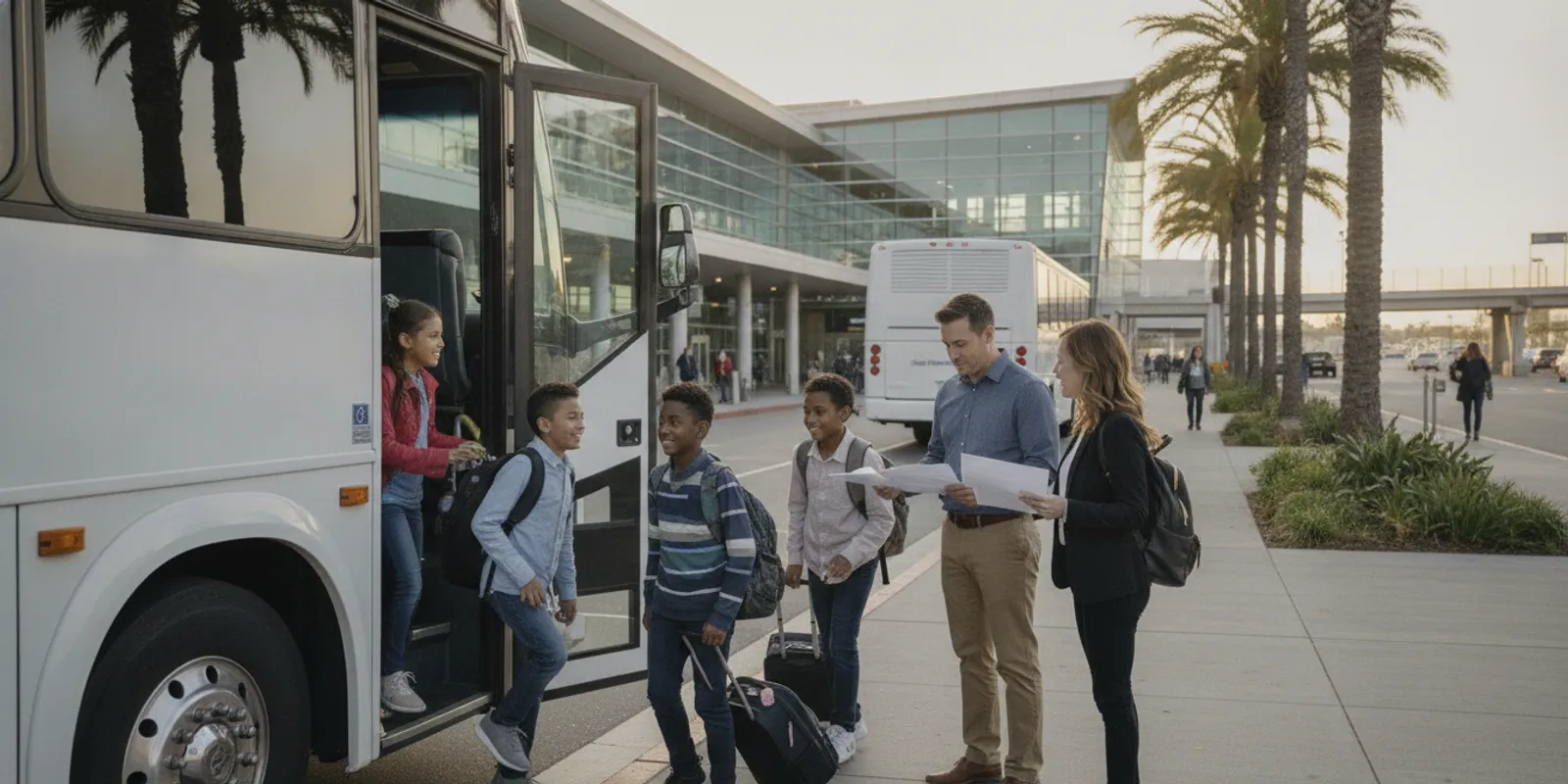
Students with luggage boarding a charter bus outside a Bay Area airport with school chaperones nearby

Call (415) 799-2744 or Request a Quote for Student Airport Transportation.

What should student airport transfer planning for Bay Area schools include?

Start by defining the transportation job in plain terms. “Airport transfer” can mean taking a group from campus to the airport, meeting arriving students and bringing them to school, moving students between terminals or a hotel, or coordinating several arrival and departure waves. Each version has different pickup points, timing, passenger counts, and supervision needs.

Write a short trip brief before comparing vehicles or asking for prices. Include:

  • Purpose and route: Identify the school or meeting location, airport, any intermediate stops, and the final destination.
  • Travel dates and flight schedule: Record scheduled arrival or departure times and note whether the trip includes multiple flights.
  • Passenger count: Count students, teachers, chaperones, and any other authorized riders separately. Add a process for updating the count if it changes.
  • Luggage estimate: Ask what students will bring and whether oversized items, instruments, sports equipment, or mobility devices need space.
  • Supervision plan: Name the adults responsible for attendance, student communication, and decisions if a flight or pickup changes.
  • Accessibility and individual needs: Identify requirements privately and early so the school can discuss a suitable arrangement.

A written brief makes the request easier to understand and reduces last-minute assumptions. If the trip is an academic outing beyond an airport movement, the school can also review practical guidance for renting a field trip bus and booking a bus for a school trip.

How can you choose the right vehicle for students and luggage?

Passenger capacity is only one part of vehicle fit. A group that technically fits by seat count may still need a different arrangement if everyone has a suitcase, instrument cases, team bags, or other bulky items. Share both the headcount and a realistic baggage estimate when you ask for options. Avoid planning to fill every seat unless the provider confirms that the passenger and luggage arrangement works for the vehicle.

Transportation option May suit Details to confirm
Passenger van or smaller vehicle A small party with limited luggage or a short connection Passenger limit, luggage capacity, and whether the group needs more than one vehicle
Minibus or shuttle-style vehicle A medium-size school group traveling together Seat count, baggage space, boarding location, and accessibility needs
Motor coach A larger group, or a group with substantial luggage that benefits from one coordinated vehicle Available seating and storage for the specific group, airport access and loading arrangements
Multiple vehicles Several flight waves, separate destinations, or a group too large for one vehicle Dispatch coordination, matching pickup times, adult assignments, and communication between vehicles

This is a planning comparison, not a substitute for a vehicle-specific recommendation. Ask the transportation provider to confirm the vehicle, usable capacity, and luggage arrangement against the actual itinerary. A school can review available options on the fleet information page and learn how charter bus transportation works. For a broader overview of planning a charter, see this charter bus rental guide.

How should a school coordinate airport pickups and drop-offs?

Do not treat the airport curb as the place to settle the itinerary. Identify the exact meeting and loading plan in advance, then confirm it with the transportation provider and the school’s trip lead. Airport procedures and available stopping locations can differ, so ask where the vehicle is expected to meet the group, whether the group should wait at a designated area, and what to do if students arrive in separate waves.

For a departure, work backward from the flight schedule with the school and provider. Allow time for the drive, traffic variation, unloading, and the airport steps the group must complete. The right buffer depends on the airport, airline instructions, group size, time of day, and school policy. Avoid presenting one universal arrival time as appropriate for every trip.

For an arrival, provide flight details and a practical contact plan. If multiple flights are involved, decide whether the group will travel in separate waves or gather before departing. Set a clear rule for who may authorize a change in pickup instructions. Students should know which adult to contact and where to wait if they cannot immediately locate the group.

Schools arranging an airport run can compare the scope of a dedicated San Francisco airport shuttle service with options for a group airport shuttle. When the trip begins at a home address rather than campus, the airport shuttle pickup guide may help clarify what pickup information to prepare. Check each service’s relevance to the planned school route and request confirmation for the exact trip.

What supervision and communication plan should accompany the ride?

The school should determine its own supervision requirements and assign responsibilities before travel day. A transportation provider supplies the ride; the school remains responsible for its student policies, permission process, and chaperone assignments. Do not assume that an adult will be available to supervise students unless that responsibility has been explicitly agreed. School leaders should confirm applicable policies and guidance directly with the district and relevant education authorities, including the California Department of Education; this article is a planning guide, not a substitute for school rules or individualized student arrangements.

It helps to distinguish transportation coordination from student supervision. The provider needs accurate trip details and a reliable adult contact, while the school decides who checks attendance, communicates with families, and makes decisions for students. Put those assignments in the trip plan rather than relying on everyone to infer them. If a flight is delayed or a student is not at the agreed meeting point, the adults should know who contacts the provider, who stays with the rest of the group, and who can authorize a revised plan.

Plan for predictable points of confusion, not only the ideal schedule. An airport may be busy, students may arrive at different times, and the pickup location may require the group to move from the terminal to a designated meeting area. Decide how the trip lead will identify the group, how students will confirm they have found the correct adult, and how the school will keep the roster current. For a multi-vehicle movement, assign students and chaperones to each vehicle before boarding and agree how the lead adult confirms all vehicles are ready to leave.

Before departure, give families and students a single, current set of instructions. Explain where and when to meet, what to do if a flight changes, which adult is the primary contact, and what students should do if they cannot find the group. Avoid sending conflicting pickup directions through several channels. If the itinerary changes, the trip lead should distribute one corrected version and confirm receipt with the adults who need it.

Make the plan straightforward enough that students and adults can follow it. The trip lead can prepare a roster, assign students to an adult or group, agree how attendance will be checked at each transition, and share a method for reaching the trip lead. Decide how the school will handle a late student, an unexpected flight change, a missed connection, or a student who needs individual assistance. Keep private student information within the appropriate school process rather than circulating it broadly.

  • Give chaperones the itinerary, provider contact details, pickup instructions, and an agreed escalation contact.
  • Tell students the meeting point, departure expectation, and what to do if they become separated from the group.
  • Use a reliable attendance check before departure and after each planned stop or vehicle change.
  • Decide in advance who can approve a changed destination, pickup time, or passenger list.
  • Share only the information each person needs to carry out their role.

If the airport trip is part of a larger school journey, compare the general considerations in the school bus versus charter bus guide. Schools planning longer academic transportation can also review available transportation services and confirm which arrangement fits the trip.

What should you include when requesting a quote?

A useful quote request gives the provider enough information to assess the route and group. It does not need to be complicated. Send one itinerary that includes dates, addresses or airport terminals when known, scheduled flight details, passenger and adult counts, luggage assumptions, and any special requirements. Mark information that is still tentative rather than presenting it as final.

Ask the provider to explain the proposed vehicle and what the quote includes. Request clarification about waiting time, extra stops, schedule changes, airport pickup coordination, and what happens if a flight is delayed. If the school is comparing options, ask each provider to quote against the same route, headcount, luggage estimate, and schedule assumptions. That makes the responses easier to compare.

Pricing depends on the itinerary and service details, so avoid assuming a generic rate will apply to the school’s trip. The private airport shuttle cost guide can help identify questions to ask about a price breakdown, but the provider must confirm the actual quote for the school’s plan.

Quote detail What to provide or ask
Route and schedule Pickup and drop-off locations, date, time, flight schedule, stops, and return movement if needed
Group size Student count, adult count, likely changes, and how separate flight groups should be handled
Vehicle fit Proposed vehicle, passenger capacity, baggage space, and accessibility arrangement
Service assumptions Pickup instructions, waiting time, airport coordination, and what is included in the quoted plan
Change process Who to contact and how schedule, flight, passenger, or destination changes are handled

How can student airport transfer planning for Bay Area schools support travel day?

Once the itinerary is confirmed, share a concise travel-day version with students, families, and chaperones through the school’s usual channels. Make sure the information reflects the final pickup location and time, not an earlier draft. Give the trip lead a current passenger list and a way to reach the transportation contact. Confirm the plan again with the provider as the date approaches, especially if flight or passenger details have changed.

On the day, the assigned adults can arrive early enough to organize the group, check attendance, and identify luggage before boarding. Keep students together while loading, and make sure the trip lead knows whether everyone is accounted for before the vehicle leaves. If the schedule changes, use the agreed contact path instead of asking students to relay revised instructions on their own.

For a Bay Area school, the same planning logic applies whether the trip starts in San Francisco, the Peninsula, East Bay, South Bay, or another part of the region: specify the exact pickup address, expected traffic and timing considerations, airport destination, and group needs. Do not rely on a city name alone to define a pickup location or route.

When is a dedicated group transfer a good fit?

A dedicated transfer may be worth exploring when the school wants students and luggage to travel together on a planned route, needs to coordinate a group rather than individual rides, or has several movement details to manage. It can also simplify planning when the school has a clear roster, adult assignments, and one primary itinerary. It is not automatically the right option for every group. Compare it with the school’s other approved arrangements and consider trip duration, group size, luggage, supervision, flexibility, and budget.

Epic Limousine provides ground transportation in the San Francisco Bay Area, including academic transportation and airport transfer services. Its fleet includes vehicle options across different passenger capacities; the specific match depends on the trip details. Schools can learn more about transportation services and share their requirements to discuss a suitable quote.

Call (415) 799-2744 to discuss the itinerary or Request a Quote for Student Group Transportation.

Frequently asked questions

How far in advance should a school arrange student airport transportation?

Start once the travel dates, flight schedule, and likely passenger count are available, especially if the group needs a specific vehicle arrangement. The school should ask the provider about availability and the lead time needed for its route. Confirm details again when the itinerary or roster changes.

Should students on different flights ride together?

That depends on the flight arrival times, school supervision plan, airport pickup arrangements, and how long students would wait. The school can compare one coordinated pickup with separate movements, then ask the provider how each option affects timing and vehicle arrangements.

What if the number of students changes?

Tell the provider as soon as the school knows the count has changed. Ask whether the vehicle and quote still fit, and update the passenger list and adult assignments. Do not assume a larger or smaller count can be accommodated without confirmation.

Can a school arrange transportation for students with accessibility needs?

Discuss the need with the provider early and share the relevant trip details through the school’s approved process. Ask what vehicle or boarding arrangements may be available and confirm that the proposed plan works for the student and the itinerary before finalizing it.

What information is most important for a first quote request?

Provide the date, pickup and drop-off locations, flight timing, student and adult counts, luggage estimate, and any known accessibility or schedule requirements. Identify which details are still tentative so the provider can explain what would change if the plan is updated.

A clear itinerary, confirmed supervision roles, and an honest passenger-and-luggage estimate give a school a stronger starting point for a coordinated airport transfer.

Ready to plan student airport transportation? Call (415) 799-2744 or Request a Quote.