
Irwan Tio

Lake Tahoe Ski Bus Planning from San Francisco

For a Bay Area group, a Tahoe ski day is easier to manage when transportation is planned as one coordinated itinerary instead of a collection of separate cars. Pickup timing, resort access, winter conditions, luggage, and ski equipment all affect the plan.
Request a Quote

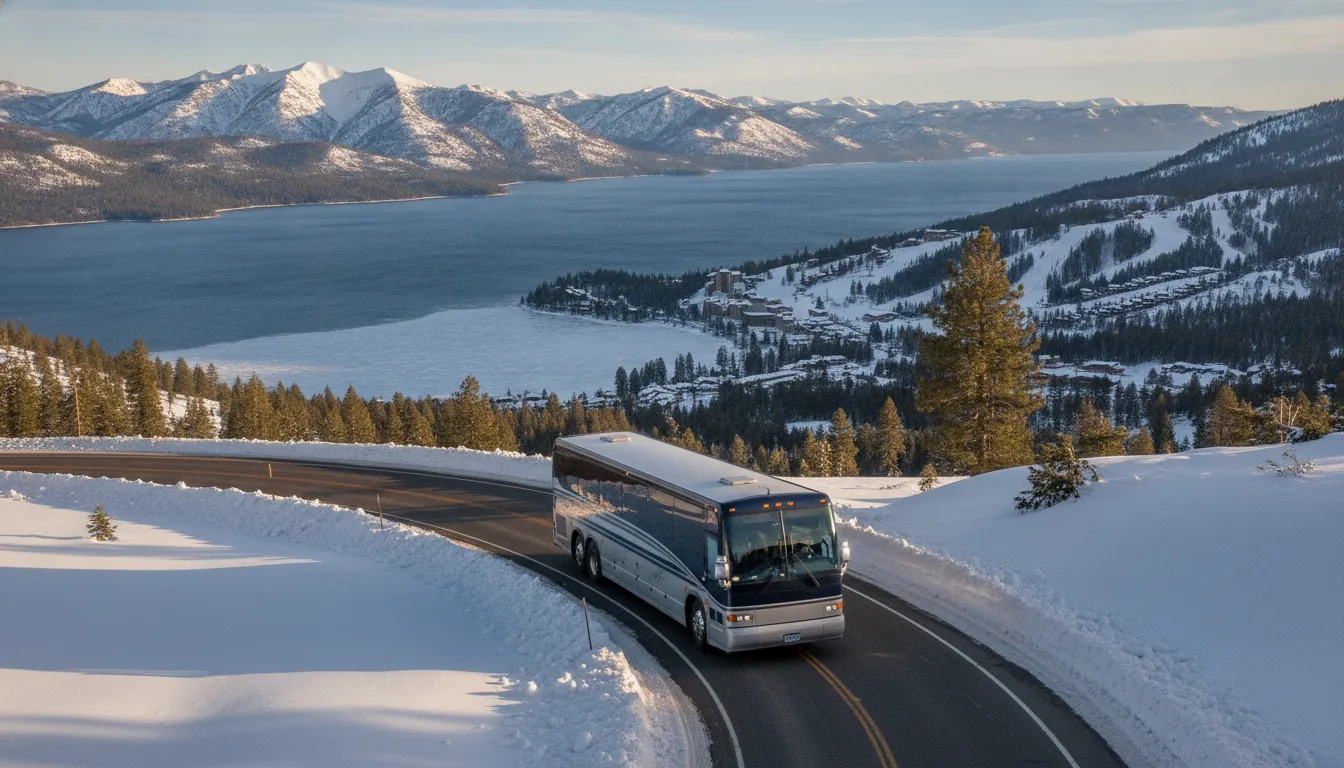
Motor coach traveling through the Sierra Nevada toward Lake Tahoe

Lake Tahoe ski bus planning from San Francisco means confirming group size, pickup locations, Tahoe destination, travel date, gear needs, schedule flexibility, and winter-road contingencies before requesting a private charter quote.

These details help match the vehicle and itinerary to the group.

The first step is distinguishing a private group charter from public scheduled transportation, then documenting the decisions your provider needs to build a practical plan.

What Does Lake Tahoe Ski Bus Planning from San Francisco Involve?

Lake Tahoe ski bus planning from San Francisco involves coordinating the group, pickup details, destination, vehicle configuration, and winter travel expectations before requesting a customized quote. The goal is to arrange one private charter for your travelers, rather than fit your plans around a public scheduled bus.

Request a Quote

A private group charter is arranged around your party’s needs. You provide the preferred pickup area, travel date, Tahoe destination, passenger count, luggage needs, and desired itinerary. The provider can then confirm which vehicle and configuration fit the trip. Ask specifically about room for skis and snowboards, passenger seating, storage, rest stops, and the communication plan for changing mountain-road conditions. Do not assume that every vehicle offers the same amenities or storage capacity.

This differs from a public scheduled bus, which typically operates according to an established route, stop pattern, and timetable. A private charter is better suited to groups that want coordinated pickup and drop-off planning, but availability and operating details still need to be confirmed directly. Epic lists long-distance transportation to Lake Tahoe ski resorts and offers vehicles ranging from 14-passenger Sprinter vans and 20-35-passenger minibuses to larger group options.

The dedicated San Francisco ski bus transportation service page explains the related service offering. This guide takes a narrower approach. It focuses on capacity, equipment, pickup coordination, and winter contingencies for a Lake Tahoe trip.

Start with a clear passenger count and destination, then ask for a quote that reflects the actual itinerary. Epic uses customized, quote-based pricing rather than a fixed ski-trip fare.

How Should You Plan the Route and Resort Details?

Plan the route around your group’s pickup needs, chosen resort, travel dates, equipment, and any planned stops. A private itinerary should be specific enough for the operator to quote accurately, while flexible enough to account for mountain traffic and winter road conditions.

Start with the pickup plan

List every pickup location before requesting a quote. Include neighborhood or city, exact address, preferred meeting point, and the number of passengers boarding at each stop. A centralized pickup can simplify the route, while multiple stops may help a dispersed group avoid separate drives. Be realistic about loading time for skis, snowboards, luggage, and winter clothing.

Choose the resort before finalizing the itinerary

Lake Tahoe trips can have very different logistics depending on whether your group is headed to Heavenly, Northstar, Kirkwood, Sugar Bowl, Homewood, or another destination. Compare the resort’s location with your group’s experience level, lodging, lesson plans, and preferred activities. Epic’s guide to ski destinations near San Francisco can help narrow the destination before you plan the vehicle route.

Put dates, stops, and return needs in writing

Share the departure date, return date, desired arrival window, and whether the trip is a day excursion or an overnight stay. Then identify useful stops, such as a meal, grocery run, lodging check-in, or a second resort area. Do not assume every stop fits efficiently into the route. Ask the provider to review the sequence and explain how additional stops affect the quote.

Private group transportation differs from public transit because the vehicle plan is built around your group’s pickup points and destination rather than a published network. Tahoe Transportation District provides links to public and private operators serving the basin, but those services may use their own routes, stops, and operating conditions. For mountain travel, review Caltrans winter driving tips and check current roadway conditions, chain controls, and closures before departure.

Which Vehicle Size Fits a Tahoe Ski Group?

The right vehicle depends on passenger count, personal luggage, ski and snowboard equipment, and how much room your group needs for a comfortable ride. Use the capacities below as a starting point, then confirm the actual vehicle configuration, storage capacity, and amenities with the transportation provider before booking.

Vehicle options for a Lake Tahoe ski group

Vehicle option Listed capacity Best planning use Confirm before booking
14-passenger Sprinter Up to 14 passengers Small families, friends, or compact groups traveling together Interior luggage room and how skis or snowboards will be carried
20-35 passenger mini bus 20-35 passengers Medium-sized groups that need more capacity than a van Seat layout, undercarriage storage, and available space for winter gear
36-56 passenger motor coach 36-56 passengers Larger groups taking a longer-distance trip to a Tahoe resort Exact passenger layout, luggage compartments, restroom availability, Wi-Fi, and ski storage
47-56 passenger charter bus 47-56 passengers Large groups, including extended or multi-day travel plans Specific bus assignment, luggage capacity, amenities, and equipment-storage arrangements

Capacity is not the same as usable space

A vehicle that technically seats your group may not provide enough room once every passenger brings a suitcase, boots, helmets, skis, or snowboards. Ask whether equipment can be stored safely without blocking seats, aisles, or emergency access. If your group has children, bulky winter clothing, or multiple bags per traveler, leave practical space beyond the seat count instead of booking to the exact limit.

Epic Limousine lists Sprinter vans, mini buses, motor coaches, and charter buses in its fleet. You can compare fleet options, then ask which specific configuration fits your group and destination. For larger parties, the Bay Area motor coach rental guide provides additional planning context. Confirm the final vehicle, storage plan, and amenities in writing because availability and configuration can vary.

What Winter Travel Contingencies Should You Discuss?

Discuss the decision points before departure, not just the preferred itinerary. A practical plan covers current weather and road checks, possible chain controls or closures, extra time, group communication, and clear choices if conditions change.

Check conditions close to departure

Mountain conditions can change after a group confirms its itinerary. Assign someone to review the forecast and current roadway information before leaving San Francisco, then establish who will monitor updates during the trip. Caltrans recommends checking roadway conditions, chain controls, and closures through QuickMap and its winter driving guidance before heading into the mountains.

Ask the transportation provider how the latest information will be shared and which conditions would trigger a schedule discussion. Do not assume a normal route, destination access, or arrival time will remain appropriate during an active storm.

Build time for slower or changed travel

A ski-day schedule should have more flexibility than a summer itinerary. Allow a buffer for reduced speeds, traffic near mountain passes, vehicle checks, parking-area congestion, or a temporary closure. If the group has lessons, reservations, a dinner booking, or a return cutoff, tell the provider early so those constraints can be considered during planning.

Keep the group aligned on what happens if the original plan cannot proceed. Options may include delaying departure, changing the pickup or drop-off sequence, shortening the day, moving to a safer meeting location, or postponing the trip. The provider can explain what is operationally feasible, but the group organizer should identify which priorities matter most before winter weather creates pressure.

Agree on communication and decision ownership

Use one organizer as the primary contact and give every traveler a backup communication method. Share the planned meeting point, update times, and the process for notifying the group about a delay or itinerary change. Bay Area charter bus planning is useful context for assigning responsibilities and keeping a larger group coordinated.

Before booking, ask specific questions about weather-related rescheduling, cancellation terms, alternate routing, and who makes the final safety decision. Winter planning is stronger when those answers are documented rather than left to the morning of travel.

What Should You Include in a Ski Bus Quote Request?

A useful ski bus quote request gives the transportation provider enough detail to evaluate the vehicle, itinerary, and operating requirements for your group. Clear information also supports more accurate quote-based pricing, since the cost is customized to the trip rather than tied to a fixed ski fare.

  1. Date and travel window: State the travel date, return date if applicable, and your preferred departure and return windows. If the schedule is flexible, say so. Do not assume a provider can guarantee a particular mountain arrival time before the route and winter conditions are reviewed.
  2. Pickup location: Provide the San Francisco address or pickup area, along with any additional Bay Area stops. Mention parking, loading restrictions, apartment access, campus procedures, or other details that could affect boarding.
  3. Destination: Name the Lake Tahoe resort, lodging property, or other final destination. If the group will visit more than one location, list each stop so the itinerary can be evaluated accurately.
  4. Passenger count: Give the expected number of travelers and identify whether the count may change. Vehicle options can range from a 14-passenger Mercedes Sprinter to larger buses and motor coaches, so an accurate headcount matters.
  5. Ski and snowboard gear: Describe the equipment passengers will bring, including skis, snowboards, boots, luggage, and bulky winter items. Ask how the proposed vehicle handles storage and whether the configuration leaves enough comfortable seating.
  6. Vehicle requirements: Explain any preferences for seating capacity, restroom access, luggage compartments, Wi-Fi, or other amenities. Epic describes larger motor-coach options as seating 36-56 passengers, but the exact configuration should be confirmed for your quote. You can review motor coach rental costs while comparing options.
  7. Stops and itinerary: List planned meal stops, lodging transfers, sightseeing, equipment pickup, or other intermediate stops. Include whether the vehicle needs to remain with the group throughout the trip.
  8. Questions for the provider: Ask what credentials and authorizations apply to the service, such as USDOT, CPUC, or California TCP information. These questions help you evaluate a provider, but credentials alone do not guarantee winter-road conditions, vehicle availability, or a specific outcome. Include your name, email, and best phone number, then request a motor-coach group quote.

How Can You Keep the Group Organized on Travel Day?

The simplest way to keep a ski group organized is to give everyone one shared plan, one confirmed meeting point, and one person responsible for communication. Before departure, confirm the details with the transportation provider, then distribute the final version to every passenger so no one is relying on scattered messages or assumptions.

Build one travel-day manifest

Create a single manifest with passenger names, mobile numbers, the group leader’s contact information, and the expected number of skis, snowboards, bags, and other bulky gear. Count equipment separately from passengers. A vehicle that fits the headcount may still require a different configuration when the group is carrying winter equipment.

Vehicle capacity varies by option. Epic describes Mercedes Sprinter vans for 14 passengers, mini buses for 20 to 35, and full-size motor coaches and buses for 36 to 56 passengers. Some configurations may include luggage compartments, but the exact layout and amenities should be confirmed for the vehicle quoted.

Confirm the meeting point and timing

Write the pickup address, neighborhood, arrival instructions, and a recognizable meeting point into the itinerary. If the location has multiple entrances, loading areas, or access restrictions, ask the provider how the group should identify the correct spot. Do not assume that a familiar hotel entrance or public curb will work for a larger vehicle.

Use a time buffer that accounts for people arriving separately, loading equipment, and changing mountain-road conditions. A flexible plan is more useful than promising an exact travel time. Before leaving, check current roadway conditions, chain controls, and closures through Caltrans QuickMap, then share any meaningful changes with the group.

Keep communication simple

Choose one lead contact for the provider and one backup contact for passengers. Ask the provider to confirm the agreed itinerary, passenger count, gear expectations, and vehicle configuration before travel day. On the morning of the trip, use one group message for check-in updates rather than allowing multiple passengers to send conflicting instructions.

For help reviewing the trip details, contact Epic Limousine and provide the group size, pickup plan, destination, and equipment count. Call (415) 799-2744 with the same information when discussing the final arrangements.

Is a Private Ski Bus Right for Your Lake Tahoe Trip?

A private ski bus is usually a strong fit when a group wants one coordinated pickup and a designated transportation plan from San Francisco to Lake Tahoe. It is especially useful for families, corporate groups, school or athletic organizations, and friends traveling with substantial gear. A private charter can simplify coordination, but it is not automatically the best choice for every party.

Consider a private vehicle when your group benefits from traveling together, needs a flexible pickup plan, or wants to avoid asking multiple drivers to navigate a mountain trip. Epic Limousine lists Lake Tahoe ski-resort transportation among its long-distance services, including destinations such as Heavenly, Northstar, Kirkwood, Sugar Bowl, and others. The right vehicle depends on the headcount, luggage, skis and snowboards, meeting points, and requested itinerary.

Separate cars may make more sense for a very small group, travelers with different departure times, or people who plan to split up at the destination. Public transit can also be worth considering when its routes and operating times match your plans. Tahoe Transportation District provides regional connections information covering public and private transit operators, but scheduled transportation is a different product from a private group charter.

Questions to answer before choosing

  • How many passengers are traveling, and is the headcount firm?
  • Where should the vehicle meet the group in San Francisco or the Bay Area?
  • How much ski, snowboard, and personal luggage must be accommodated?
  • Does the group need one destination, multiple stops, or a return itinerary?
  • What communication plan will keep everyone informed if winter conditions affect the schedule?

For practical lake tahoe ski bus planning from san francisco, compare the convenience of one organized vehicle with the flexibility of separate travel. Review San Francisco ski bus transportation details, then confirm the vehicle, equipment space, pickup plan, and winter contingencies directly with the provider.

Request a Quote

Frequently Asked Questions

How do I get from San Francisco to Lake Tahoe by bus?

For a private group, start with the pickup area, travel date, Tahoe destination, passenger count, and return plan. A provider can then recommend a Sprinter van for up to 14 passengers, a mini bus for 20-35, or a larger motor coach for groups of 36-56.

Is a private ski bus different from a scheduled shuttle?

Yes. A private charter is planned around your group’s pickup time, stops, resort, equipment, and return schedule. A scheduled shuttle follows the operator’s published route and departure structure, so confirm availability, ticketing, baggage rules, and final drop-off details directly with that operator.

How should we handle skis and snowboards on the bus?

Tell the provider how many skis, snowboards, boots, and personal bags the group expects to bring. Ask where equipment will be stored, whether the selected vehicle has adequate luggage capacity, and whether the seating layout changes usable storage space. Confirm the configuration before booking.

What should we check before traveling to Tahoe in winter?

Build flexibility into the itinerary and establish a day-of communication plan. Check roadway conditions, chain controls, and closures through Caltrans QuickMap and winter-driving guidance before departure, then ask the provider how weather-related updates and schedule changes will be communicated.

What details do we need for an accurate ski bus quote?

Provide the passenger count, pickup addresses, destination resort, travel dates, desired departure and return windows, planned stops, equipment volume, and accessibility needs. Pricing is quote-based and customized, so ask what vehicle configuration, amenities, storage, and service hours are included rather than relying on a fixed trip price.

Get Started with Your Lake Tahoe Group Plan

A clear trip outline helps your group compare vehicle options, confirm pickup details, and discuss winter travel contingencies before booking. Request a Quote for tailored Lake Tahoe group transportation from Epic Limousine, or call (415) 799-2744 to talk through your plans.
Tahoe Transportation for Bay Area Winter Groups

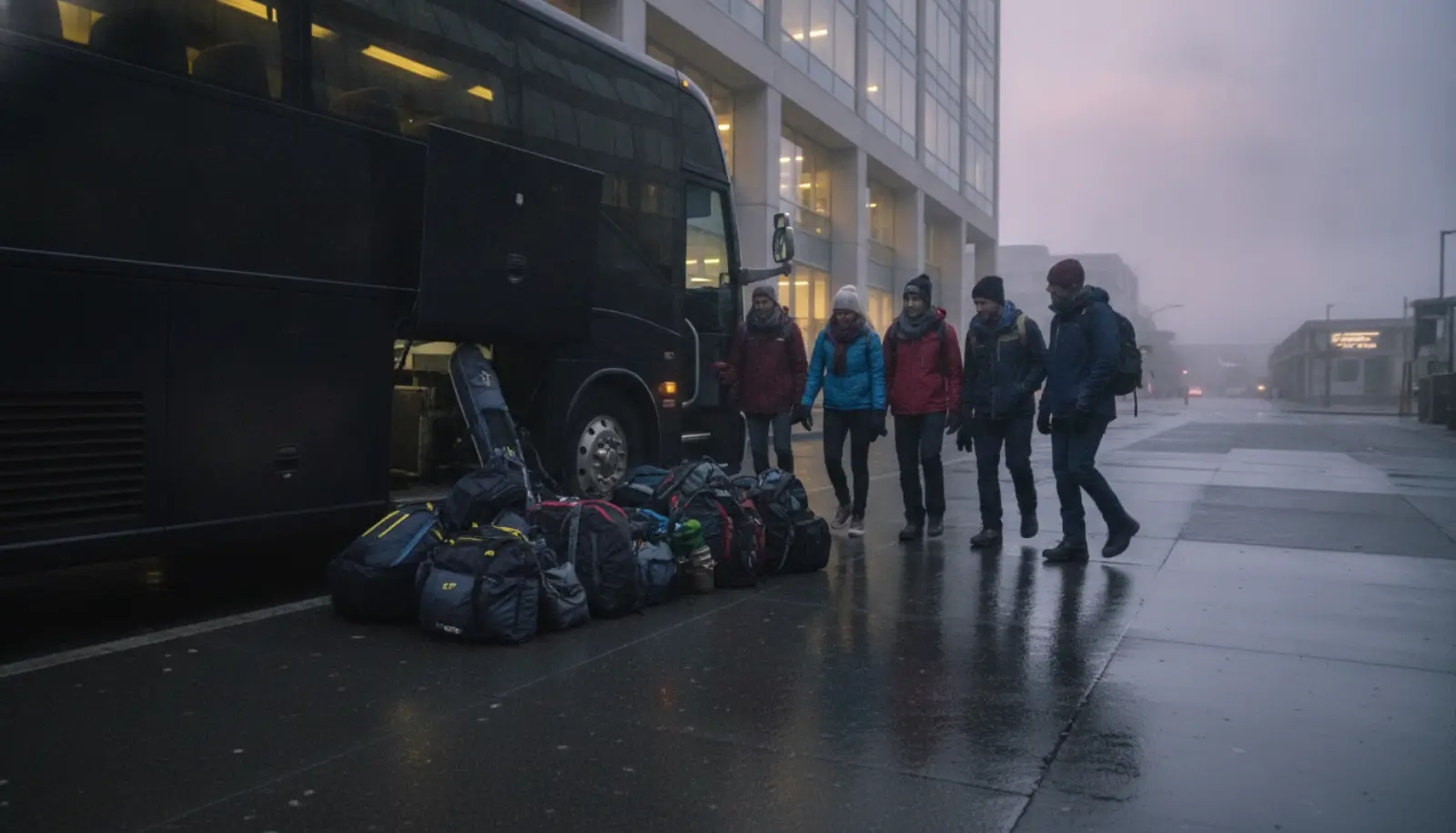
Tahoe transportation for Bay Area winter groups is a private charter built around one shared trip, not a stack of cars and not a public ski bus. The plan has to name the group type, the destination, the gear, and who can change the schedule when the pass slows down.

A charter coach loading ski bags for Tahoe transportation for Bay Area winter groups

Request a Quote

Name the trip shape before you talk about seats. A company offsite, a school or college trip, a team travel day, and a visiting group do not need the same boarding plan. Epic Limousine matches the vehicle after that brief is real. Phone the office at (415) 799-2744 when you want a person to walk through it.

What Does Tahoe Transportation for Bay Area Winter Groups Include?

It includes one private movement from the Bay Area to a Sierra destination and back, with the people, bags, and decision maker on a single plan. The destination is often a Lake Tahoe resort. It can also be a lodge that is not on the slopes.

Start with who is traveling, not with a bus photo. A company has one budget and one lead. A school or college trip has chaperones, a roster, and rules about who may change a stop. A team is carrying more equipment than a social group. Visitors often need a hotel pickup and a return that matches a flight or a tour.

This guide is about that choice. It is not a minute-by-minute ski-day checklist. Epic’s Lake Tahoe ski bus planning guide covers pickups, gear loading, and a straightforward mountain day from San Francisco. Use that page when the trip is already a simple ski day. Use this one when you still have to decide what kind of winter group you are moving.

The service home is ski bus and ski resort transportation. That page lists the mountain service. It does not write the brief for a mixed group. Confirm miles and drive time for the exact door, date, and traffic. A clear-day map is not the plan.

Which Bay Area Winter Group Are You Moving?

Sort the group before you request a vehicle. The same headcount can be a leadership crew, a class, a roster of athletes, or a tour. Each one fails in a different way if the quote only says “bus to Tahoe.”

Use the rows below as a conversation, not as a guaranteed assignment. Epic confirms the vehicle from the roster, the bags, and the date.

Group What the quote must capture Where to start
Company offsite or client retreat. Office or hotel boarding, session times, and one lead who can delay the agenda. Corporate event transportation.
School, college, or campus group. Chaperone count, roster rules, and who may approve a stop or a delay. College and academic charter pages.
Team or club travel. Skis, boards, sticks, or bags that a seat count hides. Athletics and team travel.
Visiting or tourism group. Hotel pickup, a return that matches a flight or tour, and a guide contact. Tourism and city-tour planning.

Company groups can start from corporate event transportation when the mountain day is one piece of a larger program. School and campus groups should read college and university transportation for how a campus charter is usually scoped. The college group transportation guide covers event rosters in the city. Bring the winter facts back to this page. Teams should look at athletics and team travel before they count bins. Visitors who are in town for more than the mountain can use city tour transportation for visiting groups for the Bay Area days. Keep the Sierra leg in this request so the two plans stay tied together.

A retreat that is not a ski trip belongs on the company retreat transportation guide. Do not force a summer offsite into a winter-road plan.

How Do You Choose the Trip Shape?

Choose a day trip, an overnight, or a split return before the agenda hardens. The shape decides the boarding points, the gear, and how much buffer the first session needs. North Shore and Truckee trips usually stay on I-80 over Donner Pass. South Lake Tahoe trips often use I-80 toward Sacramento, then US-50. The shore changes the weather exposure. It does not change the need for a written plan.

Lock the shape in this order:

  1. Name one destination door, not a wish list of three resorts.
  2. Say whether the group returns the same day or stays through a set checkout.
  3. Put the first timed activity at least an hour after a realistic arrival.
  4. Limit boarding to one or two Bay Area points, such as an office and a hotel.
  5. Count people and odd bags at each stop before anyone talks about seats.
  6. Name the lead, and a backup, who can move a session if the pass slows down.
  7. Hold a backup date if the trip sits on a peak holiday weekend.

Epic’s ski resort page says the service covers Dodge Ridge, Sierra-at-Tahoe, Sugar Bowl, Boreal, Bear Valley, Kirkwood, Heavenly, Palisades Tahoe, and Northstar. Confirm the exact property when you request the trip. A lodge across the lake from the lifts is a different stop. Friends who already know the resort and only need a ski-day charter should stay on the ski bus guide.

Airport pickups are a separate job from the mountain leg. If visitors land at SFO, OAK, or SJC and then go to Tahoe, say so in the same brief. Do not assume the mountain coach is also the airport meet.

What Gear and Vehicle Facts Belong in the Brief?

Match the vehicle to people plus equipment. Skis, snowboards, boot bags, suitcases, coolers, and team bins take space a headcount hides. A group that fits on paper can still be the wrong vehicle once the bay is full.

Tell Epic which of these is true, then let the fleet assignment follow:

  • A smaller crew that wants a direct office or hotel pickup, closer to a Sprinter-style vehicle.
  • A mid-size class, club, or department that needs a minibus and two boarding points.
  • A larger company, campus, or touring group that needs a motor coach and luggage bays.
  • Two vehicles, when one roster must leave later for a class, a game, or a client call.
  • An accessibility need, or an item that is not a normal bag, called out before the quote.
  • A restroom request on a long climb, which changes the coach you should discuss.

Review Epic’s fleet for the range, and the motor coach group booking page when the group is large. A smaller corporate crew can read Sprinter van rental for corporate outings. Amenities such as outlets are covered in the motor coach amenities guide. That page is not a winter plan. Do not treat any seat count here as a promise. Final fit depends on the date and the bags.

How Should the Group Plan for Sierra Weather?

Plan a buffer and a decision owner. Winter travel over Donner Pass and US-50 can add chain controls, slower speeds, and short closures. The group should decide in advance who can move a session, a practice, or a tour stop.

Caltrans posts three chain-control levels, and the group should know them before departure morning. At R-1, chains are required on most vehicles. Passenger cars and light trucks under 6,000 pounds may proceed with snow tires on two drive wheels, but those vehicles must still carry chains. At R-2, the exception narrows to four-wheel or all-wheel drive vehicles with snow-tread tires on all four wheels, and those vehicles must still carry traction devices. At R-3, chains are required on every vehicle, with no exceptions. When signs require chains, the posted speed limit is 25 or 30 miles per hour. Read the Caltrans chain control guide, and call the Highway Information Network at 800-427-7623, before the coach leaves.

Buses follow the posted control, including truck chain rules when the vehicle weight requires chains. Epic assigns the vehicle and driver for the date. The group still owns the agenda around that ride. A highway is often closed before an R-3 control is posted, so a closure plan matters more than a chain speech in the cabin.

Keep the first commitment movable, and put the go-or-delay call with one lead. Check Caltrans QuickMap the evening before and again that morning. Tell riders what a closure means: wait, reroute, or move the trip. Do not add resort-to-resort hops on a storm day unless they were in the quote.

What Should Each Group Leave Room For?

Leave room for unloading and a human break before the first timed event. People who have been on the road since dawn do not walk straight into a meeting, a lesson, or a warm-up at full speed.

Protect these blocks, then add the one that matches your group:

  • A headcount before the coach rolls, with a published cutoff for late riders.
  • A drive window plus a weather buffer, confirmed for that date rather than a clear Tuesday.
  • Time to unload gear and walk to the lodge, the rental shop, or the team meeting point.
  • A return meeting point that is a real door, not “somewhere near the lifts.”
  • A sweep for forgotten boots, sticks, and chargers before the ride home.
  • For a company, a movable first session and one lead who can slip a dinner.
  • For a school or college, chaperones at boarding and a rule for who may leave the vehicle.
  • For a team, extra time when bins and sticks come off before any warm-up.
  • For visitors, a hotel return that still protects a flight or the next tour stop.

Grocery, rental-shop, or in-town dinner stops belong in the quote. A stop that appears at the curb spends the buffer you built. Local event habits from organizing transportation for a corporate event still apply to a company group. The mountain version adds gear counts and a weather call.

What Belongs in the Tahoe Transportation Quote?

Send a brief that lets Epic price the movement. A one-line request for a bus to Tahoe leaves out the facts a dispatcher cannot guess. Use the contact form or call (415) 799-2744, and put the same facts in writing.

Work through the brief in this order:

  1. Group type: company, school or college, team, or visiting group, plus the lead’s mobile number.
  2. Travel dates, and whether this is a day trip or an overnight.
  3. Destination address, plus any lodging, dinner, or rental-shop stop.
  4. Passenger count, and whether the roster can still change.
  5. Bay Area boarding points, in order, with rider counts at each.
  6. Skis, boards, boot bags, suitcases, and any odd item such as a cooler or a team bin.
  7. The first timed commitment and the latest acceptable return.
  8. A second vehicle, an accessibility need, or an airport meet, if either is real.

Skip seat-only price shopping. A quote that ignores gear, stops, and a storm buffer is not comparable to one that includes them. Epic prices from the itinerary. There is no public rate card that replaces this brief.

If the winter trip is only one piece of a company program, keep the mountain dates in the same request as luxury group transportation for corporate events. Campus groups can do the same with their academic page. Do not split the Sierra leg into a second, thinner email.

Request a Quote

Frequently Asked Questions

Is this the same as a Lake Tahoe ski bus from San Francisco?

No. The ski bus guide plans a straightforward mountain day: pickups, gear, and winter contingencies. Tahoe transportation for Bay Area winter groups starts earlier. It sorts companies, schools, teams, and visitors, then builds the quote around that trip shape.

Can a school or college group use the same charter as a company?

Yes, when the brief says so. Add chaperone counts, roster rules, and the person who may approve a delay. A company brief instead names session times and one budget owner. The vehicle follows those facts, not a shared template.

Do team trips need a different vehicle?

Often they need more bay space, not a different kind of company. Sticks, bins, skis, and boots can overflow a vehicle that seats the roster. Count that gear in the quote so Epic can confirm the fit.

Can visitors fly into the Bay Area and continue to Tahoe?

Yes, if the airport meet and the mountain leg are both in the request. SFO, OAK, and SJC are not the same stop as a San Francisco hotel. Say which one, and what time the flight actually lands.

Which resorts can the request name?

Epic’s ski resort page lists Dodge Ridge, Sierra-at-Tahoe, Sugar Bowl, Boreal, Bear Valley, Kirkwood, Heavenly, Palisades Tahoe, and Northstar. Confirm the exact door. A different lodge is fine when you write the address.

What if chain controls or a closure hit the pass?

The group lead and Epic should follow Caltrans and California Highway Patrol instructions for that hour. The first commitment should be movable. A closure can mean a delay, a reroute, or a postponed departure.

How early should a winter group book?

Start when the destination hold and the headcount are real, especially for December through March weekends. Winter dates and coach inventory move together. Early booking leaves time to change vehicles if the gear list grows.

Send the Brief Before the Agenda Hardens

Tahoe transportation for Bay Area winter groups works when the lead treats the mountain drive as part of the trip. Set the group type, the destination door, the boarding points, the gear count, and a weather buffer before the first session, lesson, or tour stop is locked. Epic Limousine can then match a vehicle and a driver to that plan.

Call (415) 799-2744 or send the brief through the contact page. Include the dates, the roster, the stops, and the equipment. One lead should own changes after that.

Request a Quote

Funeral Transportation Planning for Bay Area Families

When a family is coordinating a funeral or memorial across the Bay Area, transportation can become one more difficult detail during an already emotional time. Clear information about passengers, pickup points, and service times helps everyone travel with fewer surprises. Include cemetery arrangements and reception stops in the plan. This keeps attention where it belongs: honoring the person who has passed.

Funeral transportation planning for bay area families should begin with the passenger list, locations, timing, mobility needs, and number of stops. Share those details with the funeral home, venues, cemetery, and transportation provider. This helps confirm the vehicle, route, and service plan before the ceremony.

Request a Quote

Call (415) 799-2744 to discuss the transportation details.

The first decision is not always the vehicle. It is understanding who needs transportation and how the day will unfold. From there, families can make practical choices about group size, route coordination, comfort, and timing.

What Should Families Decide First?

Start by clarifying who needs transportation and where everyone must be picked up. List the locations that are part of the day. A simple outline helps the funeral home, family contact, and transportation provider work from the same information.

First, prepare a passenger list. Include immediate family, close relatives, members of the funeral party, and anyone who may need a separate pickup. Note an approximate count instead of relying on a last-minute estimate. If the group may change, identify the expected range. Tell the provider that the list is still being finalized.

Map the people and locations

List every relevant address in order. Include homes, hotels, the funeral home, place of worship, cemetery, reception venue, or another agreed meeting point. Add the preferred pickup time for each location. Note whether passengers will travel together or meet at one central point.

Bay Area plans may cross San Francisco, the Peninsula, the East Bay, the South Bay, or the North Bay. Route details matter when building a realistic schedule.

Also record practical access information. Tell the provider about stairs, narrow driveways, steep streets, limited loading areas, mobility concerns, service animals, or a need for boarding assistance. These details do not guarantee a vehicle or feature. They give the provider information needed to discuss options and confirm availability.

Choose one family contact

Designate one person to approve the itinerary and communicate changes. That contact should have the final passenger list, addresses, service times, cemetery or venue instructions, and names of people who may need extra assistance. A single point of contact reduces conflicting updates during an already difficult day.

When speaking with a provider, ask who will confirm the itinerary and how changes should be reported. Ask what vehicle configurations are available and whether the planned stops can be accommodated. Review available vehicle options for general planning context. Learn more about the family-owned transportation team. Submit completed details through Request a Quote.

How Do You Match Vehicles to the Group?

Match the vehicle to the confirmed passenger count, pickup points, and mobility needs. Use the ranges below as general fleet references. Confirm the vehicle, availability, boarding requirements, and route details with the provider.

Use these general ranges for planning. Confirm the vehicle and seating arrangement with the provider.

Vehicle capacity references.

Vehicle type. General capacity. When it may fit.
Sedan 3-4 passengers. A small family group or individual household.
SUV 6-7 passengers. A small group traveling together with personal space.
Stretch limo 8-10 passengers. A medium-sized group using one shared vehicle.
Mini bus 20-35 passengers. A larger family group or coordinated guest transportation.
Motor coach 36-56 passengers. A large group traveling between multiple locations.

Start with the passenger list

Count everyone who needs transportation, not only the immediate family. Include relatives arriving from different parts of the Bay Area and members of the ceremony party. Add guests who may join for a cemetery visit or reception.

A little extra room can make boarding and settling in less stressful. A much larger vehicle may not fit the group’s preferred arrangement.

Consider the complete route

Vehicle size should reflect more than the number of seats. Share the planned pickup locations, place of worship or funeral home, cemetery, reception venue, expected stops, and any standby period.

A sedan or SUV may suit a small, direct trip. A mini bus or motor coach can simplify coordination when many people follow one itinerary. Epic Limousine’s available vehicle options can help families review the fleet range before discussing details.

These capacities are planning references. They do not guarantee that every vehicle will be available for a funeral or memorial service. Confirm the exact vehicle, seating configuration, personal-item needs, boarding assistance, and accessibility questions in advance.

Give the provider an accurate passenger count and itinerary. The recommendation can then reflect the actual day rather than a generic vehicle category.

How Can Families Simplify the Itinerary?

Build the itinerary around every required location, the people traveling, and the time they need to board comfortably. A useful plan names each pickup, service stop, cemetery or reception destination, and contact person before the first vehicle arrives.

  1. List the locations. Write down home or hotel pickups, the funeral home, place of worship, cemetery, reception venue, and any planned return trips. Confirm complete addresses and the best loading area for each stop.
  2. Set the service schedule. Record arrival times, not only the start of the ceremony. Families may need time to gather, greet one another, load personal items, and move from the vehicle to the venue without rushing.
  3. Group passengers thoughtfully. Note who should travel together, who may need extra boarding time, and who will carry important items. A smaller family group may fit a sedan or SUV, while a larger gathering may need a bus or multiple vehicles.
  4. Confirm access at each stop. Ask the funeral home, cemetery, church, and reception venue about entrances, parking, loading zones, gates, and any restrictions that could affect a large vehicle. Access can vary from one property to the next.
  5. Build in practical buffer time. Bay Area traffic, venue procedures, passenger loading, and cemetery access can all affect the schedule. Ask the transportation provider how much time to allow between stops rather than treating a map estimate as a promise.
  6. Choose one family contact. Give the provider one person who can answer itinerary questions and communicate changes. This keeps grieving relatives from receiving conflicting instructions during the service day.
  7. Share the final version. Send the confirmed pickup windows, addresses, passenger groupings, and contact information to the family and provider. Keep one copy available to the person coordinating the day.

Epic supports planning for transportation between funeral homes, cemeteries, and other locations. Review the funeral and memorial transportation services page for the service context, then use the contact page to discuss the actual itinerary. Families coordinating larger groups can also review the available vehicle options before requesting a recommendation.

The goal is not to create a complicated document. It is to give the family, venues, and transportation team the same practical information so the day can move with care and fewer surprises.

Request a Quote

How Can Families Coordinate a Respectful Procession?

A respectful procession starts with one shared itinerary, one family point person, and clear communication between the transportation provider, funeral home, place of worship, cemetery, and reception venue. Confirm the vehicle order, pickup sequence, arrival windows, parking or loading instructions, and the best way to communicate changes before the day begins.

Set the vehicle order and pickup sequence

Write down which passengers are traveling together and where each vehicle fits in the plan. A common arrangement may place immediate family in one vehicle, with additional relatives or friends following in another. But the right order depends on the family’s wishes and the locations involved. List every pickup address, passenger name or group, meeting point, and planned departure time. This gives chauffeurs a clear working itinerary without requiring relatives to coordinate details from separate cars.

For larger groups, confirm whether everyone will travel in one vehicle or whether multiple vehicles will move together. Epic Limousine’s fleet includes options ranging from sedans and SUVs to larger group vehicles. But vehicle fit and availability should be confirmed against the actual passenger list and route. Keep the plan practical rather than assuming that a particular vehicle will be appropriate for every family member.

Confirm access at every location

Ask the funeral home, place of worship, cemetery, and reception venue where vehicles should enter, wait, load, and unload. Some properties may have separate entrances, narrow drives, restricted loading areas, or parking instructions that are not obvious from a map. Share those details with the transportation provider in advance, including any walking distance that may matter to older adults or guests with mobility concerns.

It is also useful to identify a family point person who can answer questions without interrupting other relatives. That person can confirm when the group is ready, relay a venue instruction, and approve a route or timing adjustment if circumstances change. Drivers should receive the same contact information and the final itinerary, while the family keeps a copy for reference.

Build a calm contingency plan

Bay Area routes can involve changing traffic, construction, event activity, or delays at a pickup location. Discuss the communication plan before departure: who receives updates, whether the point person should call or text the provider, and how the group will be notified if a meeting location changes. This preparation does not need to make the day feel complicated. It simply reduces the number of decisions relatives must make during an already difficult time.

When Should You Request a Quote?

Request a quote as soon as you know the likely date, passenger group, and main locations. Early planning gives the transportation provider time to review the itinerary, discuss vehicle fit, confirm availability, and identify details that may affect the service plan. Because funeral transportation is customized, pricing is quote-based rather than a standard published rate.

When you reach out, share the date and expected passenger count, even if the final list may change. Include each pickup and drop-off location, such as a family residence, funeral home, place of worship, cemetery, or reception venue. If the group will need several stops, explain the order and approximate schedule. A point-to-point trip, hourly service, and multi-stop itinerary may require different planning, so the more complete the outline, the more useful the quote can be.

It also helps to describe the people traveling. Mention boarding or mobility needs, whether anyone may need additional assistance, and any preference for a sedan, SUV, limousine, minibus, or motor coach. Vehicle capacities are general planning references, not a promise of availability or accessibility. Ask the provider to confirm the specific vehicle configuration that fits your group.

What information should the family designate?

Choose one family contact who can answer questions and approve changes. Provide that person’s name and preferred contact method, along with the funeral home or venue contact when coordination may be helpful. Tell the provider about possible changes, such as an adjusted service time, an added stop, a revised passenger count, or a different reception location. These updates are easier to manage when shared promptly rather than on the day of service.

Families planning across San Francisco, the Peninsula, East Bay, South Bay, or North Bay should also ask how route timing and venue access will be confirmed. The provider can then build a practical plan around the locations and schedule you supply, without relying on assumptions about every cemetery or facility.

Request a Quote

Call (415) 799-2744 to discuss your funeral transportation plan with Epic Limousine.

Frequently Asked Questions

How do we choose the right vehicle for a funeral group?

Start with the confirmed passenger list, then consider luggage, mobility needs, pickup points, and the route. General fleet references range from sedans for 3-4 passengers and SUVs for 6-7 to mini buses for 20-35 and motor coaches for 36-56. Confirm the exact vehicle and availability before booking.

Can transportation be arranged for relatives at several pickup locations?

Yes. Share each pickup address, passenger name or group, preferred order, service location, cemetery, and reception venue. Point-to-point, multiple-stop, hourly, and flexible routing options may be available, depending on the itinerary and vehicle selected.

What accessibility details should we discuss before booking?

Tell the provider about wheelchair use, limited mobility, boarding assistance, service animals, and any difficulty with steps. Ask whether a specific vehicle offers the access and interior configuration your family needs. Accessibility equipment and features should be confirmed directly rather than assumed from a vehicle category.

How early should families plan funeral transportation?

Request a quote as soon as the service time, locations, passenger count, and route are reasonably known. Early planning allows the family, funeral home, cemetery, venues, and transportation provider to confirm timing, stops, access instructions, and traffic buffers together.

What information is needed to receive a transportation quote?

Provide the service date, expected passenger count, pickup and drop-off addresses, cemetery or reception stops, desired timing, vehicle preferences, mobility considerations, and any changes that may affect the route. Pricing is quote-based and customized to the itinerary, so no standard rate should be assumed.

Plan Funeral Transportation With a Calm, Clear Conversation

Funeral transportation planning for Bay Area families does not need to be another burden during an already difficult time. Share your passenger count, pickup and drop-off locations, service schedule, planned stops, and any boarding or comfort questions with a transportation coordinator. Epic Limousine can help you review the itinerary and discuss vehicle options based on the details of your day.

For a respectful, itinerary-specific conversation, Request a Quote or call (415) 799-2744. Confirm current availability, access requirements, and final timing directly with the provider, funeral home, cemetery, and venues involved.