
For a Bay Area group, a Tahoe ski day is easier to manage when transportation is planned as one coordinated itinerary instead of a collection of separate cars. Pickup timing, resort access, winter conditions, luggage, and ski equipment all affect the plan.
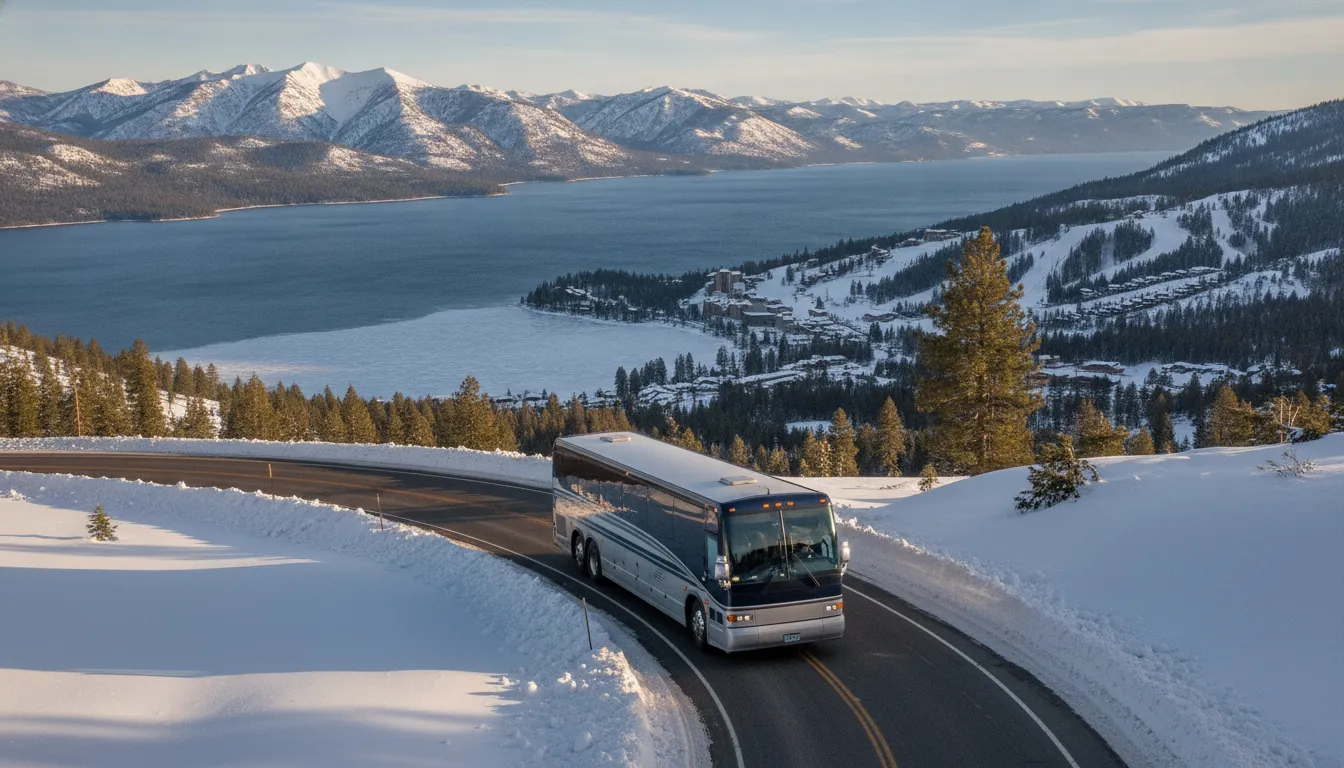
Lake Tahoe ski bus planning from San Francisco means confirming group size, pickup locations, Tahoe destination, travel date, gear needs, schedule flexibility, and winter-road contingencies before requesting a private charter quote.
These details help match the vehicle and itinerary to the group.
The first step is distinguishing a private group charter from public scheduled transportation, then documenting the decisions your provider needs to build a practical plan.
What Does Lake Tahoe Ski Bus Planning from San Francisco Involve?
Lake Tahoe ski bus planning from San Francisco involves coordinating the group, pickup details, destination, vehicle configuration, and winter travel expectations before requesting a customized quote. The goal is to arrange one private charter for your travelers, rather than fit your plans around a public scheduled bus.
A private group charter is arranged around your party’s needs. You provide the preferred pickup area, travel date, Tahoe destination, passenger count, luggage needs, and desired itinerary. The provider can then confirm which vehicle and configuration fit the trip. Ask specifically about room for skis and snowboards, passenger seating, storage, rest stops, and the communication plan for changing mountain-road conditions. Do not assume that every vehicle offers the same amenities or storage capacity.
This differs from a public scheduled bus, which typically operates according to an established route, stop pattern, and timetable. A private charter is better suited to groups that want coordinated pickup and drop-off planning, but availability and operating details still need to be confirmed directly. Epic lists long-distance transportation to Lake Tahoe ski resorts and offers vehicles ranging from 14-passenger Sprinter vans and 20-35-passenger minibuses to larger group options.
The dedicated San Francisco ski bus transportation service page explains the related service offering. This guide takes a narrower approach. It focuses on capacity, equipment, pickup coordination, and winter contingencies for a Lake Tahoe trip.
Start with a clear passenger count and destination, then ask for a quote that reflects the actual itinerary. Epic uses customized, quote-based pricing rather than a fixed ski-trip fare.
How Should You Plan the Route and Resort Details?
Plan the route around your group’s pickup needs, chosen resort, travel dates, equipment, and any planned stops. A private itinerary should be specific enough for the operator to quote accurately, while flexible enough to account for mountain traffic and winter road conditions.
Start with the pickup plan
List every pickup location before requesting a quote. Include neighborhood or city, exact address, preferred meeting point, and the number of passengers boarding at each stop. A centralized pickup can simplify the route, while multiple stops may help a dispersed group avoid separate drives. Be realistic about loading time for skis, snowboards, luggage, and winter clothing.
Choose the resort before finalizing the itinerary
Lake Tahoe trips can have very different logistics depending on whether your group is headed to Heavenly, Northstar, Kirkwood, Sugar Bowl, Homewood, or another destination. Compare the resort’s location with your group’s experience level, lodging, lesson plans, and preferred activities. Epic’s guide to ski destinations near San Francisco can help narrow the destination before you plan the vehicle route.
Put dates, stops, and return needs in writing
Share the departure date, return date, desired arrival window, and whether the trip is a day excursion or an overnight stay. Then identify useful stops, such as a meal, grocery run, lodging check-in, or a second resort area. Do not assume every stop fits efficiently into the route. Ask the provider to review the sequence and explain how additional stops affect the quote.
Private group transportation differs from public transit because the vehicle plan is built around your group’s pickup points and destination rather than a published network. Tahoe Transportation District provides links to public and private operators serving the basin, but those services may use their own routes, stops, and operating conditions. For mountain travel, review Caltrans winter driving tips and check current roadway conditions, chain controls, and closures before departure.
Which Vehicle Size Fits a Tahoe Ski Group?
The right vehicle depends on passenger count, personal luggage, ski and snowboard equipment, and how much room your group needs for a comfortable ride. Use the capacities below as a starting point, then confirm the actual vehicle configuration, storage capacity, and amenities with the transportation provider before booking.
| Vehicle option | Listed capacity | Best planning use | Confirm before booking |
|---|---|---|---|
| 14-passenger Sprinter | Up to 14 passengers | Small families, friends, or compact groups traveling together | Interior luggage room and how skis or snowboards will be carried |
| 20-35 passenger mini bus | 20-35 passengers | Medium-sized groups that need more capacity than a van | Seat layout, undercarriage storage, and available space for winter gear |
| 36-56 passenger motor coach | 36-56 passengers | Larger groups taking a longer-distance trip to a Tahoe resort | Exact passenger layout, luggage compartments, restroom availability, Wi-Fi, and ski storage |
| 47-56 passenger charter bus | 47-56 passengers | Large groups, including extended or multi-day travel plans | Specific bus assignment, luggage capacity, amenities, and equipment-storage arrangements |
Capacity is not the same as usable space
A vehicle that technically seats your group may not provide enough room once every passenger brings a suitcase, boots, helmets, skis, or snowboards. Ask whether equipment can be stored safely without blocking seats, aisles, or emergency access. If your group has children, bulky winter clothing, or multiple bags per traveler, leave practical space beyond the seat count instead of booking to the exact limit.
Epic Limousine lists Sprinter vans, mini buses, motor coaches, and charter buses in its fleet. You can compare fleet options, then ask which specific configuration fits your group and destination. For larger parties, the Bay Area motor coach rental guide provides additional planning context. Confirm the final vehicle, storage plan, and amenities in writing because availability and configuration can vary.
What Winter Travel Contingencies Should You Discuss?
Discuss the decision points before departure, not just the preferred itinerary. A practical plan covers current weather and road checks, possible chain controls or closures, extra time, group communication, and clear choices if conditions change.
Check conditions close to departure
Mountain conditions can change after a group confirms its itinerary. Assign someone to review the forecast and current roadway information before leaving San Francisco, then establish who will monitor updates during the trip. Caltrans recommends checking roadway conditions, chain controls, and closures through QuickMap and its winter driving guidance before heading into the mountains.
Ask the transportation provider how the latest information will be shared and which conditions would trigger a schedule discussion. Do not assume a normal route, destination access, or arrival time will remain appropriate during an active storm.
Build time for slower or changed travel
A ski-day schedule should have more flexibility than a summer itinerary. Allow a buffer for reduced speeds, traffic near mountain passes, vehicle checks, parking-area congestion, or a temporary closure. If the group has lessons, reservations, a dinner booking, or a return cutoff, tell the provider early so those constraints can be considered during planning.
Keep the group aligned on what happens if the original plan cannot proceed. Options may include delaying departure, changing the pickup or drop-off sequence, shortening the day, moving to a safer meeting location, or postponing the trip. The provider can explain what is operationally feasible, but the group organizer should identify which priorities matter most before winter weather creates pressure.
Agree on communication and decision ownership
Use one organizer as the primary contact and give every traveler a backup communication method. Share the planned meeting point, update times, and the process for notifying the group about a delay or itinerary change. Bay Area charter bus planning is useful context for assigning responsibilities and keeping a larger group coordinated.
Before booking, ask specific questions about weather-related rescheduling, cancellation terms, alternate routing, and who makes the final safety decision. Winter planning is stronger when those answers are documented rather than left to the morning of travel.
What Should You Include in a Ski Bus Quote Request?
A useful ski bus quote request gives the transportation provider enough detail to evaluate the vehicle, itinerary, and operating requirements for your group. Clear information also supports more accurate quote-based pricing, since the cost is customized to the trip rather than tied to a fixed ski fare.
- Date and travel window: State the travel date, return date if applicable, and your preferred departure and return windows. If the schedule is flexible, say so. Do not assume a provider can guarantee a particular mountain arrival time before the route and winter conditions are reviewed.
- Pickup location: Provide the San Francisco address or pickup area, along with any additional Bay Area stops. Mention parking, loading restrictions, apartment access, campus procedures, or other details that could affect boarding.
- Destination: Name the Lake Tahoe resort, lodging property, or other final destination. If the group will visit more than one location, list each stop so the itinerary can be evaluated accurately.
- Passenger count: Give the expected number of travelers and identify whether the count may change. Vehicle options can range from a 14-passenger Mercedes Sprinter to larger buses and motor coaches, so an accurate headcount matters.
- Ski and snowboard gear: Describe the equipment passengers will bring, including skis, snowboards, boots, luggage, and bulky winter items. Ask how the proposed vehicle handles storage and whether the configuration leaves enough comfortable seating.
- Vehicle requirements: Explain any preferences for seating capacity, restroom access, luggage compartments, Wi-Fi, or other amenities. Epic describes larger motor-coach options as seating 36-56 passengers, but the exact configuration should be confirmed for your quote. You can review motor coach rental costs while comparing options.
- Stops and itinerary: List planned meal stops, lodging transfers, sightseeing, equipment pickup, or other intermediate stops. Include whether the vehicle needs to remain with the group throughout the trip.
- Questions for the provider: Ask what credentials and authorizations apply to the service, such as USDOT, CPUC, or California TCP information. These questions help you evaluate a provider, but credentials alone do not guarantee winter-road conditions, vehicle availability, or a specific outcome. Include your name, email, and best phone number, then request a motor-coach group quote.
How Can You Keep the Group Organized on Travel Day?
The simplest way to keep a ski group organized is to give everyone one shared plan, one confirmed meeting point, and one person responsible for communication. Before departure, confirm the details with the transportation provider, then distribute the final version to every passenger so no one is relying on scattered messages or assumptions.
Build one travel-day manifest
Create a single manifest with passenger names, mobile numbers, the group leader’s contact information, and the expected number of skis, snowboards, bags, and other bulky gear. Count equipment separately from passengers. A vehicle that fits the headcount may still require a different configuration when the group is carrying winter equipment.
Vehicle capacity varies by option. Epic describes Mercedes Sprinter vans for 14 passengers, mini buses for 20 to 35, and full-size motor coaches and buses for 36 to 56 passengers. Some configurations may include luggage compartments, but the exact layout and amenities should be confirmed for the vehicle quoted.
Confirm the meeting point and timing
Write the pickup address, neighborhood, arrival instructions, and a recognizable meeting point into the itinerary. If the location has multiple entrances, loading areas, or access restrictions, ask the provider how the group should identify the correct spot. Do not assume that a familiar hotel entrance or public curb will work for a larger vehicle.
Use a time buffer that accounts for people arriving separately, loading equipment, and changing mountain-road conditions. A flexible plan is more useful than promising an exact travel time. Before leaving, check current roadway conditions, chain controls, and closures through Caltrans QuickMap, then share any meaningful changes with the group.
Keep communication simple
Choose one lead contact for the provider and one backup contact for passengers. Ask the provider to confirm the agreed itinerary, passenger count, gear expectations, and vehicle configuration before travel day. On the morning of the trip, use one group message for check-in updates rather than allowing multiple passengers to send conflicting instructions.
For help reviewing the trip details, contact Epic Limousine and provide the group size, pickup plan, destination, and equipment count. Call (415) 799-2744 with the same information when discussing the final arrangements.
Is a Private Ski Bus Right for Your Lake Tahoe Trip?
A private ski bus is usually a strong fit when a group wants one coordinated pickup and a designated transportation plan from San Francisco to Lake Tahoe. It is especially useful for families, corporate groups, school or athletic organizations, and friends traveling with substantial gear. A private charter can simplify coordination, but it is not automatically the best choice for every party.
Consider a private vehicle when your group benefits from traveling together, needs a flexible pickup plan, or wants to avoid asking multiple drivers to navigate a mountain trip. Epic Limousine lists Lake Tahoe ski-resort transportation among its long-distance services, including destinations such as Heavenly, Northstar, Kirkwood, Sugar Bowl, and others. The right vehicle depends on the headcount, luggage, skis and snowboards, meeting points, and requested itinerary.
Separate cars may make more sense for a very small group, travelers with different departure times, or people who plan to split up at the destination. Public transit can also be worth considering when its routes and operating times match your plans. Tahoe Transportation District provides regional connections information covering public and private transit operators, but scheduled transportation is a different product from a private group charter.
Questions to answer before choosing
- How many passengers are traveling, and is the headcount firm?
- Where should the vehicle meet the group in San Francisco or the Bay Area?
- How much ski, snowboard, and personal luggage must be accommodated?
- Does the group need one destination, multiple stops, or a return itinerary?
- What communication plan will keep everyone informed if winter conditions affect the schedule?
For practical lake tahoe ski bus planning from san francisco, compare the convenience of one organized vehicle with the flexibility of separate travel. Review San Francisco ski bus transportation details, then confirm the vehicle, equipment space, pickup plan, and winter contingencies directly with the provider.
Frequently Asked Questions
How do I get from San Francisco to Lake Tahoe by bus?
For a private group, start with the pickup area, travel date, Tahoe destination, passenger count, and return plan. A provider can then recommend a Sprinter van for up to 14 passengers, a mini bus for 20-35, or a larger motor coach for groups of 36-56.
Is a private ski bus different from a scheduled shuttle?
Yes. A private charter is planned around your group’s pickup time, stops, resort, equipment, and return schedule. A scheduled shuttle follows the operator’s published route and departure structure, so confirm availability, ticketing, baggage rules, and final drop-off details directly with that operator.
How should we handle skis and snowboards on the bus?
Tell the provider how many skis, snowboards, boots, and personal bags the group expects to bring. Ask where equipment will be stored, whether the selected vehicle has adequate luggage capacity, and whether the seating layout changes usable storage space. Confirm the configuration before booking.
What should we check before traveling to Tahoe in winter?
Build flexibility into the itinerary and establish a day-of communication plan. Check roadway conditions, chain controls, and closures through Caltrans QuickMap and winter-driving guidance before departure, then ask the provider how weather-related updates and schedule changes will be communicated.
What details do we need for an accurate ski bus quote?
Provide the passenger count, pickup addresses, destination resort, travel dates, desired departure and return windows, planned stops, equipment volume, and accessibility needs. Pricing is quote-based and customized, so ask what vehicle configuration, amenities, storage, and service hours are included rather than relying on a fixed trip price.
Get Started with Your Lake Tahoe Group Plan
A clear trip outline helps your group compare vehicle options, confirm pickup details, and discuss winter travel contingencies before booking. Request a Quote for tailored Lake Tahoe group transportation from Epic Limousine, or call (415) 799-2744 to talk through your plans.