
When a visiting group explores San Francisco, the vehicle is only one part of the plan. Pickup coordination, passenger capacity, airport or event connections, and time between stops can determine whether the day feels relaxed or rushed.
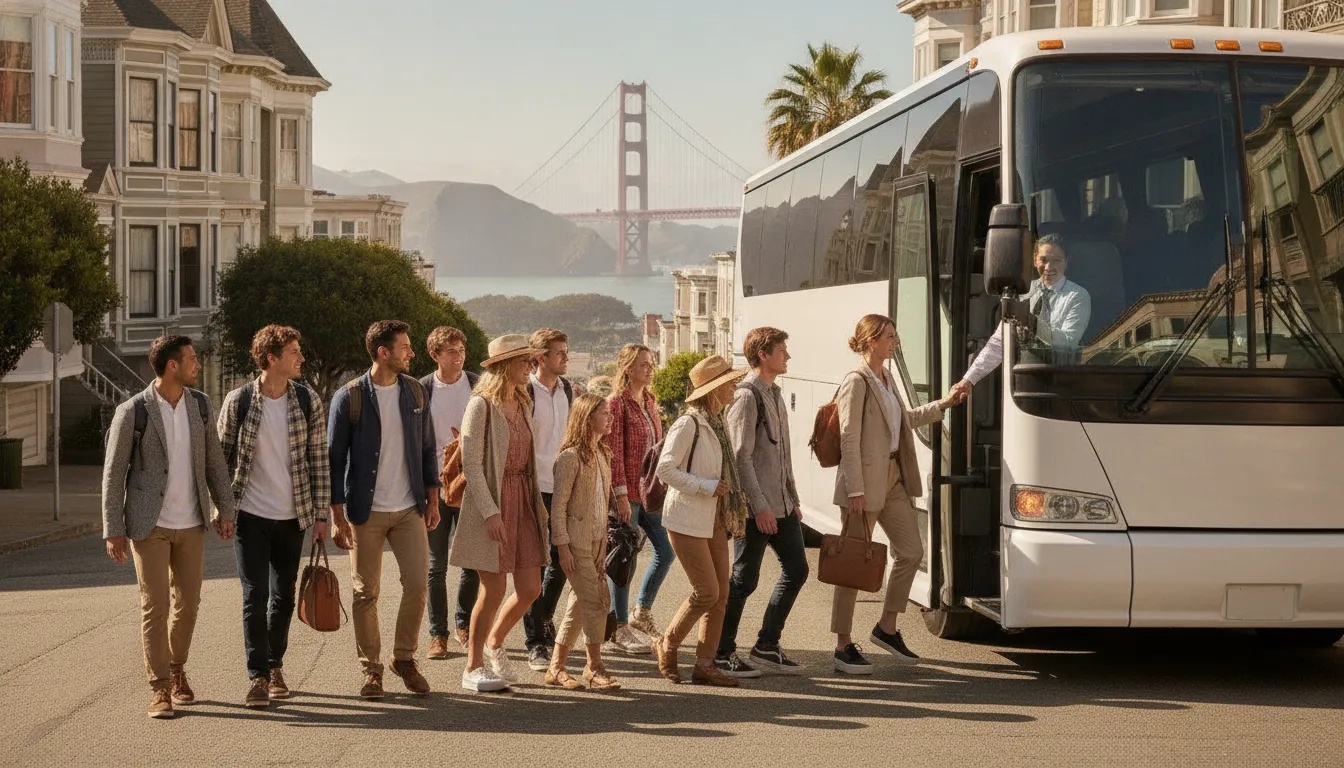
San francisco city tour transportation for visiting groups works best when you match the vehicle to the headcount. Map a realistic multi-stop itinerary, and share hotel, airport, and event details in advance. Epic Limousine serves San Francisco and the wider Bay Area with customized, quote-based planning.
Start by clarifying who is traveling, where the day begins and ends, and how the itinerary connects with other plans. Those decisions create a practical foundation for choosing transportation that supports the group rather than complicating it.
How to Plan San Francisco City Tour Transportation for Visiting Groups
The best plan starts with the group, not a predetermined sightseeing route. Confirm the headcount, pickup needs, travel dates, preferred pace, and key activities first, then match the transportation plan to the itinerary. This approach keeps a visiting group together while giving the coordinator a clear basis for requesting a tailored quote.
Group transportation planning is different from booking a simple point-to-point ride. A city tour may involve hotel arrivals, airport connections, event schedules, multiple stops, and passengers with different mobility or comfort needs. Share those boundaries early so the transportation provider can evaluate the day as one coordinated movement rather than a series of disconnected trips.
Start with the decisions that shape the day
- Group size: Count every passenger, including hosts, guides, staff, and children. Capacity should leave room for a comfortable experience rather than treating every available seat as a target.
- Pickup pattern: Identify whether everyone meets at one location or arrives from several hotels, an airport, a conference, or an event venue.
- Itinerary priorities: Separate must-see activities from flexible ideas. A shorter list of meaningful stops is often easier to coordinate than an overfilled schedule.
- Timing: Note arrival times, meal periods, event start times, and any firm return deadline. Traffic and walking time can affect how much sightseeing fits into the day.
Epic Limousine serves San Francisco and the wider Bay Area, including Oakland, Berkeley, and the Tri-Valley. Its described fleet spans capacities from 3 to 56 passengers, giving planners a starting point for matching vehicle size to the group. For more detail on passenger capacity and comfort considerations, compare vehicle capacity for groups.
For a group arriving by air or continuing to a conference or event, include those connections in the initial request. Epic provides airport pickups and drop-offs, as well as corporate and group transportation for conferences, team-building, executive travel, and outings. Building those details into the plan helps create a smoother experience and supports a more accurate quote.
What Vehicle Size Fits Your Visiting Group?
The right vehicle is the one that accommodates every traveler, expected luggage, and the pace of the itinerary without making the group feel crowded. Start with an accurate headcount, then discuss comfort, mobility needs, luggage volume, and whether the group will stay together throughout the day.
Epic Limousine’s described fleet spans capacities from 3 to 56 passengers, giving planners room to consider transportation for differently sized visiting groups. That range is a planning reference, not a reason to select a vehicle by headcount alone. A group traveling with substantial luggage or mobility equipment may need a different fit. The same is true for a full-day itinerary compared with a short outing.
Count people and belongings together
Confirm the final passenger count before requesting a recommendation. Include organizers, guides, children, guests joining at another location, and anyone who may need additional space. Then estimate what the group will bring, such as airport luggage, day bags, event materials, or equipment. If the itinerary includes airport or hotel coordination, explain when those items will be loaded and whether they remain with the group between stops.
| Group profile | Planning focus | Details to share |
|---|---|---|
| Small visiting group. | Passenger comfort and simple pickup. | Headcount, luggage, preferred meeting point. |
| Large visiting group. | Capacity, loading, and keeping guests together. | Final count, staging needs, stop timing. |
| Airport-connected group. | Luggage flow and arrival coordination. | Flight details, bags, hotel or next destination. |
| Event or academic group. | Schedule alignment and day-of communication. | Venue, release time, group contact, mobility needs. |
For a practical starting point, use this capacity guide to compare vehicle capacity for groups. It can help a coordinator think beyond the number of seats and consider how passenger comfort and luggage affect vehicle fit.
Plan for comfort and mobility
Share mobility considerations early, including reduced walking tolerance, assistance devices, or passengers who need extra time to board and exit. Do not assume that a larger vehicle automatically solves every access concern. Ask the transportation provider which available option best matches the group’s needs and how pickup locations and stops can support a comfortable day.
Vehicle allocation also matters when a group has separate arrival times, different hotel locations, or an itinerary that requires people to split temporarily. In those cases, describe the movements clearly rather than choosing several vehicles based only on headcount. For groups traveling between multiple locations, this guide can help you plan a multi-stop group itinerary around vehicle fit and coordination.
How Should You Build a San Francisco City Tour Itinerary?
Build the day around your group’s priorities, realistic travel time, and one coordinated pickup plan rather than trying to cover every landmark. A useful itinerary balances sightseeing with comfortable transitions, planned walking, and enough flexibility for traffic, weather, and group needs.
- Start with the group’s purpose and priorities. Decide whether the day is centered on landmark views, neighborhood character, a corporate outing, or a first introduction to the city. Ask the group coordinator which experiences matter most, then rank them so the itinerary has a clear focus instead of an overextended checklist.
- Group nearby experiences into logical areas. San Francisco’s neighborhoods can make a compelling sequence when arranged geographically. For example, a waterfront-focused portion might include Fisherman’s Wharf views toward the Golden Gate Bridge, Alcatraz Island, Coit Tower, North Beach, and Russian Hill. SF.gov also identifies North Beach, Chinatown, and Haight-Ashbury as neighborhoods visitors may explore on sightseeing routes. See the SF.gov Fisherman’s Wharf itinerary guide for additional visitor-planning context.
- Choose where the group will leave the vehicle. Separate drive-by views from places where guests genuinely want to walk, take photographs, eat, or explore. Fewer purposeful stops are often easier to manage than frequent unloading and reloading, particularly for a large visiting group.
- Allow time for conditions outside the itinerary. Build practical space between major activities for loading, pedestrian movement, traffic, and weather. Bridge conditions can feel breezy, so remind guests to dress for changing conditions rather than assuming the same temperature across the city.
- Connect the tour to the wider travel schedule. If the day begins at a hotel, follows an airport arrival, or ends at a conference or event, include those details when planning transportation. A multi-stop group itinerary plan can help coordinators think through vehicle movement, stop order, and timing before requesting a quote.
- Share one working itinerary with the coordinator and transportation team. Provide the pickup location, preferred sequence, approximate stop durations, passenger count, mobility considerations, and a day-of contact. This gives the transportation plan room to be tailored as the group’s priorities become clear, without promising fixed stops that may not suit the actual day.
For groups combining sightseeing with a celebration, conference, or organized outing, review Epic’s tourism and special-event transportation options alongside the itinerary.
Which Pickup Details Matter for Hotels, Airports, and Events?
The most important pickup details are the exact location, group contact, arrival or event timing, and a clear staging plan. Sharing these details early helps the transportation provider coordinate a practical meeting point without making assumptions about hotel access, airport procedures, traffic, or venue rules.
Hotel pickups
For a hotel departure, provide the property name, full address, reservation or group name when relevant, and the preferred meeting area. A large visiting group may need one coordinated pickup point rather than several individual collections. Ask the hotel or venue whether a motor coach or larger vehicle can wait onsite, then pass along any loading instructions to the transportation team. If the vehicle must stage nearby, the group coordinator should know where to direct guests and how to recognize the driver or vehicle.
Airport arrivals and departures
Airport transportation requires accurate flight information, the arrival or departure date, the number of travelers, luggage expectations, and the destination after the airport. Do not assume that an airport pickup works like a hotel curbside meeting. Confirm the agreed meeting instructions and keep one group contact responsible for updates. Epic Limousine provides airport pickups and drop-offs as part of its corporate transportation services. Review the guidance on coordinating airport pickup transportation when your itinerary connects the airport with a city tour or group event.
Events, conferences, and staging
For an event pickup, include the venue name, address, event start and end times, guest release time, and the person authorized to make day-of decisions. Conference groups may also need a designated staging area and a communication plan for departures. Epic’s corporate bus charter services support use cases such as conferences, executive transportation, team-building, and group outings. For a venue-focused plan, see the guide to coordinating San Francisco event transportation and consider convention shuttle transportation when multiple scheduled movements are involved.
Before requesting a quote, consolidate these details into one itinerary: pickup addresses, contact names, flight or event information, planned stops, and timing priorities. That gives the provider a dependable starting point for recommending a vehicle and building a quote around the group’s actual movement through San Francisco.
What Should You Include in a Quote Request?
A useful quote request gives the transportation provider enough context to match the vehicle, timing, and service plan to your group. Include the details below so pricing can be customized around your actual itinerary rather than estimated from a generic trip description.
- Group size: State the expected passenger count, plus whether the number may change before travel. If your group includes children, older adults, or guests with mobility considerations, mention that when relevant.
- Travel date: Provide the date of service and whether the request covers one day or multiple days. If your plans are flexible, identify the possible dates.
- Pickup location: List the hotel, airport, office, campus, residence, or event venue where the group will meet. Include the city for each location, especially when travel begins outside San Francisco.
- Pickup time: Share the requested pickup time and when the group needs to arrive at its first destination. A schedule helps the provider evaluate the time needed between locations.
- Stops and destinations: List the neighborhoods, attractions, restaurants, meeting venues, or other planned stops you already know. You can also identify which stops are priorities if the itinerary is still developing.
- Trip duration: Explain how long you expect transportation to be needed, including whether the vehicle should remain available during the group outing or only cover transfers.
- Luggage and equipment: Note suitcases, presentation materials, musical equipment, mobility devices, or other items that may affect vehicle selection. For additional capacity guidance, compare vehicle capacity for groups.
- Related travel: Mention airport connections, conference schedules, corporate outings, or academic travel that may affect pickup coordination. Epic’s corporate bus and group charter service can be relevant for organized group transportation, while the motor coach planning guide offers another planning reference.
Pricing is customized and quote-based, so there is no need to force your plans into a published rate. Once these details are ready, request a tailored quote and explain any itinerary elements that remain tentative.
How Can Groups Keep the Day Comfortable and on Schedule?
Groups stay comfortable and on schedule when the itinerary allows realistic travel time, walking, meals, weather changes, and clear communication between the coordinator and transportation provider. A practical plan leaves room for the city instead of treating every minute as a guaranteed stop.
Start by separating driving time from guest time. A photo opportunity, waterfront walk, meal, or neighborhood visit may take longer than the activity itself once everyone exits, regroups, and boards. Build buffers around the portions of the day that matter most, especially when the group has a reservation, event arrival, or airport connection later. Traffic, loading conditions, and the pace of the group can all affect the final timing.
Set expectations before the vehicle arrives
Give guests a simple pickup plan with the meeting location, expected departure time, coordinator contact, and any walking required from a hotel, venue, or attraction. One designated group contact can collect updates and confirm when everyone is ready, reducing repeated calls and last-minute searching. If the itinerary changes, share the new priority with the transportation team promptly rather than trying to preserve every original stop.
Comfort also depends on how the day feels between destinations. Tell guests when the plan includes walking, uneven surfaces, outdoor viewpoints, or time outside. San Francisco conditions can change by neighborhood, and the city notes that bridge crossings may be breezy, so layers are a sensible suggestion for visitors. The guide to coordinating San Francisco event transportation can help planners think through guest movement and timing around a larger gathering.
Plan meals and stops without overloading the route
Ask the group what meal timing, accessibility needs, and rest opportunities should be reflected in the plan. Rather than promising a fixed sequence, identify priority areas and acceptable alternatives. That approach makes it easier to adjust when a stop is crowded, weather shifts, or guests want more time in one neighborhood. For additional guidance on planning vehicle and stop logistics, review the related special-events guide before requesting a tailored quote.
Why Choose a Local Bay Area Transportation Partner?
A local transportation partner can connect the moving parts of a visiting group itinerary across San Francisco and the wider Bay Area. That matters when one plan includes sightseeing, airport transfers, a corporate gathering, an academic visit, or a special event, rather than a single point-to-point ride.
Epic Limousine serves San Francisco and Bay Area markets including Oakland, Berkeley, and the Tri-Valley. This regional coverage gives a group coordinator one transportation conversation for trips that cross city lines. A tourism-focused itinerary may begin at a hotel, continue through San Francisco, and finish at an event venue or airport. A corporate or academic group may need a different sequence, with attention to arrival details, meeting times, and shared pickup planning.
Epic’s tourism services include San Francisco city tours, while its corporate transportation services include airport pickups and drop-offs. Corporate bus charters also support conferences, team-building, executive transportation, and group outings. Those service categories make it easier to frame the request around the group’s actual day instead of treating the city tour as an isolated product. Explore tourism and special-event transportation or review corporate transportation and airport pickups as you define the itinerary.
This group-planning approach is different from arranging a private city tour for a smaller party focused mainly on sightseeing. If that is your situation, the private San Francisco city-tour guide may be a better starting point. For visiting groups, share the passenger count, pickup locations, airports or venues involved, and intended stops so the transportation plan can be shaped around the whole day.
Frequently Asked Questions
What vehicle size fits a visiting group?
Vehicle fit depends on passenger count, luggage, mobility needs, and how much room your group wants between stops. Epic Limousine’s described fleet spans capacities from 3 to 56 passengers, giving planners several starting points for a tailored recommendation. Review this guide to compare vehicle capacity for groups.
How long should a San Francisco city tour last?
Plan the duration around the number of neighborhoods, viewpoints, meals, walking breaks, and pickup or drop-off commitments your group wants to include. A shorter itinerary may suit a tight schedule, while a longer reservation can provide more flexibility. Share your priorities rather than assuming a fixed route or schedule, since traffic and group pacing affect the plan.
Can airport pickup be part of the group transportation plan?
Yes. Epic Limousine provides corporate transportation that includes airport pickups and drop-offs, so an airport transfer can be coordinated with a broader group itinerary. Include the airport, arrival or departure details, passenger count, luggage expectations, and the next destination when requesting a quote. This airport pickup transportation guide can help organize those details.
Can the vehicle pick up guests from a hotel or event?
Hotel and event pickup can be included in the planning conversation. Provide the property or venue, preferred meeting point, group contact, passenger count, and the timing requirements you already know. Epic serves tourism, group travel, corporate, academic, and event customers across San Francisco and the wider Bay Area, including Oakland, Berkeley, and the Tri-Valley.
How should we plan a multi-stop itinerary?
Start with the must-see priorities, then group nearby stops and identify where the group will walk, eat, or spend time independently. Build practical buffer time instead of promising a fixed sequence. Give the transportation team your pickup, stop, and return details early. You can also plan a multi-stop group itinerary with this related guide.
What details are needed for a customized quote?
Request a quote with your travel date, passenger count, luggage needs, pickup and drop-off locations, airport or event details, preferred duration, planned stops, and group contact information. Pricing is customized and quote-based, so these details help match the vehicle and service plan to your itinerary. For the next step, Request a Quote or call (415) 799-2744.
Get started with your San Francisco group tour
A clear vehicle plan and coordinated itinerary can help your visiting group enjoy San Francisco with fewer transportation details to manage. Share your group size, pickup needs, planned stops, and timing so the team can recommend an approach suited to your day. For a tailored quote, call (415) 799-2744 or use the link below.