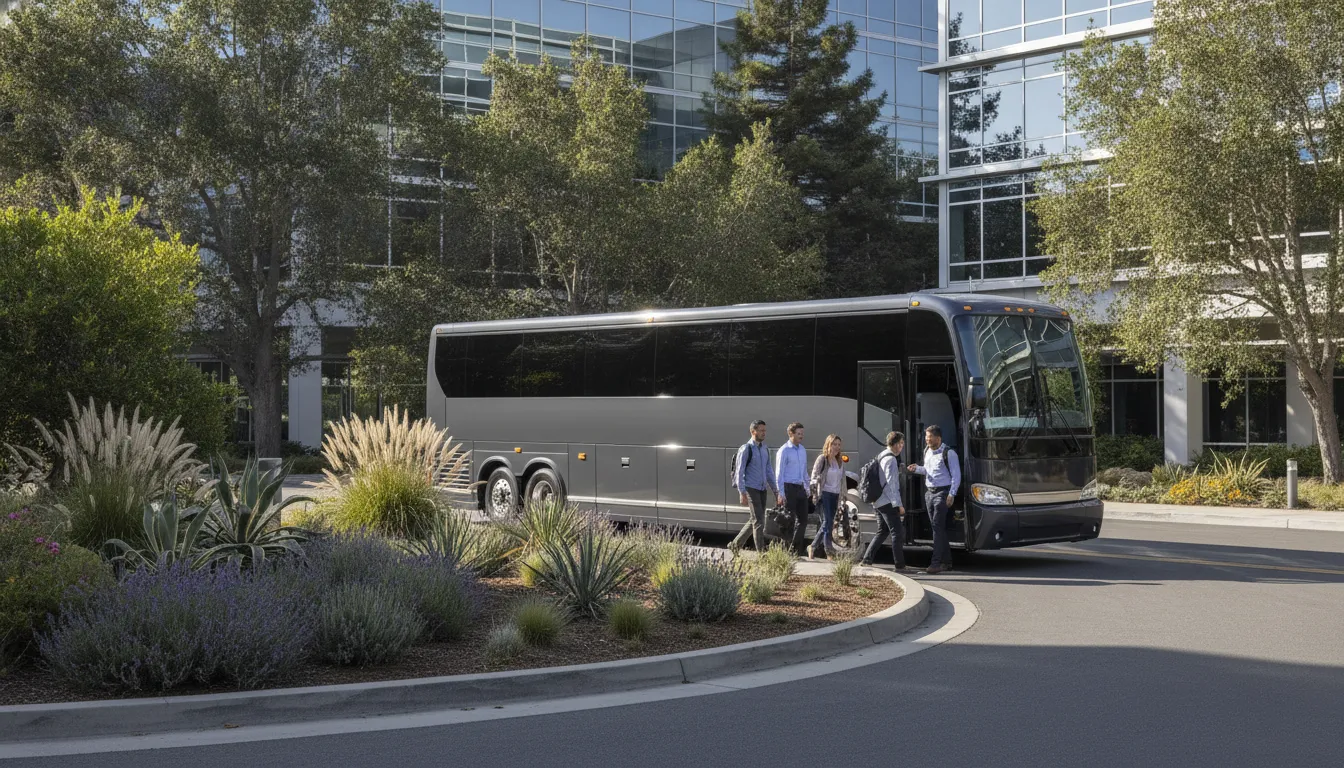
Groups planning a charter bus rental in Hayward can start with a complete itinerary, a vehicle that fits the passengers and their belongings, and confirmed loading points. Before requesting a quote, gather the date, headcount, stops, accessibility needs, and arrival deadline so the trip can be planned around the details that matter.
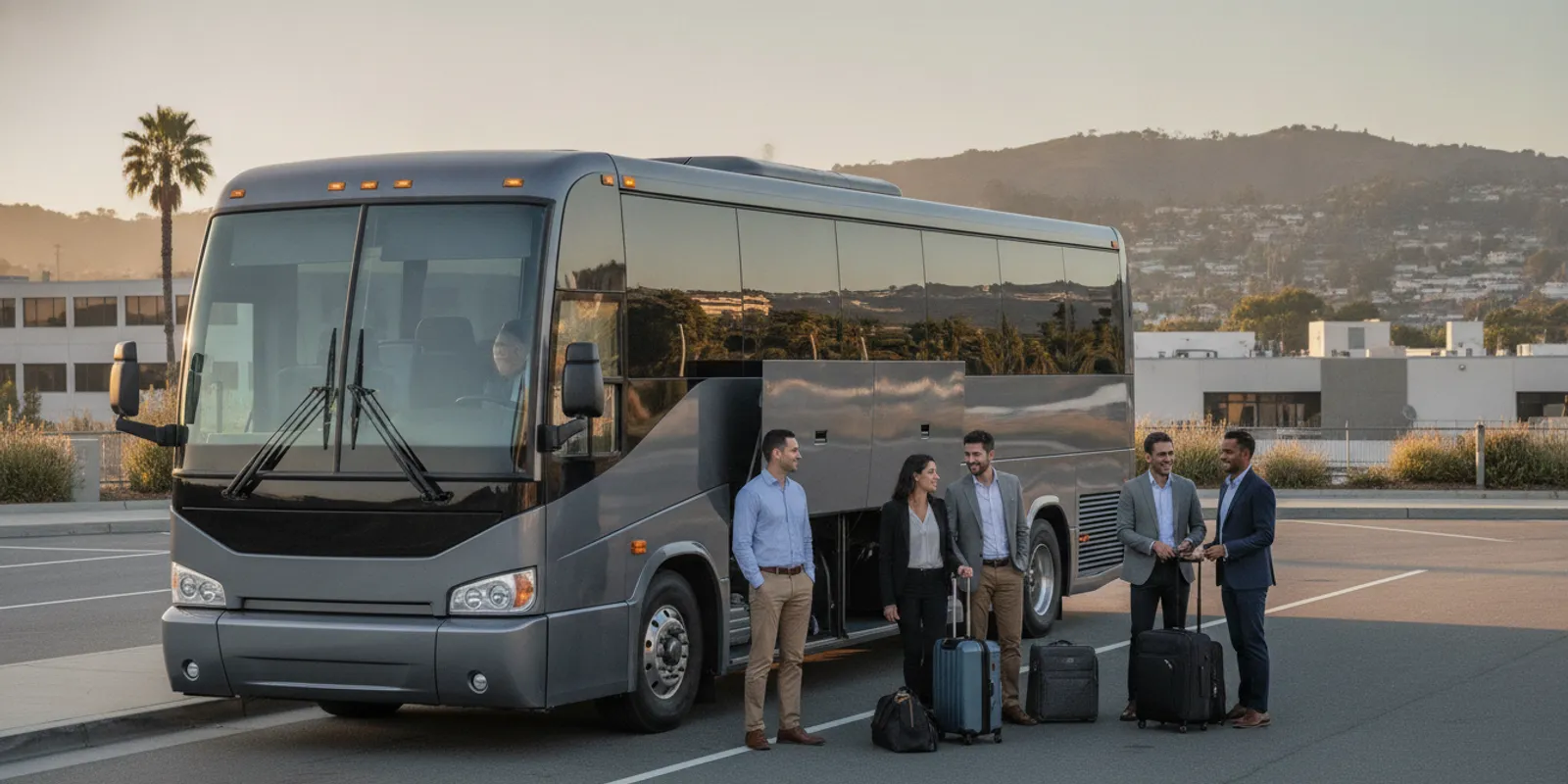
What should you plan for a charter bus rental Hayward trip?
Start with the full journey, not just the first pickup and final destination. A written plan helps you compare vehicle options and lets the transportation provider understand the schedule, access, and passenger needs.
List the travel date, estimated passenger count, pickup address, destination, and every planned stop. Add the time passengers should arrive, the desired departure time, event start time, and expected return window. If the group will wait at a destination before returning, include that time too. A round trip with several hours between travel legs may need a different service arrangement from a direct drop-off and pickup.
Then identify who owns each part of the trip. The organizer should have one day-of contact number and a person responsible for headcounts, updates, and decisions. If several departments, coaches, or family members are involved, agree on one source of truth for schedule changes rather than sending conflicting instructions.
- Travel date, passenger estimate, and a realistic final headcount deadline.
- Full pickup and drop-off addresses, including building or entrance details.
- All stops, their sequence, and how long the group will be at each one.
- Arrival deadline, departure time, event schedule, and return plan.
- Luggage, sports gear, instruments, supplies, or other cargo.
- Mobility or boarding needs and any required vehicle features.
- Organizer and alternate contact who can answer questions on the day.
Epic’s charter bus planning guide offers more background on arranging group transportation. For a service-specific option, review Epic’s charter bus travel for college groups service page. As you assemble details, separate confirmed facts from estimates. For example, say that 42 people are expected and the final count will be available a week before travel, rather than presenting an early roster as final.
How do you plan routes and loading in Hayward?
Choose pickup locations where a large passenger vehicle can enter, stop, load safely, and leave without blocking traffic. Confirm bus access with the property or venue; a street address alone may not identify an appropriate entrance or waiting area.
For a school, office, hotel, or event venue, ask the site contact which gate or curb is approved for bus loading. Check for restrictions such as narrow drives, low clearances, security check-in, or limited staging space. A passenger-car drop-off loop should not be assumed to work for a motor coach. If the bus cannot wait near the entrance, agree on a practical meeting point and tell passengers how to reach it.
In Hayward and the wider East Bay, traffic conditions and busy campus or venue approaches can affect timing. Plan a schedule that includes the distance between stops and time for passengers to get on and off. Share the required arrival time, not only the time an event begins. This allows the itinerary to account for check-in, seating, and walking from the drop-off point.
- Ask each property for its approved bus entrance and loading area.
- Confirm the vehicle can approach and exit the location in the planned direction.
- Choose a safe waiting point that does not obstruct a driveway, sidewalk, or travel lane.
- Provide passengers with a map pin plus a visible landmark or entrance name.
- Set a boarding deadline and name the person checking attendance.
- Identify a backup meeting point and a plan for late arrivals.
- Share the stop sequence, planned times, and day-of contact with the trip lead.
For a multi-stop schedule, put stops in a sensible order and avoid unnecessary backtracking. A useful shared itinerary includes each address, arrival and departure time, the person responsible at the stop, and any access instructions. Build a little flexibility into the schedule rather than making every transfer depend on an exact minute. Do not promise passengers an arrival time that assumes every person will board instantly.
Which vehicle capacity fits your group?
Match the vehicle to both the passenger count and the space needed for belongings. Seat capacity alone may not be enough if passengers are carrying suitcases, team equipment, instruments, or event supplies.
Ask the provider to confirm the capacity of the vehicle being considered, and describe cargo in practical terms: number and approximate size of bags, sports equipment, or mobility devices. Epic’s fleet includes vehicles from 3 to 56 passenger capacities. Review the fleet information and discuss which option suits the actual itinerary and group size.
| Planning option | May suit | Details to confirm |
|---|---|---|
| Smaller group vehicle | A compact group with a simple route and limited cargo | Seat count, luggage room, and room for a changing roster |
| Mid-size group vehicle | A moderate group traveling together to one or more nearby stops | Passenger capacity, equipment storage, and loading access |
| Motor coach | A larger group or trip with substantial belongings | Capacity, luggage space, amenities, and venue access |
| Multiple vehicles | A group larger than one vehicle’s capacity or with separate schedules | How vehicles will load, communicate, and arrive at each stop |
As a practical example, a group with 45 passengers and bulky sports bags should not select a vehicle by counting seats alone. The organizer should share the roster range and equipment list, then ask what capacity and storage arrangement is appropriate. If the count may grow, mention the likely change before finalizing. The motor coach group travel guide can help you think through longer group trips, while the charter bus rental guide explains additional planning considerations.
What accessibility and amenities should you confirm?
Share accessibility requirements early and verify details for the specific vehicle being considered. Do not rely on a general fleet photograph or an assumption that every vehicle has the same boarding method, space, or amenities.
Explain what the passenger needs to board and travel comfortably, then ask what vehicle options are available for the date. Confirm the boarding method, securement arrangement if relevant, space for the mobility device, and seating for companions. Discuss the route and stop locations too: the vehicle’s boarding features are only part of the plan if a curb or venue entrance is difficult to reach.
Next, distinguish essential features from preferences. A school group might need a way to keep students comfortable during a longer ride; a corporate group may want Wi-Fi for work; a sports team may prioritize storage. Wi-Fi, climate control, and entertainment systems are among the amenities available across Epic’s fleet, but availability can vary by vehicle. Confirm each feature for the vehicle assigned to the trip.
- Boarding method and any mobility-device dimensions or securement needs.
- Companion seating and room for personal items or assistive equipment.
- Storage for luggage, sports gear, instruments, or event materials.
- Climate control and any trip-specific comfort requirements.
- Wi-Fi, power access, or entertainment needs, if important to the group.
- Restroom availability for a longer journey, if required.
- Rules for food, drinks, and items passengers may bring aboard.
For school outings, coordinate vehicle needs with the school’s supervision and student handoff plan. See Epic’s field trip bus planning guide and its academic bus rental information for related planning context. For sports travel, the sports team bus guide and team transportation resource offer additional ideas for organizing people and gear.
How can you keep passengers informed?
Send one clear set of instructions to everyone before travel. Include when to arrive, where to meet, what to bring, and whom to contact if plans change.
Tell passengers to be at the pickup point before the scheduled departure, leaving enough time for boarding and attendance. A group lead can check names while another organizer answers questions, but both should work from the same roster. If the group has more than one pickup, state which passengers board at each stop and make clear whether the bus will wait for late arrivals.
For school trips, give staff and guardians the same approved schedule through the appropriate channel. For a corporate outing, name a coordinator who can relay updates to employees. Weddings and celebrations benefit from an easy-to-recognize meeting location and a clear plan for guests who arrive after the first departure. The event shuttle planning guide and corporate event bus guide cover related group coordination.
A passenger message can be brief while still answering common questions:
- Date, scheduled departure, and time to be ready.
- Pickup address, map pin, and recognizable entrance or landmark.
- Destination and the planned return or final drop-off window.
- Approved luggage or equipment and any storage instructions.
- Trip lead’s name and day-of contact method.
- Late-arrival process and what to do if the pickup point is unclear.
- Any accessibility arrangements or itinerary updates passengers need to know.
Before the trip, send a final reminder with any confirmed changes. Avoid relying on a message sent only to one person who may not pass it along. If the schedule changes during the day, have the designated organizer update the group through the agreed channel and confirm that key staff received the information.
What should a charter bus rental Hayward quote include?
Request a written quote based on the same complete itinerary and vehicle requirements you provide to each provider. Compare the service window and included terms, not only a headline figure.
Describe whether the trip is one-way, round-trip, hourly, multi-stop, or recurring. Give the expected passenger count, cargo needs, and required arrival time. If the route or event schedule is still changing, explain what is tentative and ask how changes may affect the quote. Epic offers point-to-point and hourly charter options; its charter bus cost guide can help you prepare questions without assuming one rate applies to every trip.
- Vehicle type and confirmed passenger capacity.
- Pickup, destination, stop sequence, and total service window.
- Waiting time included and how additional time is handled.
- Potential fees, taxes, tolls, parking, or other charges.
- Deposit, cancellation, and rescheduling terms.
- Accessibility features and amenities confirmed for the vehicle.
- How changes to passenger count, schedule, or route are handled.
- Day-of contact and process for coordinating itinerary updates.
Ask the provider to clarify anything that is not described in the quote. For example, if an event ends at 9 p.m. but the group’s departure time is uncertain, find out how the service window is defined and what happens if the group is delayed. Keep a copy of the final itinerary and quote together so the organizer can refer to the agreed details.
To compare two proposals fairly, place their assumptions side by side. Check that both use the same pickup time, stop list, passenger estimate, and return window. One quote may include waiting while another may describe a different service period, so ask before treating the totals as equivalent. Note any feature that remains unconfirmed, such as luggage space or an accessibility requirement, and resolve it before choosing. This simple review helps the organizer compare the trip being offered rather than just two numbers.
When a trip crosses state lines, federal motor-carrier safety resources are available from the Federal Motor Carrier Safety Administration. For a Hayward trip, focus your quote request on the actual route, stops, passenger needs, and schedule so the provider can address the details that apply.
Different groups may need different preparation. School organizers can start with the school trip bus booking guide; wedding planners can consult the wedding shuttle planning resource. For office events, the corporate charter bus guide offers another checklist. These links can help you shape the request, but your quote should reflect your particular date and itinerary.
Frequently asked questions
How early should I request a charter bus?
Request a quote once you know the date, approximate passenger count, and basic itinerary. That gives you time to check vehicle availability, venue access, and passenger requirements. If details are not final, label them as estimates and ask when the provider needs confirmation.
Can a charter bus make several stops?
Multi-stop travel can be planned when each stop is included in the itinerary. Share the order, addresses, planned times, and loading instructions, then confirm access at each location. Allow time for boarding and regrouping between stops.
What if our passenger count changes?
Tell the provider as soon as you learn the count has changed. The final number can affect vehicle selection and availability. Also update the cargo estimate, because equipment and luggage may affect usable space even when the number of passengers stays the same.
How should I request an accessible vehicle?
Describe the passenger’s boarding and travel needs when you request a quote. Ask about the specific vehicle available for the date, including boarding, securement, space for a mobility device, and companion seating. Confirm access at pickup and destination as well.
Are amenities such as Wi-Fi guaranteed?
No. Ask whether the vehicle assigned to your trip has the feature and whether it will be available for the journey. If an amenity is essential, make that requirement clear before accepting a quote.
What information should I send for a quote?
Provide the date, passenger estimate, pickup and destination addresses, stop sequence, schedule, luggage or equipment needs, accessibility requirements, and preferred amenities. Include an organizer’s day-of contact and identify which details may still change.
Plan a clear trip from pickup to drop-off
A well-organized Hayward charter bus trip depends on a realistic itinerary, an appropriate vehicle, confirmed access at every stop, and passenger instructions everyone can follow. Gather those details first, then compare written quotes against the journey your group actually plans to take.
With the route, headcount, timing, and special requirements documented, your group can discuss options and work toward a coordinated travel plan.