
A charter bus rental Fremont organizers arrange can keep a school, employer, sports team, or event group on one coordinated itinerary. Start by confirming the passenger range, complete route, required arrival time, pickup access, and any mobility or storage needs; then share those details with the provider before discussing vehicle selection.
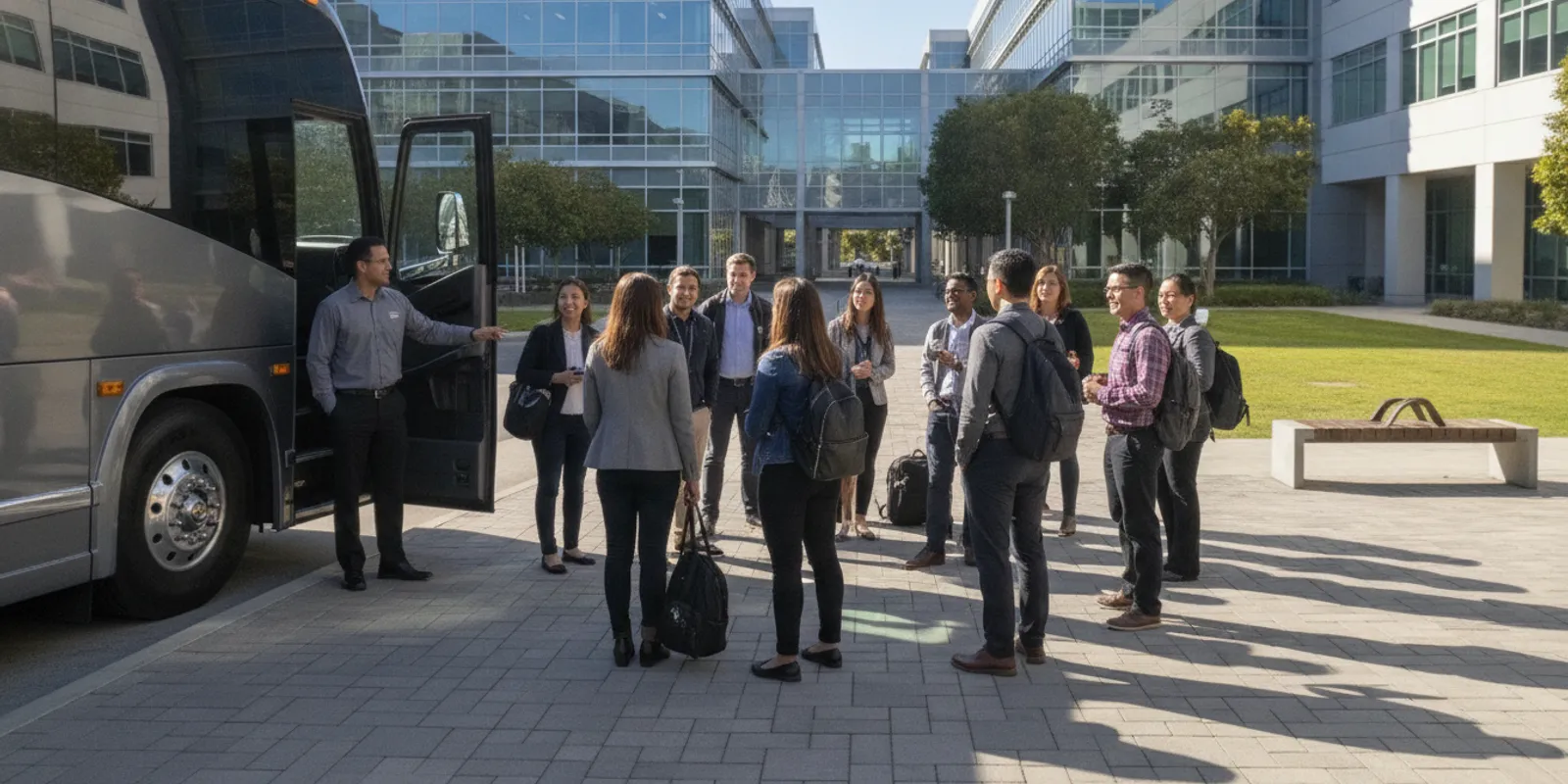
What should Fremont organizers decide first?
Set the trip’s basic facts before requesting transportation. A concise brief helps the provider assess the itinerary and identify what still needs confirmation.
Choose one trip lead to collect information and send updates. Before making the inquiry, write down:
- The travel date, expected passenger count, and highest likely count.
- Every pickup and drop-off address, with building entrances, gate numbers, or campus access instructions.
- The departure time, required arrival time, event start and end times, and return departure.
- Whether the trip is one-way, round trip, hourly, or includes several stops.
- The amount and type of luggage, sports equipment, instruments, or other large items.
- Boarding, mobility, or other accessibility requirements that need advance discussion.
- A reachable contact for the group and a backup contact, if available.
Mark each detail as confirmed or tentative. For example, a school may know the date and destination but still be waiting for permission forms. Share the current estimate, the date the roster should be final, and any possible change in the passenger total. Review the fleet information to become familiar with general options, then confirm suitability and availability for the particular trip directly.
Define what the group needs to accomplish, not only where it is going. An employer may need an on-time arrival for a shift; a team may need room to load equipment; an event host may need a dependable return plan. Those priorities affect the information to include in the trip brief.
How should you estimate capacity and storage?
Count every traveler and describe the items that must travel with them. Passenger seats alone do not tell the whole story if the group also has luggage, equipment, or special boarding needs.
Use this table to organize questions for a provider. It is a planning aid, not a promise about a specific vehicle or configuration.
| Group or situation | Details to estimate | What to confirm |
|---|---|---|
| School or campus group | Students, staff, chaperones, and roster changes | Passenger total, boarding sequence, and adult assignments |
| Sports team | Players, coaches, support staff, and equipment | Storage needs and time for loading and unloading |
| Employer or conference group | Riders by pickup point and arrival deadline | Seat count, pickup order, and operating schedule |
| Airport-connected group | Travelers, suitcases, carry-ons, and flight information | Capacity, storage, meeting procedure, and timing buffer |
| Event guests | Expected riders on each leg and return attendance | Boarding location, schedule, and end-of-event plan |
If attendance may change, provide both the expected count and a realistic maximum. State whether people will bring large suitcases, team bags, instruments, or bulky materials. Ask whether the quantity or shape of those items could affect the recommended vehicle or seating arrangement. The motor coach and group transportation information can serve as a starting point for questions about larger trips; confirm all trip-specific details with the provider.
Make a simple count by category. For a school trip, record students, teachers, other staff, and chaperones separately, then add them for a total. For a team, separate athletes from coaches and support personnel, and list equipment apart from personal bags. This makes it easier to catch missing people or storage needs when the roster changes.
Do not choose capacity by rounding down to the current confirmed headcount. Instead, tell the provider which numbers are firm and which may change, and ask when the final count is needed. Review the general explanation of charter bus planning and vehicle considerations if your group is comparing transportation formats.
How do you build a workable route and schedule?
Work backward from the time passengers need to be at the destination. Include gathering, boarding, travel, unloading, and any planned stops rather than treating the drive as the whole trip.
Write the itinerary as a sequence that another person could follow without guessing:
- Give the exact address and a recognizable entrance for each pickup.
- State when passengers should be ready and when the vehicle is expected to depart.
- List every intermediate stop in order, with its address and time window.
- Separate the required arrival time from the event’s published start time.
- State how long the group expects to stay and when the return trip should begin.
- Identify the trip lead who will confirm that the group is assembled at each stop.
Leave a realistic buffer for boarding and route conditions. A group with several pickup points may need time for people to check in, find the right entrance, and load bags. Ask the provider to review the route and timing; do not treat an online map estimate as a guaranteed travel time.
For a multi-stop day, distinguish required stops from optional ones. If the schedule runs late, the trip lead should know which stop can move and who has authority to approve a change. For a recurring employee trip, describe the days, shifts, pickup sequence, and expected passenger pattern instead of sending only one day’s timetable. Related employee shuttle planning information can help frame those recurring-service questions.
Airport-connected trips need clear terminal and arrival details. Use the airport code in uppercase, such as SFO, OAK, or SJC, and include the terminal, whether the group is arriving or departing, flight details when available, approximate luggage volume, and a reachable lead. Verify the airport’s current pickup instructions and permitted meeting area rather than assuming curb access. See the airport pickup information and airport shuttle planning guide as background, then check the procedure for your specific itinerary.
Where should the group meet and board?
Choose a pickup point that passengers can find and that the vehicle can access. Confirm the location with the school, venue, property manager, or other site contact before distributing final directions.
A passenger-car pullout may not work for a larger vehicle. Ask whether the proposed area has room to approach, load, wait, and leave without blocking traffic. Confirm any gate, security, loading-zone, or time restrictions. If the group is meeting at a campus or venue with several entrances, name the specific entrance and give a landmark that passengers will recognize.
For a school, coordinate student release and adult positions with the school office. For an event, ask where the vehicle may wait during the program and whether the venue has a designated loading area. Identify a backup meeting point in case construction, traffic controls, or an event crowd makes the first location unusable.
Assign an adult or event lead to meet the vehicle and guide passengers. That person should have the itinerary, a roster or count, and the provider’s contact details. Share a single clear message if the meeting point changes, including the new address or landmark and the time the group should be ready. Avoid relying on one passenger to relay an informal update to another.
On a trip with several stops, name a local point person at each pickup if the main trip lead cannot be present throughout. Provide the same plan to all leads, including the order of stops and the method for reporting a delay or missing passenger. For event transportation, compare your requirements with the event shuttle planning guide and agree on the exact meeting procedure with the venue.
Which amenities and access needs belong in the inquiry?
Explain how the group will use the vehicle and what every passenger needs to board and travel comfortably. Ask the provider to confirm specific features and arrangements for the vehicle being considered.
Separate essentials from preferences. A longer ride may make climate control or connectivity important; a shorter school transfer may put more emphasis on orderly boarding and clear supervision. General fleet information is not confirmation that every vehicle has the same features, so list any must-have amenity and ask directly whether it can be provided for the trip.
Describe accessibility requirements in practical terms. If a passenger uses a mobility device, explain the boarding needs and share relevant device information when requested. Ask about the vehicle configuration, boarding process, and any equipment or space needed before confirming. Do not assume a general service description guarantees a particular accommodation.
Prepare passenger instructions after the arrangements are confirmed. Include the ready time, exact pickup point, what to bring, whom to contact, and any boarding notes. Tell riders to be present before departure time, not to arrive as the vehicle is due to leave. Schools may also want to clarify who checks attendance and who remains responsible for students during loading and unloading.
What should different Fremont groups prepare?
Match the handoff to the group’s purpose and put one person in charge of keeping the details current. A small set of written responsibilities can prevent last-minute confusion.
- Schools: Confirm the roster, chaperone count, student release plan, emergency contact, and return procedure. The field trip bus planning guide and academic transportation information offer relevant planning references.
- Employers: Share shift or event deadlines, pickup points, expected riders at each point, and an operations contact. For a corporate outing, see the corporate charter planning guide.
- Sports teams: Count players and staff separately, describe equipment, and allow time to load before departure and after the game. Review the sports team bus guide for trip-planning prompts.
- Event organizers: Set guest meeting and return times, choose a recognizable pickup place, and explain how guests will get updates. The event bus planning guide can help structure those logistics.
- Tour groups: Map each stop, time at the destination, and passenger instructions. Give the provider the full route, not only the final destination; see the tour transportation overview for related service information.
The person coordinating the trip should not leave the driver to resolve a missing roster, an unclear entrance, or unassigned equipment at departure. Make clear who is responsible for passenger check-in, loading, communicating schedule changes, and confirming the final return plan. Where a trip involves student transportation, review the applicable school and provider procedures in advance rather than assuming one checklist covers every organization’s requirements.
What information makes a quote request useful?
A useful inquiry describes the whole trip, including its uncertainties. Complete details help a provider assess the route, schedule, passenger needs, and vehicle plan without relying on guesses.
Include the date, current passenger range, exact addresses, stop sequence, departure and arrival deadlines, return plan, luggage or equipment, and accessibility requirements. State whether the request is for a one-time trip or a recurring schedule. If something is tentative, label it and say when you expect to know more.
Before sending the inquiry, check each item:
- Confirm the trip date and expected and maximum passenger counts.
- Write each pickup and destination address in the order the trip will follow.
- Separate the event start time from the latest acceptable arrival time.
- Describe bags, equipment, and any storage considerations.
- List access requirements and amenities that are essential.
- Name the trip lead and provide a reliable way to reach that person.
- Ask what deadlines apply to final counts, itinerary changes, and confirmations.
When comparing proposals, make sure they use the same assumptions: date, route, passenger count, planned waiting time, and return arrangement. Ask how a change to the count, timing, or pickup location should be reported and whether it affects the plan. The charter bus quote and cost guide can help you prepare questions, but request trip-specific pricing rather than assuming a general figure applies. Epic’s transportation service overview is another starting point for matching an inquiry to a service.
For U.S. motor carriers, the Federal Motor Carrier Safety Administration provides federal motor-carrier safety and registration information. Organizers can consult the FMCSA as one reference point and should confirm the requirements that apply to their trip and provider. This general resource does not replace a school’s, employer’s, or venue’s own transportation policies.
After arrangements are confirmed, send passengers a short final message with the meeting point, ready time, return plan, and lead contact. Keep a fuller organizer copy with every stop, access note, and provider instruction. That way, passengers receive a simple action plan while the trip lead retains the detail needed to manage the day.
Frequently asked questions
When should I contact a provider about a charter bus?
Reach out once you know the date, basic route, and passenger estimate. Availability depends on the requested date and trip details, so confirm directly and ask when final counts and itinerary details are due.
Can I revise the passenger count after I inquire?
Tell the provider when the count changes and ask whether the vehicle plan or quote needs to be updated. Share the final count and any related luggage or equipment changes by the confirmed deadline.
Can one trip include several Fremont-area pickups?
Yes, you can request a route with several stops, but provide every address and the preferred order. The provider can review timing and route feasibility using the complete itinerary.
What details should I include for airport transportation?
Provide the uppercase airport code, terminal, flight details when available, passenger and luggage estimates, meeting location, and a reachable trip lead. Check the airport’s current pickup process for the itinerary.
Are Wi-Fi or other amenities included on every vehicle?
Do not assume that a feature is available on every vehicle. Identify which amenities matter and ask the provider to confirm them for the vehicle proposed for your trip.
How do I arrange for a passenger with mobility needs?
Describe the boarding and mobility requirements when you first inquire. Ask about the available vehicle configuration, any necessary equipment, and the boarding process before confirming the arrangement.
What if the event schedule is not final yet?
Send the confirmed date, best current itinerary, passenger estimate, and open questions. Explain when you expect to finalize the remaining details and ask which changes should be reported as soon as they occur.
Plan the Fremont trip with a confirmed handoff
Clear passenger counts, exact pickup instructions, realistic timing, and a named trip lead make a group itinerary easier to coordinate. Put the full plan in writing, confirm the vehicle and access arrangements directly, and give passengers one concise set of instructions before travel.
Once the provider confirms the itinerary, share the same final pickup and timing details with everyone who needs them so the group starts the trip with a clear plan.