
Archives for September 2026

How to Plan an Employee Shuttle Route in the Bay Area

Employee shuttle route planning in the Bay Area starts with employee demand, not a blank map. Build the route around commute origins, worksite arrival windows, transit connections, vehicle capacity, stop safety, and a backup plan. A measured pilot then shows which stops and departure times serve employees reliably before the program expands.

Request a Quote

What is employee shuttle route planning?

Employee shuttle route planning is the process of turning commute data and business schedules into a repeatable transportation service. For a Bay Area employer, that means deciding where employees should meet, when vehicles should depart, how many passengers each route can carry, and how the service will respond to traffic or changing demand.

The best route is not always the shortest line between homes and an office. A useful route balances access, ride time, safe loading, predictable arrivals, and the number of employees who can realistically use each stop. It may connect residential clusters to a campus, provide a last-mile link from BART or Caltrain, or run a loop between several company locations.

Epic Limousine’s commuter shuttle service is designed for recurring employee transportation with customized routes and schedules. This guide focuses on the planning decisions a company should make before requesting an operating proposal.

1. Start with employee demand, not the map

A route plan should begin with a clear picture of who needs transportation, where they start their commute, and when they need to arrive. Collecting that information first prevents a company from designing attractive-looking stops that serve too few riders or create an impractical schedule.

Use an employee survey, voluntary home ZIP code data, existing parking information, and worksite attendance patterns to build a demand map. You do not need an employee’s exact home address to identify useful clusters. Protect personal information by grouping results and using the data only for transportation planning.

  1. Define the service population: Separate regular commuters, hybrid employees, shift workers, interns, contractors, and visitors. Each group may need a different schedule or service model.
  2. Map origin clusters: Group employees by neighborhood, ZIP code, transit station, or other practical meeting area rather than planning door-to-door pickups.
  3. Record arrival windows: Note when teams need to be on site, when buildings open, and whether different departments have different start times.
  4. Identify return patterns: Capture expected end-of-day times, late shifts, overtime needs, and the days when ridership changes.
  5. Separate must-serve demand from nice-to-have demand: Give priority to clusters with enough recurring riders to support a dependable stop.
  6. Set privacy rules: Store aggregated planning information securely and avoid publishing employee addresses or personally identifiable commute details.

For a broader overview of program design, see Epic Limousine’s employee transportation solutions guide. Route planning becomes more precise when the company can distinguish a stable daily demand pattern from occasional interest.

2. How do you choose employee shuttle stops?

Choose employee shuttle stops where a meaningful group can arrive safely and consistently, then test whether the stop supports the required arrival window. The best locations are easy to find, legal for loading, accessible to riders, and close enough to major commute corridors without adding unnecessary detours.

A stop should make the employee’s trip simpler, not merely move the waiting time from one location to another. Employers often consider major transit stations, park-and-ride areas, neighborhood collection points, and company-owned locations. The final choice depends on site access, traffic conditions, permissions, and the size of the demand cluster.

  • Safety: Select a place with adequate lighting, a stable waiting area, and room for passengers to board without standing in active traffic.
  • Vehicle access: Confirm that the planned vehicle can approach, load, turn, and leave without blocking a lane or making a difficult maneuver.
  • Visibility: Use recognizable landmarks and clear stop instructions so new riders can find the pickup point without guesswork.
  • Walking access: Consider sidewalks, crossings, slopes, weather exposure, and accessibility for passengers with mobility needs.
  • Demand concentration: Prefer a stop that serves a durable cluster over a stop added for one occasional rider.
  • Schedule impact: Estimate dwell time at every stop and remove stops that add substantial delay for only a small number of riders.
  • Permission and curb rules: Confirm that loading is allowed and that the operator has a practical plan for school zones, private lots, campuses, and transit-adjacent areas.

Epic’s Bay Area employee shuttle planning resource explains why routes should be customized around a company’s workforce. Its broad program guidance pairs well with this route-specific stop evaluation.

3. How should you match vehicle capacity to the route?

Match vehicle capacity to expected riders at each trip segment, not just the total number of employees enrolled in the program. The right vehicle leaves reasonable room for normal ridership changes while staying practical for the streets, loading areas, and service frequency included in the route plan.

Capacity planning should account for the busiest segment, not the average passenger count. A route may be lightly used at its first stop, fill up near a transit connection, and then lose riders before reaching the workplace. Review the expected load by stop and by direction before selecting the vehicle or finalizing the schedule.

Route planning input What to evaluate Planning decision
Recurring rider count Expected weekday riders and normal variation Choose a vehicle with practical operating capacity, not a one-day maximum
Peak segment Where the greatest number of passengers share the route Size the vehicle and boarding process for the busiest segment
Road and site access Lane width, turns, curb space, campus entrances, and loading areas Confirm the vehicle can serve every planned stop safely
Service frequency Whether riders need one departure or several waves Compare a larger vehicle with multiple departures or smaller vehicles
Passenger needs Luggage, mobility access, work equipment, and comfort expectations Include the space and accessibility features the route actually requires

Use Epic Limousine’s employee shuttle bus guide when comparing vehicle and service concepts, and review the Epic Limousine fleet to understand the available transportation range. Avoid choosing the largest vehicle by default if a smaller, more frequent service would improve access and reduce unnecessary dwell time.

4. How do you build a schedule employees can trust?

A dependable shuttle schedule works backward from the required workplace arrival time and includes realistic loading, traffic, and recovery time. Publish a small number of clear departures that riders can remember, then monitor actual travel and boarding times before adding complexity.

Start with the arrival requirement, such as a shift start or a meeting window. Work backward through the route, adding the expected drive time between stops and a reasonable dwell allowance. Avoid promising an exact arrival minute when Bay Area traffic can vary. Instead, use a clear arrival window and a policy for service disruptions.

  1. Set the arrival window: Define when riders must be at the destination and how much early arrival is useful rather than disruptive.
  2. Build the return schedule: Match departures to normal employee release times and identify what happens after late shifts or approved overtime.
  3. Estimate stop dwell: Allow time for boarding, accessibility needs, questions, and normal late arrivals without making the entire route fragile.
  4. Test the route in real conditions: Review the route during representative weekday traffic, not only during a quiet midday drive.
  5. Create a rider communication plan: Publish stop names, pickup windows, service days, contact procedures, and rules for missed pickups.
  6. Build recovery options: Decide how dispatch will respond to a vehicle delay, road closure, unusually high ridership, or a missed trip.

For a multi-site employer, map each route’s connection to the wider corporate transportation program. A route that looks efficient alone may create a conflict with another campus movement or executive trip if the vehicle schedule is not coordinated.

Request a Quote

5. What should a Bay Area route plan include for traffic and contingencies?

A Bay Area employee shuttle route plan should document the normal path, likely delay points, alternate access, and the decisions an operator can make during disruption. A contingency plan protects service reliability without pretending that traffic, construction, weather, or event impacts can be eliminated.

Review each route for bridges, freeway approaches, dense downtown streets, campus gates, transit transfer points, and locations where a short delay can affect the next trip. The goal is not to predict every incident. The goal is to identify the choices that should already be agreed upon before a disruption occurs.

  • Primary and alternate access: Record a practical alternate approach for major bottlenecks and restricted entrances.
  • Communication ownership: Name who informs riders, who coordinates with the employer, and who makes an operational route decision.
  • Late vehicle protocol: Define when a delay triggers an alert and what information riders should receive.
  • High-demand days: Flag office events, conferences, school schedules, construction periods, or other dates that may change ridership.
  • Vehicle substitution: Document what happens if the planned vehicle is unavailable and whether the alternate can use every stop.
  • Accessibility continuity: Make sure an alternate vehicle or stop plan does not remove an agreed accessibility accommodation.
  • Data review: Keep a simple log of delays, missed stops, no-shows, overloads, and rider feedback so the route can improve.

Do not publish a route as final until the employer, transportation operator, property contacts, and rider communications owner understand these responsibilities. Clear ownership is more useful than a complicated plan that no one follows.

6. How do you pilot and improve an employee shuttle route?

Pilot the route for a defined period, measure the rider experience and operating performance, and adjust stops or departure times using evidence. A pilot should answer whether the route is useful, reliable, safe, and practical to operate before the company commits to a larger network.

Set the pilot’s goals before the first trip. A business may care about employee adoption, on-time arrivals, reduced parking pressure, coverage for a difficult shift, or a dependable connection to transit. The route can only be judged fairly when the team agrees on what success means.

  1. Track ridership by stop: Compare reservations or boardings with the original demand estimate and identify underused or overloaded stops.
  2. Review on-time performance: Record actual departure and arrival windows, including the trips most affected by traffic.
  3. Measure ride experience: Ask whether the stops are convenient, the instructions are clear, and the ride feels comfortable and predictable.
  4. Review operational friction: Note difficult turns, unsafe loading, repeated communication questions, and stops that cause excessive dwell.
  5. Compare service days: Look for differences between weekdays, hybrid schedules, shift changes, and special company events.
  6. Make one change at a time: Adjust a stop, departure, or vehicle plan in a controlled way so the effect can be understood.

Epic Limousine’s employee shuttle benefits guide provides broader context for evaluating the employee experience, while its corporate shuttle solutions guide can help teams think through recurring service needs. Use those resources to support the business case, then keep the route decision grounded in your own ridership and operations data.

A route that gains riders after small changes is often more valuable than a large initial network that is difficult to operate. Start with the most defensible corridor, communicate clearly, and expand only when the existing service is stable.

Request a Quote

Frequently Asked Questions

Employee shuttle route planning is easiest when the employer defines its demand, arrival windows, stop requirements, vehicle needs, and operating responsibilities before asking for a final proposal. The questions below cover the planning decisions that most often shape a Bay Area commuter shuttle.

How far in advance should an employer plan an employee shuttle route?

Begin route planning as soon as the employer knows its worksite schedule, employee population, and desired launch window. A provider needs time to review demand clusters, inspect stops, test drive times, select vehicles, and coordinate communications. More complex multi-site or shift-based programs benefit from an earlier planning start.

Should employee shuttles pick up riders at their homes?

Most recurring employee shuttles work better with central pickup points than with individual home pickups. Grouped stops reduce detours, make arrival times easier to communicate, and allow the vehicle to serve more riders. Central locations should still be selected for safe access, reasonable walking distance, and the needs of the workforce.

Can an employee shuttle connect to BART or Caltrain?

Yes, a route can be designed as a last-mile connection to a transit hub when the station, schedule, demand, and loading conditions make the connection practical. The employer should compare transit arrival patterns with worksite start times and allow enough time for boarding and normal service variation.

How many stops should an employee shuttle route have?

There is no universal stop count. The right number depends on rider density, route length, vehicle capacity, safety, and the required arrival window. Too few stops can make the service inaccessible, while too many can create long ride times and unreliable arrivals. Use demand and pilot results to refine the balance.

What information should an employer provide for a shuttle quote?

Share the service area, worksite addresses, operating days, arrival and departure windows, expected rider counts, shift patterns, preferred transit connections, accessibility needs, and any site restrictions. Include whether the service is recurring, seasonal, or tied to a pilot. This gives the provider enough context to recommend a route and vehicle plan.

How can a company improve a route after launch?

Review ridership by stop, on-time performance, rider feedback, missed pickups, vehicle capacity, and the effect of traffic on each trip. Make controlled changes to stops or departure times, communicate updates clearly, and continue checking whether the route serves the current workforce. A recurring service should evolve as attendance and worksites change.

Request a Quote

For help planning a recurring Bay Area employee shuttle route, contact Epic Limousine with your service area, worksite schedule, and estimated rider demand. You can also call (415) 799-2744 to discuss the route and next steps.
Private School Transportation Bay Area: Planning Guide

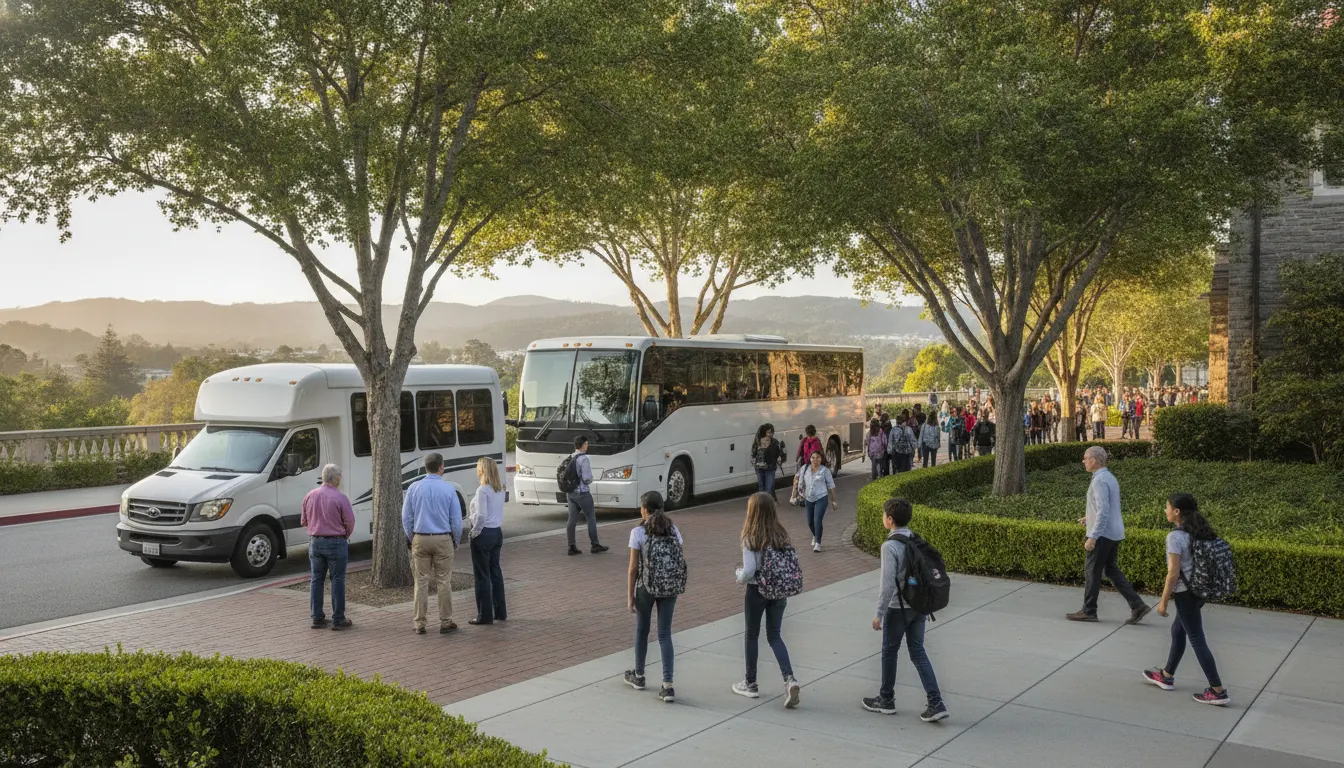
Private school transportation Bay Area charter coach and shuttle arriving at a school campus

Private school transportation in the Bay Area is more than arranging a bus for a single outing. Administrators are coordinating recurring home-to-campus routes, bell schedules, athletics, campus transfers, field trips, accessibility needs, and clear communication with families. A workable plan connects each of those moving parts without making staff responsible for every delay or handoff.

Request a Quote

A strong private school transportation plan starts with a defined service pattern, right-sized vehicles, documented loading and supervision procedures, and a provider that can adapt when the school calendar changes. Use this guide to build the brief, questions, and checklist your administrator or transportation coordinator needs before requesting a proposal.

Why private school transportation requires an operating plan

Private school transportation works best when recurring routes, occasional trips, and campus movements are planned as one connected program rather than separate bookings. The goal is predictable movement for students, families, faculty, and coaches, with clear ownership of each pickup, transfer, and arrival.

A school may need morning service from several communities, an afternoon return pattern, a midday transfer between campuses, and extra capacity for sports or activities. Those services can share information and standards, but they may not share the same vehicle, timing, or supervision model. Start by defining:

  • Which students need transportation and on which days.
  • Whether service is home-to-school, school-to-home, campus-to-campus, or event-based.
  • Where students are released, received, and supervised at every handoff.
  • Which trips are recurring and which are tied to the academic or athletic calendar.
  • How families, faculty, coaches, and administrators will receive schedule updates.
  • What accessibility, storage, seating, or equipment needs must be addressed in advance.

Epic Limousine’s academic bus rentals and charters page is the natural service starting point for schools comparing vehicle options and planning support. Keep the article’s recurring-route focus separate from the site’s existing field trip bus safety checklist, which is more focused on one-time outings.

Which transportation model fits a private school?

The right model depends on frequency, passenger flow, route length, equipment, and the number of supervised handoffs. A recurring route needs schedule discipline and family communication, while athletics and field trips need flexibility around changing destinations, equipment, and event times.

School need Planning focus Questions to answer Vehicle considerations
Daily home-to-campus routes Stops, bell times, ridership, and morning or afternoon service Where can students safely load and unload? What happens when a rider is absent? Capacity, comfortable seating, storage, and route suitability
Intercampus transfers Connection times, campus access, and receiving staff Who confirms departure and arrival? Is a student moving with a class or individually? Fast loading, clear visibility, and capacity at peak periods
Athletics and activities Game times, equipment, return windows, and roster changes Will teams travel together? Where will gear be stored? Luggage or equipment space, comfort, and flexible scheduling
Field trips and special events Multiple stops, meal or venue timing, and group supervision What are the exact pickup, staging, and emergency contact procedures? Capacity, climate control, accessibility, and storage

For a deeper vehicle comparison, review the school bus versus charter bus guide. The decision should follow the school’s actual passenger flow and itinerary, not a generic vehicle preference.

How should administrators design recurring routes?

Recurring routes should be built backward from the required arrival time, then tested against realistic loading, traffic, and campus handoff conditions. A route that looks efficient on a map can still fail if stops are difficult to access or if students cannot be received promptly.

Use this sequence when preparing a recurring private school transportation program:

  1. Map the service area. Group student demand by community or corridor, then identify safe meeting points that families can reach consistently.
  2. Set the campus arrival window. Allow time for unloading, walking, attendance, and the start of the school day instead of targeting the bell by itself.
  3. Build a stop list. Record the address or landmark, loading direction, expected riders, accessibility notes, and an approved alternate location.
  4. Separate morning and afternoon assumptions. Afternoon dismissal, traffic, activities, and parent pickup patterns may require a different sequence than the morning route.
  5. Define absences and late changes. Decide who receives updates, when the route can be adjusted, and how staff document a no-show or unexpected pickup.
  6. Test the handoffs. Identify the school employee or authorized adult responsible for receiving students at campus and for confirming departures.
  7. Review after launch. Use the first weeks of service to identify stop timing, ridership, traffic, or communication changes, then update the route with the school and provider together.

Schools can borrow useful ideas from the site’s commuter shuttle service guidance, especially the emphasis on customized routes and schedules. The operating details should still be written for the school’s students, families, and campus procedures.

What safety and supervision questions should schools ask?

Safety planning should cover the provider, the vehicle, the route, and the people responsible for each student handoff. Ask for current documentation and operating procedures rather than relying on a broad promise that transportation is safe.

  • What licenses, insurance documents, inspections, and school transportation credentials apply to this service?
  • How are drivers selected, qualified, briefed, and assigned to recurring school routes?
  • Who is the school’s day-of transportation contact, and who is the provider’s operations contact?
  • How will the school handle a delayed vehicle, a missed stop, a changed game time, or an absent rider?
  • Where are students expected to wait, load, unload, and transfer under normal conditions?
  • How are headcounts, rosters, equipment, and authorized releases handled?
  • What accessibility needs can be accommodated, and how early must the school provide those details?
  • How will families and administrators receive a confirmed schedule or a material service update?

The California Highway Patrol School Bus Program is an authoritative reference for school transportation safety information. A school should also follow its own policies and obtain current provider documents during the vendor review.

Request a Quote

How do athletics and field trips fit around daily service?

Athletics and field trips should be scheduled as separate service patterns that share the school’s communication and safety standards. This keeps a recurring route from being disrupted by a tournament while giving coaches and activity leaders the vehicle, equipment space, and timing their trip requires.

For athletic teams, prepare a roster, equipment estimate, departure window, venue address, return assumptions, and a coach or staff contact. Epic Limousine’s athletics and team travel service page and its coach bus rental guide for athletic teams address the different planning needs of team travel. Build in time for gear loading and post-game changes instead of planning only for the outbound drive.

For field trips, document the group size, chaperone count, stops, venue arrival time, meal or restroom needs, and the exact pickup procedure. The existing field trip transportation guide can support the one-time outing conversation, while this article’s focus remains the broader private-school operating program.

How should schools plan accessibility and parent communication?

Accessibility and communication should be designed before a route is quoted, not added after a student or family encounters a problem. Ask families for relevant information through the school’s established process, protect student privacy, and provide the transportation provider only the operational details needed to deliver the service.

Include these items in the planning brief:

  • Mobility, seating, boarding, or other accessibility requirements.
  • Approved pickup and drop-off locations for each rider or family group.
  • Parent or guardian communication preferences and escalation contacts.
  • Campus arrival, dismissal, and late-activity procedures.
  • Roster updates, absence reporting, and the deadline for schedule changes.
  • Contact instructions for coaches, faculty, and administrators during events.

When a school serves more than one campus, review the campus transportation planning guide for ideas about transfer timing and event coordination. Private K-12 schools should adapt those concepts to their own bell schedules, student age groups, and supervision policies.

What should a private school transportation quote include?

A useful quote request gives the provider enough operational detail to recommend a vehicle and schedule without guessing. It should describe the service pattern, not just the number of students, because recurring routes, campus transfers, and athletics each create different requirements.

  1. School name, primary contact, and decision timeline.
  2. Service dates, days of the week, and whether the need is recurring or occasional.
  3. Pickup communities, proposed stops, campus addresses, and arrival or dismissal windows.
  4. Estimated riders by route, grade group, and time of day.
  5. Vehicle, luggage, equipment, seating, and accessibility requirements.
  6. Field trip, athletic, or activity dates that may add service demand.
  7. School procedures for rosters, supervision, late changes, and emergency contacts.
  8. Requested billing structure, proposal format, and the person authorized to approve changes.

For larger groups, the 56-passenger charter bus planning guide can help administrators think through capacity and booking details. The Epic Limousine fleet page provides a live overview of vehicle categories, but the final recommendation should be based on the school’s route and passenger requirements.

Before sending the request, confirm that every stop is accessible, every handoff has an owner, and every schedule includes enough time for loading and unloading. That preparation makes the quote more useful and gives families a clearer service expectation.

Request a Quote

Frequently asked questions

Private school transportation questions usually center on route design, timing, safety documentation, accessibility, communication, and the provider’s ability to support both recurring and occasional school needs. These answers can help administrators prepare a focused request.

What does private school transportation in the Bay Area include?

It can include recurring home-to-campus routes, campus transfers, athletic team travel, field trips, and special school events. The school and provider define the exact stops, schedule, vehicle, supervision process, and communication plan.

How far in advance should a school plan transportation?

Start as early as the school calendar and enrollment information allow, especially for recurring routes or dates that overlap with athletics and events. Earlier planning gives the school time to confirm stops, accessibility needs, rosters, and vehicle availability.

Can one vehicle handle daily routes and athletic trips?

Sometimes, but the answer depends on timing, capacity, equipment, and the provider’s schedule. Treat daily routes and athletics as separate service requirements, then ask the provider whether they can be coordinated without compromising either schedule.

What should a school ask about accessibility?

Ask what vehicle and boarding options are available, what information is needed, how much notice is required, and how accessible pickup and drop-off locations will be confirmed. Document the plan with the school and provider before service begins.

How can parents receive transportation updates?

The school should choose an approved communication channel and identify who sends routine schedules, delays, stop changes, and emergency instructions. The provider’s operational contact can support the school, but the school should remain clear about its family communication role.

How does a school request a transportation proposal?

Prepare the route, dates, rider estimates, campus details, vehicle needs, accessibility requirements, and contact information, then send the brief to a qualified provider. Epic Limousine can review those details and recommend a Bay Area transportation approach.

Plan a dependable school transportation program

Private school transportation in the Bay Area is easiest to manage when recurring routes, athletics, field trips, campus transfers, safety questions, and family communication are documented before service begins. Epic Limousine serves Bay Area schools and academic organizations with quote-based transportation planning. Call (415) 799-2744 or use the link below to share your school calendar and route requirements.

Request a Quote

How Many People Can Fit in a Limo? Capacity Guide

How many people can fit in a limo depends on the vehicle category and its installed seating. Your group also needs enough room for comfort and luggage. In the San Francisco Bay Area, a luxury sedan may suit 3 to 4 passengers. Larger options extend from 8 to 56 passengers. The best choice starts with your real headcount and itinerary.

Request a Quote

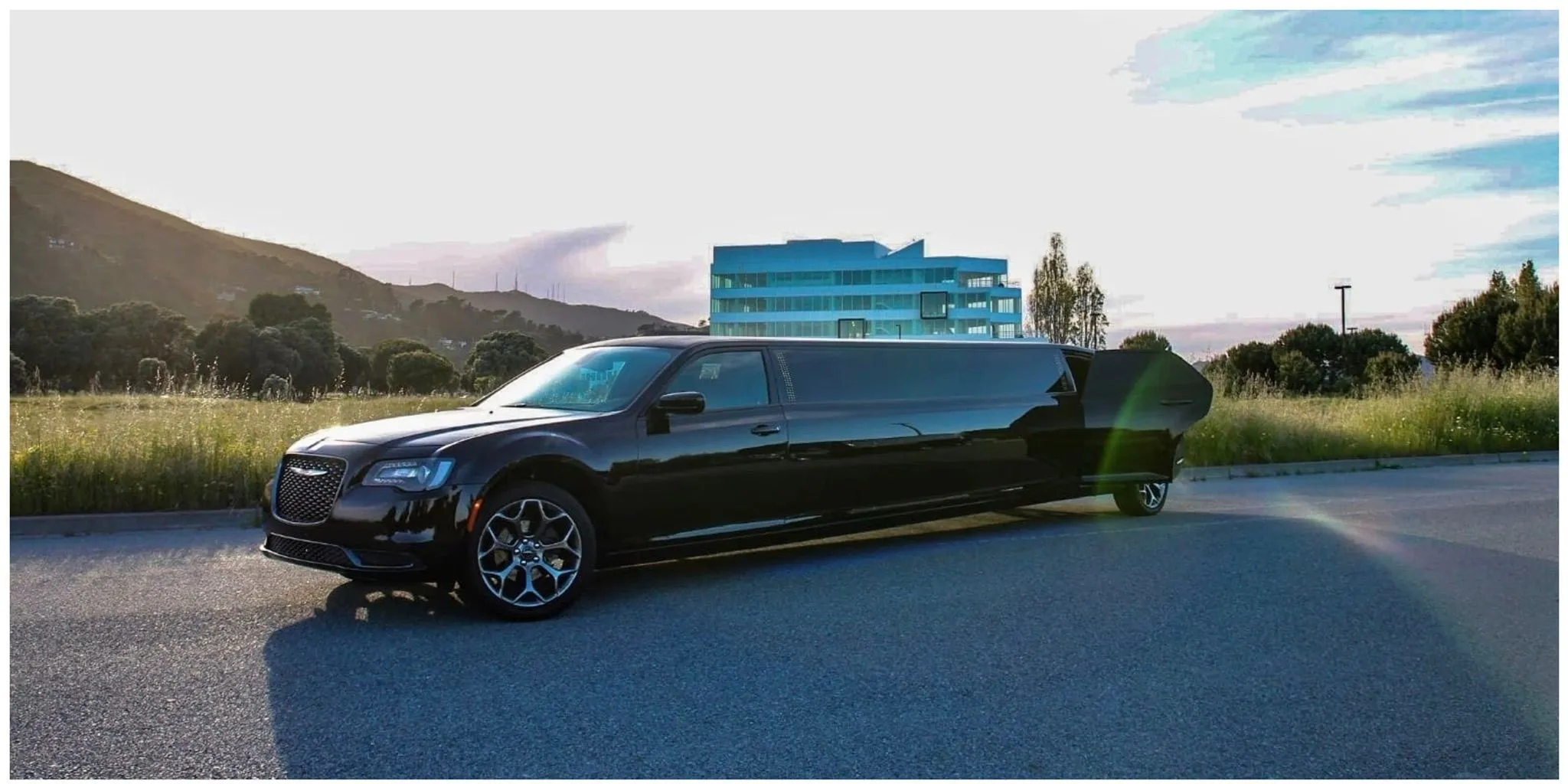
Black stretch limousine, luxury SUV, and passenger van staged for a Bay Area group pickup

A limousine can carry about 3 to 4 people in a luxury sedan, 6 to 7 in a luxury SUV. 8 to 10 in a stretch limousine, and 10 to 14 in a super-stretch limousine. Party buses, minibuses, and motor coaches accommodate larger groups. For a comfortable fit, account for luggage, personal space, the route, and the vehicle’s actual configuration.

How Many People Can Fit in a Limo? Start With the Vehicle Category

The number of people who fit in a limo is determined by the specific vehicle, its installed seats, the passenger configuration, and the needs of the trip. The advertised capacity should be compared with luggage, trip length, boarding needs, and the level of comfort your group expects.

Listed capacity and comfortable capacity are different

Vehicle listings generally describe the maximum passenger count for that configuration. Comfortable capacity is the practical number for your group after considering personal space, clothing, bags, and the time spent on the road. For a short transfer, a group may accept a closer fit. For a longer Bay Area itinerary, a little extra room can make boarding and the ride more pleasant.

Share the exact headcount, pickup sequence, luggage needs, and any mobility considerations when requesting a quote. The transportation team can then discuss an appropriate vehicle rather than guessing from a generic limo label.

Limo Capacity by Vehicle Category

Epic Limousine’s fleet guidance ranges from 3 to 4 passengers in luxury sedans to 36 to 56 in motor coaches. The following ranges are practical planning references for the customer’s vehicle categories, but the exact number depends on the vehicle assigned to your reservation.

Bay Area limo and group transportation capacity guide

Vehicle category Approximate capacity Common planning fit
Luxury sedan 3 to 4 passengers Airport transfers, executive trips, and private point-to-point rides
Luxury SUV 6 to 7 passengers Small groups, luggage-heavy trips, and executive travel
Stretch limousine 8 to 10 passengers Weddings, formal events, dinners, and short celebrations
Super-stretch limousine 10 to 14 passengers Larger formal groups and milestone celebrations
Party bus or limo coach 14 to 30 passengers Celebrations and groups that want shared onboard entertainment
Mercedes Sprinter van About 14 passengers Small group transfers and flexible Bay Area itineraries
Minibus 20 to 35 passengers Mid-size group transportation and multi-stop trips
Motor coach 36 to 56 passengers Large groups, longer routes, and coordinated travel
Charter bus 47 to 56 passengers Large organized groups that need one vehicle with lugagge

These ranges are useful for narrowing the options, but they should not replace a vehicle-specific conversation. Review the Epic Limousine fleet and ask which vehicle will be assigned, how many passenger seats it has, and whether the layout leaves room for the group’s bags and personal space.

How Many People Fit in a Sedan or SUV?

A luxury sedan generally fits 3 to 4 passengers, while a luxury SUV generally fits 6 to 7. These categories are often the practical choice for airport transportation, executive travel, small groups, or trips where luggage matters as much as seating.

Luxury sedans for smaller groups

A sedan can be a polished choice for one to four passengers traveling between an airport, hotel, office, or event. Tell the transportation team how many checked bags, carry-ons, garment bags, or equipment cases will travel with you before selecting a sedan.

For executive airport planning, compare the route and baggage needs with Epic’s SFO, OAK, and SJC transfer guide. Airport codes should be confirmed carefully because the pickup airport affects timing, loading instructions, and the vehicle that makes sense.

Luxury SUVs for people and luggage

A luxury SUV can give a small group more flexibility than a sedan. It may be a better match for six or seven passengers, guests carrying luggage, or an itinerary that includes changing weather and longer travel between Bay Area communities. Ask whether the selected SUV’s full seating configuration leaves enough cargo space for your group.

If your group is deciding between an SUV and a larger shared vehicle, Epic’s private SUV versus party bus comparison provides a useful starting point. The choice should reflect the atmosphere, stops, bags, and privacy your group wants, not just the number of seats on a listing.

How Many People Fit in a Stretch Limo?

A standard stretch limousine generally fits 8 to 10 passengers, while a super-stretch limousine generally fits 10 to 14. These vehicles can work well for formal events and celebrations, but the best capacity depends on the ride length, passenger comfort, and whether the group is carrying luggage.

When an 8 to 10 passenger stretch limousine works

A stretch limousine is often a natural fit for a wedding party, dinner outing, formal arrival, or milestone celebration. Perimeter seating helps a group socialize, and the vehicle creates a distinct event experience. For a group of eight to ten, confirm whether the available space is appropriate for the full route and the clothing or personal items passengers will bring.

Epic’s wedding transportation guide can help couples compare limousines, shuttles, and party buses based on guest movement and event logistics. A wedding party with dresses, suits, bags, or multiple stops may benefit from a different configuration than a group traveling directly to dinner.

When to move up to a super-stretch

A super-stretch can be a better option for a group of ten to fourteen that wants to remain together. Moving up may also make sense when the group has a longer itinerary or wants more room to settle in. Do not choose a super-stretch solely because the maximum capacity matches your headcount. Ask about the exact model and its comfortable configuration.

For a formal evening with several stops, share the pickup order, destination, stop timing, and return window before selecting the vehicle.

When Should a Group Choose a Party Bus, Sprinter, or Coach?

Choose a party bus, Sprinter, minibus, or motor coach when the group is larger than a comfortable limousine fit. The itinerary requires shared transportation, or passengers need more room for a longer trip. The right category depends on headcount, route, luggage, amenities, and whether everyone must travel together.

Party buses and limo coaches for celebrations

Party buses and limo coach party buses generally range from 14 to 30 passengers in Epic’s fleet guidance. They may suit celebrations where the shared ride is part of the event. Confirm the specific vehicle’s seats, standing or movement expectations, lighting, sound, and other amenities rather than assuming every party bus has the same interior.

For a celebration between limousine and motor-coach sizes, review the special-event transportation options and include the event location, pickup points, desired stops, and required service time.

Sprinter vans for compact group travel

A Mercedes Sprinter van is listed at about 14 passengers in the customer’s fleet guidance. It can be a practical middle option for a group that wants to travel together without reserving a full-size bus. It may be useful for airport transfers, corporate outings, tours, and smaller events, but confirm luggage space and the selected interior layout.

Recurring employee routes require different timing and operations than a one-time reservation, so describe the service pattern when requesting a quote.

Minibuses and motor coaches for larger groups

Minibuses generally accommodate about 20 to 35 passengers, while motor coaches generally accommodate about 36 to 56. These vehicles make it easier to keep a large group on one itinerary, particularly for conferences, school trips, tours, and long-distance travel. Confirm luggage compartments, restrooms, reclining seats, Wi-Fi, charging, accessibility, and other amenities for the assigned vehicle.

For a larger Bay Area group, compare the planning considerations in Epic’s charter bus rental guide. If the group needs a motor coach specifically, the motor coach group booking page is the more direct service resource.

How Do Luggage and Comfort Change Limo Capacity?

Luggage and comfort reduce usable capacity, especially in sedans, SUVs, and stretch limousines. A vehicle that technically holds a certain number of people may not be the right choice when passengers have airport bags. Event clothing, equipment, or several hours of travel ahead.

Account for the kind of luggage

List the type and amount of luggage, not just the number of passengers. Two passengers with carry-ons create a different requirement from two passengers with large checked cases, golf bags, musical equipment, or garment bags. Airport trips often favor a vehicle with more cargo flexibility, while a short dinner transfer may have little or no luggage.

For Bay Area airport trips, share the airport, meeting area, bag count, and flight timing. Epic’s Oakland airport transportation guide offers additional OAK planning context.

Use a comfort buffer for longer routes

A comfort buffer is extra capacity beyond the exact headcount. It can give passengers more room for personal items, help with boarding, and reduce the chance that a long ride feels cramped. The appropriate buffer depends on the group, route, vehicle layout, and event. Ask the transportation team to recommend the configuration instead of applying one universal percentage to every vehicle.

For a conference, multiple offices, or a coordinated arrival, review Epic’s corporate transportation services, since corporate groups often need staging in addition to passenger capacity.

Booking Checklist for the Right Limo Size

The easiest way to select the right limo size is to give the transportation provider a complete trip brief. Use this checklist before requesting a quote:

  1. Confirm the headcount. Count every passenger, including guests joining at later pickup points.
  2. Separate adults and children when relevant. Share any seating or supervision considerations that affect the vehicle choice.
  3. List luggage and equipment. Include checked bags, carry-ons, garment bags, sports gear, instruments, or other large items.
  4. Describe the itinerary. Provide the pickup address, destination, return plan, route length, and every planned stop.
  5. Identify the occasion. Explain whether the trip is for an airport transfer, wedding, prom, corporate event, celebration, tour, or another purpose.
  6. State comfort priorities. Tell the provider whether extra personal room, privacy, easy boarding, or a shared social interior matters most.
  7. Ask for the exact vehicle. Confirm the category, passenger capacity, luggage arrangement, and amenities for the assigned vehicle.
  8. Share accessibility needs early. Discuss mobility equipment, boarding time, and any route or loading considerations before booking.
  9. Confirm the pickup coordinator. Give the transportation team one contact person for schedule updates and passenger communication.

Request a Quote

Include the headcount, luggage, date, pickup locations, destination, stops, and comfort preferences in your request. Those details make it easier to compare a stretch limousine with an SUV, Sprinter, party bus, minibus, or motor coach.

Request a Quote

Frequently Asked Questions About Limo Capacity

Can 10 people fit in a limo?

Ten people can fit in some stretch limousines, depending on the vehicle’s installed capacity and configuration. A super-stretch limousine may provide a better match for a group of ten when the trip is longer or passengers want more room. Confirm the exact vehicle rather than relying on the word “limo” alone.

Can 14 people fit in a limo?

Fourteen people may fit in a super-stretch limousine, party bus, limo coach, or Sprinter van, depending on the assigned vehicle. The best option depends on luggage, route length, and whether the group wants a formal limousine interior or a more flexible shared vehicle.

Can 20 people fit in a limousine?

Twenty people generally need a party bus, limo coach, minibus, or another larger group vehicle rather than a standard stretch limousine. A minibus is often the more practical category when the group needs organized seating and shared transportation without reserving the largest coach.

Does luggage reduce the number of people a limo can carry?

Yes. Luggage can reduce usable capacity, particularly in sedans, SUVs, and stretch limousines with limited cargo space. Tell the provider what each passenger is bringing so the vehicle recommendation accounts for both seats and storage.

Is the maximum capacity always comfortable?

No. Maximum capacity describes the vehicle’s listed seating, while comfort depends on the layout, ride length, passenger needs, luggage, and personal space. Ask for a vehicle-specific recommendation when the group will travel for an extended period or carry substantial belongings.

What information should I provide when booking a limo?

Provide the passenger count, luggage details, date, pickup and drop-off addresses, stop sequence, event type, timing, accessibility needs, and desired amenities. Also ask which vehicle will be assigned and whether its confirmed capacity fits the group comfortably.

Choose the Right Vehicle for Your Bay Area Group

How many people can fit in a limo is only the first question. The right choice also depends on luggage, comfort, trip length, stops, accessibility, and the experience your group wants. Epic Limousine can help compare the available vehicle categories for a San Francisco Bay Area itinerary.

Share your group size and trip details to discuss the best fit. Request a Quote or call (415) 799-2744.