
Archives for August 2026

Limo Service Etiquette: A Complete First-Time Rider’s Guide

Your first limousine ride should feel effortless, not intimidating. The smoothest experiences usually come from a few simple choices: share accurate details when booking, arrive ready, communicate clearly, and treat the vehicle and chauffeur with consideration.

Ready to book your first limousine ride? Call (415) 799-2744 or Request a Quote from Epic Limousine to plan a smooth, comfortable trip.

Limo service etiquette means understanding what is included, confirming your itinerary and party size, following vehicle rules, and communicating respectfully with your chauffeur. It also means checking whether gratuity already appears on the invoice and tipping 15% to 20% when it does not.

Etiquette works both ways. A professional chauffeur brings discretion, local navigation knowledge, safety awareness, and polished service, while a prepared rider helps the trip stay comfortable and on schedule. Before thinking about seating or tipping, begin with the details that shape the ride itself.

How Limo Service Etiquette Starts Before You Book

Good limo service etiquette begins when you make the reservation. Give the provider an accurate party size and share a clear itinerary. Plan to arrive a few minutes early so your chauffeur can deliver a smooth, on-time experience from the first pickup.

Booking in advance gives you time to compare vehicle options and confirm that the service fits your occasion. It also gives the chauffeur and dispatch team time to prepare for the route, passenger count, luggage, and timing. This matters whether you are arranging wedding transportation, airport travel, or a night out with friends.

Start with the actual number of passengers, not an estimate. A group that grows after booking may need a different vehicle, while an oversized vehicle can affect the price and experience unnecessarily. Share the pickup address exactly, including a hotel name, venue entrance, terminal, or other detail that helps the chauffeur find the right meeting point.

Next, map the route and every planned stop before the reservation is finalized. Tell the provider about multiple pickups, photo locations, restaurants, hotels, venue changes, or a return trip. For Bay Area airport travel, confirm whether your plans involve SFO, OAK, or SJC and allow appropriate time for terminal access and traffic. The guide to SFO, OAK, and SJC limo transfers can help you think through those details.

Arrive a few minutes early at the agreed pickup point. Being ready when the vehicle arrives prevents rushed loading, missed timing, and confusion for everyone. If your group is coordinating a celebration, review the itinerary with each passenger in advance. The party bus and limo guide offers additional planning ideas for larger wedding-related groups.

What to Confirm When You Book

  • Party size: Confirm the final number of passengers and select a vehicle with appropriate capacity.
  • Pickup time and location: Provide the exact address, entrance, terminal, or meeting point, along with a reachable arrival time.
  • Stops and itinerary: List every planned stop, special event, waiting period, and return destination before service begins.
  • Luggage and special needs: Mention airport bags, mobility needs, child seats, equipment, or anything else that affects vehicle space.
  • Gratuity policy: Ask whether gratuity is already included on the invoice or will be handled separately. Some providers add a flat gratuity, so checking in advance prevents an awkward duplicate payment.
  • Contact information: Confirm the best passenger phone number and the dispatch or chauffeur contact process for day-of changes.

Clear information is a courtesy to the chauffeur and a practical way to protect your own schedule. When the plan changes, communicate promptly rather than assuming the vehicle can absorb an extra stop or delay. Thoughtful preparation makes the ride more comfortable for your group and supports the professional, respectful partnership that defines a well-run limo service.

How Much Should You Tip a Limo Driver?

Tip your limo driver 15% to 20% of the total fare when gratuity is not already included. Give the tip in cash at the end of the ride. Check the invoice, confirmation, or receipt first so you do not pay twice if a service charge or driver tip line already covers it.

Gratuity is an additional payment that recognizes service, and tips form part of the income for many service workers, including taxi and livery drivers. The CFPB guide to tipping offers helpful background on how tips work across service industries. For broader advice on tipping situations, review the Emily Post general tipping guide.

Calculate the percentage from the final fare, then hand the chauffeur cash before leaving the vehicle. Cash makes the gesture clear and avoids confusion when several passengers share the ride. If you are traveling for work, save the receipt and check your company’s reimbursement policy before assuming a tip will be covered. Travelers using a corporate sedan service should confirm whether gratuity is reimbursed separately or must fit within a ground transportation allowance.

Gratuity Already Included?

Review the invoice, confirmation email, or final receipt for terms such as “gratuity,” “service charge,” or “driver tip.” Some providers add a flat gratuity to the invoice. So paying another 15% to 20% automatically could result in tipping twice. When the included amount is unclear, ask the booking coordinator or chauffeur before payment.

An extra cash tip is still appreciated when the chauffeur provides service beyond the standard ride. Consider tipping toward the higher end, or adding more, when the trip involves:

  • Handling several heavy or oversized pieces of luggage.
  • Waiting through extra stops or significant itinerary changes.
  • Late-night, early-morning, or unusually demanding travel conditions.
  • Special care for children, older passengers, or guests with mobility needs.
  • Discreet, patient service during a busy event or tight schedule.
  • Exceptional professionalism that makes the ride notably easier.

The amount should reflect the actual experience, not pressure to follow a rigid formula. A clear invoice, a prepared cash tip, and a brief thank-you keep the final exchange simple and professional.
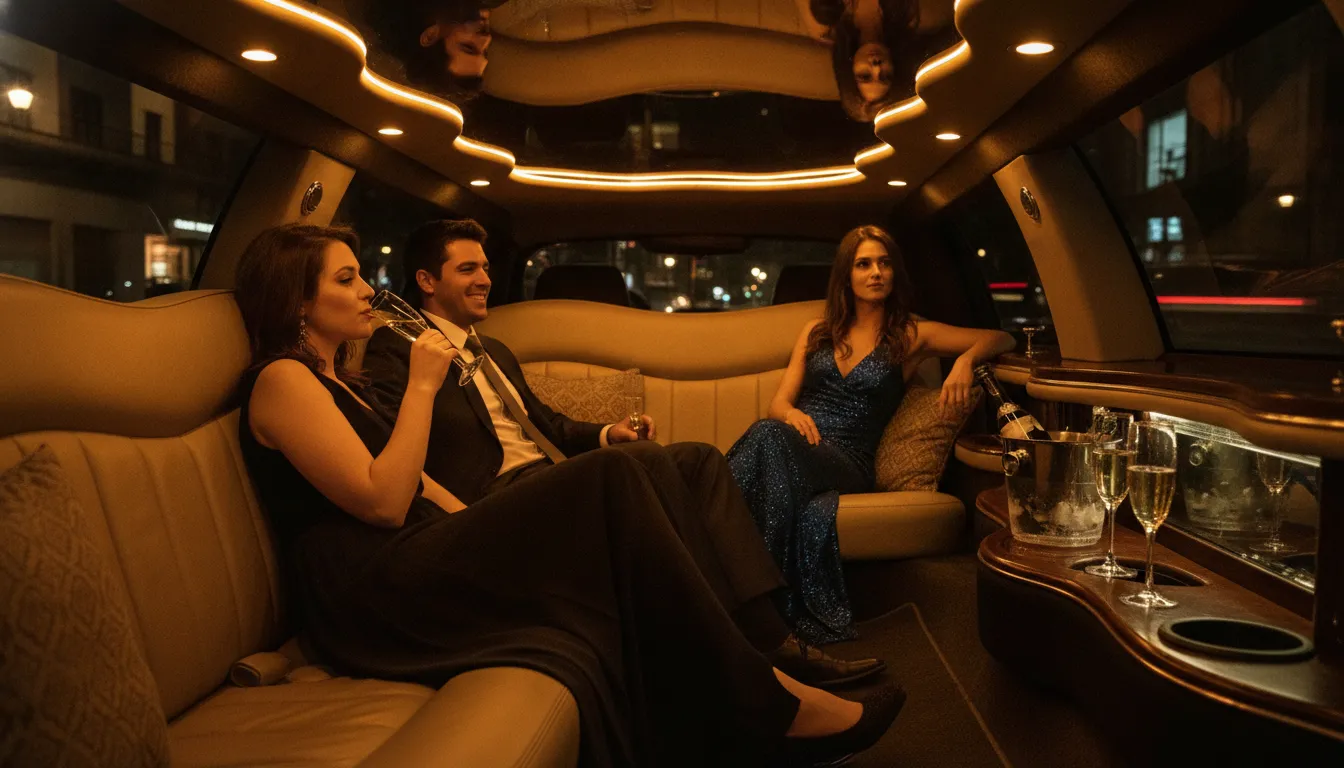
Passengers seated comfortably in the rear cabin of a black stretch limousine with warm interior lighting
Knowing where everyone sits helps a group board smoothly and stay comfortable.

Seating Etiquette: Where Everyone Sits in a Limousine

There is no rigid seating chart for every limousine ride. The host, couple of honor, or group organizer usually decides who sits where. Everyone else can follow the chauffeur’s lead and allow the door to be opened before boarding.

When the chauffeur opens the door, pause and let them assist rather than reaching around the door or stepping into the vehicle at the same time. Boarding is simple:

  1. Turn sideways and enter feet first, then lower yourself onto the seat and bring your legs inside.
  2. Mind the roofline and let the chauffeur close the door once everyone is seated.
  3. On arrival, turn toward the open door, place your feet on the ground, and stand only after you have cleared the roofline.

This approach is more graceful and helps you avoid striking your head.

On departure, the guest of honor or person seated farthest inside generally enters first so others do not have to climb across them. On arrival, the person nearest the door can exit first, followed by the remaining passengers. If the chauffeur gives different instructions because of traffic, a curb, luggage, or safety concerns, follow that direction.

Seating for Weddings and Prom Groups

  • Weddings: Give the couple of honor the most comfortable or visually prominent seats, unless they request another arrangement. Coordinate the order with the wedding schedule and the chauffeur.
  • Prom: Confirm the seating plan before the group arrives, especially if formalwear, corsages, or personal bags will take up space.
  • Group photos: Keep the couple of honor or prom celebrant from being blocked by taller passengers when the group gathers near the vehicle.
  • Corporate groups: Let the organizer or senior guest choose the seating order, and keep conversations and movements professional during transfers.
  • Jump seats: Rear-facing jump seats can be useful for balancing a group. But passengers should sit securely and follow the chauffeur’s instructions rather than changing seats while the vehicle is moving.
  • Shared courtesy: Avoid stretching across another passenger’s space, and offer the easiest entry or exit position to guests with mobility needs or delicate clothing.

For wedding logistics, review this wedding shuttle service timeline before assigning pickup seats. Groups planning a formal evening can also use the prom limo guide to coordinate passengers, timing, and vehicle expectations.

How Should You Communicate With Your Chauffeur?

The smoothest ride begins with a clear conversation: share your complete itinerary, planned stops, luggage needs, and comfort preferences before departure. During the trip, use the intercom or speak through the privacy divider when needed, while allowing the chauffeur to keep primary attention on safe driving and navigation.

What to Tell Your Chauffeur Before You Leave

  • Your full itinerary, including the final destination and every planned stop.
  • Any timing requirements, such as a flight, ceremony, meeting, or dinner reservation.
  • How many bags you have and whether any items are unusually large, fragile, or difficult to load.
  • Your preferred cabin temperature, music, lighting, or level of conversation.
  • Whether anyone in your party needs extra assistance entering, exiting, or settling in.
  • The best way to reach you if the pickup location changes or the group becomes separated.

Clear instructions about destinations and stops help prevent misunderstandings, delays, and last-minute route changes. They also give the chauffeur time to plan effectively. This matters particularly in the Bay Area, where local navigation and timing can affect the experience. If you are comparing providers, our guide to choosing a chauffeur service in San Francisco covers the questions worth asking before you reserve.

Luggage expectations deserve the same directness. A chauffeur can usually assist with loading and unloading, but the vehicle and passenger count should match the group and baggage requirements established during booking. Mentioning those details early is part of good corporate sedan service etiquette, especially when a schedule depends on a prompt departure.

Luxury vehicles may include an intercom, privacy glass, or a divider between the cabin and the driver. Use these features courteously rather than calling repeatedly, knocking on the divider, or distracting the chauffeur while the vehicle is moving. A brief request about temperature or music is appropriate. For route changes, safety concerns, or assistance, wait for a safe opportunity to speak clearly.

Professional communication works both ways. Epic Limousine chauffeurs are CDL-licensed, background-checked, and trained in professional etiquette and Bay Area navigation. Their focus is passenger safety, smooth navigation, discretion, and confidentiality. California ground transportation providers also operate within state oversight; the California Public Utilities Commission provides charter-party carrier information for passengers who want regulatory context.

Riders support that professional standard by being courteous, keeping noise at a reasonable level, following vehicle rules, and wearing attire appropriate to the occasion. Give the chauffeur space to work, respond promptly to reasonable questions, and avoid treating privacy as an invitation to disregard safety. That partnership is the heart of thoughtful limo service etiquette.
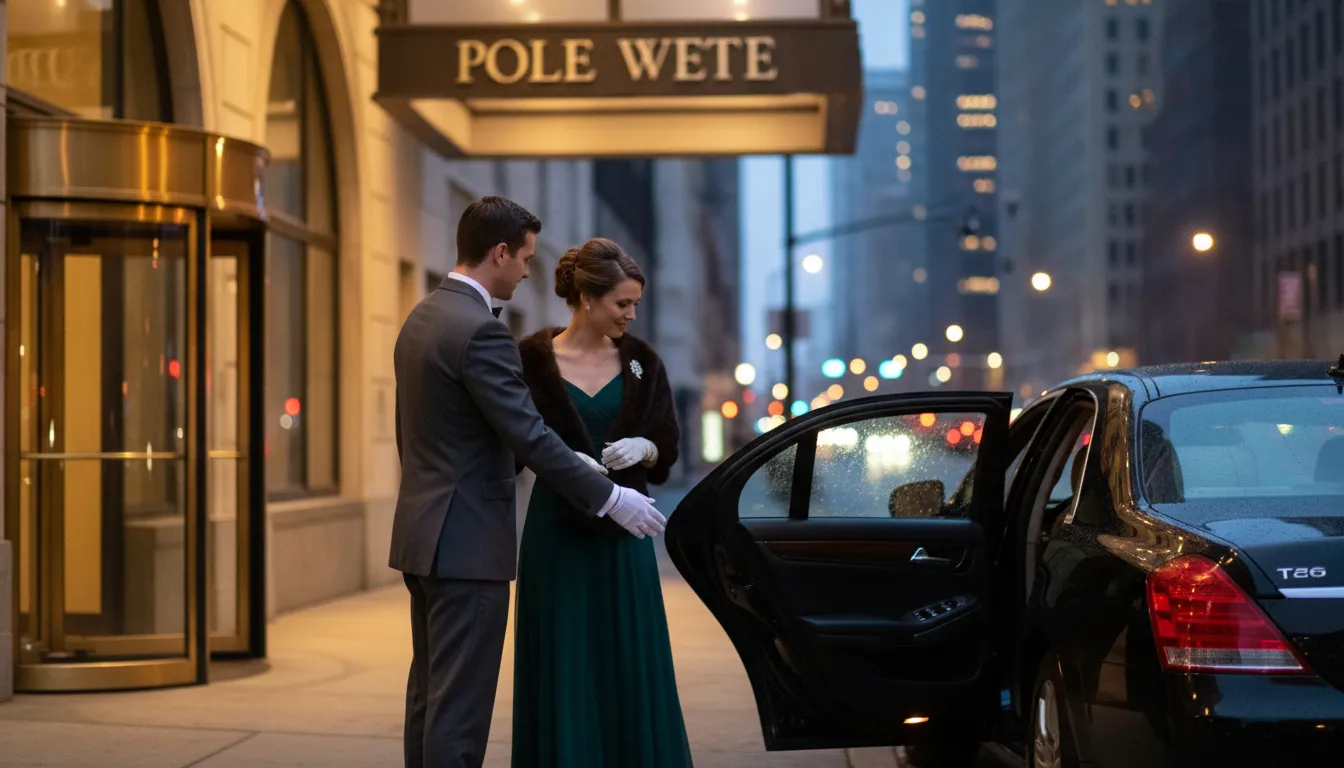
Professional chauffeur in a dark suit opening the door of a black limousine for passengers at a downtown entrance
A courteous rider and a professional chauffeur work together for a smooth ride.

What Not to Do in a Limo: Vehicle Care and Behavior

Treat the cabin like a well-kept living room. No smoking, no standing while the vehicle moves, no trash left behind, and no spills or interior damage. Follow the company’s posted rules, ask when you are unsure. And leave the cabin as clean as you found it out of respect for the chauffeur and the next passengers.

Every operator may have slightly different policies, so review the rules before departure and ask questions if anything is unclear. This matters especially for celebrations, including wedding transportation, where formal clothing, flowers, food, and drinks can create additional risks inside the vehicle.

  • Do not smoke or vape. Smoke and vapor can affect the cabin, upholstery, and the comfort of future passengers.
  • Do not stand while the vehicle is moving. Stay seated, and never stand through a sunroof or another opening. The chauffeur needs everyone to remain safely inside the cabin.
  • Do not leave trash behind. Gather bottles, wrappers, napkins, and personal items before you exit.
  • Do not bring open food or drinks unless the company permits them. Even a small spill can stain upholstery or damage interior surfaces.
  • Do not raise the volume beyond what the chauffeur or group can comfortably manage. Enjoy music and conversation without creating an unnecessarily disruptive environment.
  • Do not ignore company rules. Policies about smoking, alcohol, food, seating, and vehicle features exist to protect passengers and the vehicle.
  • Do not distract the chauffeur. Share necessary requests clearly and respectfully, but avoid behavior that interferes with safe driving or navigation.
  • Do not treat the interior as disposable. Keep shoes, bags, decorations, and clothing from scraping, staining, or placing unreasonable strain on seats and trim.

Courtesy is part of the service partnership. A professional chauffeur is responsible for safe, smooth navigation and a comfortable experience, while passengers are responsible for communicating respectfully and caring for the space. Leave the cabin in good condition, and everyone after you gets to start their ride on the right note.

Limo Service Etiquette for Weddings, Prom, and Corporate Events

Etiquette changes with the occasion, but the essentials stay consistent: arrive on time, respect the vehicle, and treat your chauffeur courteously. The right approach helps a wedding stay on schedule, gives a prom group clear structure, and keeps corporate travel polished and discreet.

Event-specific limo etiquette at a glance
Occasion Etiquette Focus Common Mistake
Weddings Build in timing for photos, coordinated boarding, and venue transitions. Leaving photo stops or departure timing undecided until the last minute.
Prom Coordinate the group, confirm pickup points, and designate one adult or student contact. Having several people give conflicting instructions or delaying the group’s arrival.
Corporate Maintain professional conduct, protect confidential conversations, and follow expense rules. Assuming a tip is reimbursable without checking company policy.
Airport transfers Share the correct flight, terminal, luggage needs, and pickup instructions. Changing the meeting point without notifying the chauffeur or travel coordinator.

Wedding transportation etiquette

Wedding schedules depend on small timing decisions. Share the ceremony, reception, photography locations, and required arrival times in advance. The couple of honor typically boards last when the group is gathering and leaves first when the vehicle departs. So the chauffeur can position the vehicle and protect the schedule. Ask about photo stops before the event, including how much time each stop requires.

Also confirm the company’s policy on confetti, flower petals, food, and beverages. Loose confetti can damage the interior or create a difficult cleanup, so use only materials the provider approves. A detailed wedding transportation plan makes those expectations easier to coordinate.

Prom group coordination

For prom, choose one point of contact for the group. That person can confirm the final passenger list, pickup sequence, addresses, and arrival deadline with the chauffeur. Everyone should be ready before the scheduled pickup rather than treating the vehicle as a gathering place. A reliable prom limo experience depends on the group following the same itinerary and communicating changes promptly.

Corporate professionalism and tipping

Corporate passengers should keep conversations and behavior professional, respect privacy, and avoid distracting the chauffeur. If the ride is expensed, check the company’s travel policy before tipping. Reimbursement rules vary, and some transportation invoices already include gratuity. Keep the receipt and document the business purpose when required. These habits pair naturally with a discreet corporate sedan service.

The same courtesy applies to social itineraries such as a Napa wine tour transportation guide: communicate stops, follow vehicle rules, and allow the chauffeur to focus on safe navigation.

Planning a wedding, prom, corporate event, or airport transfer? Call Epic Limousine at (415) 799-2744 or Request a Quote and we will match the right vehicle and itinerary to your group.

Frequently Asked Questions

How much should you tip a limo driver?

A tip of 15% to 20% of the fare is a common guideline when gratuity is not already included. Check your invoice first, then adjust for exceptional service, extra stops, or substantial luggage. The Consumer Financial Protection Bureau identifies taxi and livery drivers among service workers who may receive tips as part of their income.

Does the gratuity include the tip for a limo driver?

Not always. Review the quote or final invoice for a gratuity, service charge, or chauffeur tip line. If gratuity is already included, an additional tip is optional, though a separate thank-you may be appropriate when the chauffeur provides notably helpful service.

How should passengers sit in a limousine?

Follow the seating plan agreed on for your event and let guests of honor, the couple, or the client take priority when appropriate. Enter and exit carefully, allow the chauffeur to open the door, and avoid changing seats while the vehicle is moving.

What should I tell my limo driver before the ride?

Confirm the pickup address, contact person, party size, luggage, planned stops, timing, and any music or temperature preferences before departure. Share changes as early as possible so the chauffeur can manage the itinerary safely and efficiently.

Is it rude to eat or drink in a limo?

Ask about the company policy before bringing food or beverages. If permitted, keep everything tidy, use secure containers, avoid spills, and remove all trash when the ride ends. Never smoke or damage the vehicle, and follow any rules about windows or privacy partitions.

What should first-time riders know about limo service etiquette?

Confirm your itinerary and party size when booking, arrive a few minutes early, let the chauffeur open the door. Communicate your stops and preferences clearly, follow the vehicle’s rules, and tip 15% to 20% when gratuity is not already included. Treat the ride as a partnership: the chauffeur handles safety and navigation while you handle courtesy and preparation.

Ready to Make Your Ride Comfortable and Easy?

Clear planning and respectful communication help create a smooth experience for first-time riders, whether you are arranging airport transportation, an event, or a private outing. If you would like guidance on the right vehicle and itinerary for your group, call (415) 799-2744 or Request a Quote from Epic Limousine.

Hotel Shuttle Service Bay Area: Simplify Event Group Travel

When a conference, wedding, or large event involves several hotels, transportation can quickly become one of the most important details to coordinate. Guests need clear pickup times, comfortable vehicles, and a dependable plan that keeps the day moving without adding stress for the host or event team.

A hotel shuttle service Bay Area event planners can rely on connects hotels, airports, and venues through pre-arranged routes built around the event schedule. Professional group transportation helps keep guests together, supports timely arrivals, and gives organizers one accountable transportation partner.

That coordination matters across the San Francisco Bay Area, where groups may travel between SFO, OAK, SJC, downtown hotels, convention centers, and wedding venues. Epic Limousine has served the region since 2012, with vehicles ranging from luxury sedans to 56-passenger motor coaches and chauffeurs who are CDL-licensed and background-checked. The right plan begins by matching vehicle capacity and pickup timing to the guest experience, then accounting for the route details that can affect every event transfer.

Make your next Bay Area event seamless. Request a free quote to discuss your hotel shuttle needs with our team.

How a Hotel Shuttle Service in the Bay Area Simplifies Event Logistics

A coordinated hotel shuttle turns guest transportation into a scheduled part of the event plan rather than a series of individual rides. Planners can group hotel pickups, venue arrivals, and return trips around the program, helping guests arrive together and giving the event team one transportation partner to manage.

  • Block booking creates consistency: Reserve vehicles and service windows for the full guest group instead of asking attendees to arrange separate transfers.
  • Schedule coordination protects the agenda: Align pickup times with registration, ceremony, meal service, and closing times.
  • Multi-venue routing reduces confusion: Build a practical plan for hotels, conference venues, reception sites, and overflow locations.

Block booking keeps the guest experience organized

For conferences, weddings, and large group gatherings, the hotel may be the easiest meeting point. A block reservation gives the planner a defined number of vehicles, operating hours, and pickup windows. That structure makes it easier to communicate instructions to guests and adjust the plan when room blocks, session attendance, or event timing changes.

The right vehicle mix also matters. Epic Limousine maintains a fleet that ranges from luxury sedans to 56-passenger motor coaches. Allowing the transportation plan to match the group size and the movement required between locations. For recurring employee or conference shuttles, explore our corporate bus rental options for year-round transportation programs. A smaller vehicle may work well for a hotel VIP group, while a motor coach can consolidate transportation for a larger guest list.

Timing coordination connects hotels and venues

Event transportation should be planned backward from the time guests need to be seated, checked in, or ready for the next activity. A professional operator can account for staggered hotel departures, loading time, traffic-sensitive routes, and return windows instead of treating every trip as a simple point-to-point transfer. For convention planning, a Bay Area convention shuttle service can be built around the event schedule and venue requirements.

For events using more than one venue, the plan can separate guest movements into clear service periods: hotel to the first venue. Transfers between scheduled locations, and venue to hotel at the end of the program. This reduces last-minute calls and helps the event team know where vehicles should be and when.

Professional standards matter beyond the route

Guests notice whether vehicles are clean, chauffeurs are professional, and the service stays on time. Epic Limousine chauffeurs are CDL-licensed and background-checked. Those standards support a more dependable experience for planners who are responsible for guests, schedules, and the event’s overall impression.

Conference and Convention Hotel Shuttle Coordination

For Bay Area business conferences, a coordinated hotel shuttle keeps attendees moving between convention hotels and the venue without asking each guest to solve transportation independently. The most effective plan connects pickup windows to registration, session changes, networking events, and the final departure, with routes designed around the actual hotel list.

Build the route around the conference schedule

Start with the event agenda, then work backward from the times guests must be in their seats. A route serving several hotels may need an early first departure for keynote attendees, followed by a second wave for later sessions. At the end of the day, staggered return departures can align with closing sessions, hosted dinners, and evening receptions rather than forcing every passenger onto one fixed schedule.

For events at Moscone Center, planners should also account for downtown loading areas, traffic conditions, and the walking distance between vehicle staging points and the convention entrance. Moscone Center shuttle planning can help refine those venue-specific details before the program is finalized.

Coordinate multiple convention hotels

Multi-hotel service works best when the guest list is grouped by property and each stop has a defined pickup window. Share the schedule with hotel contacts, event staff, and attendees in advance. Epic Limousine also serves academic and group travel when events include school groups or university delegations. Clear instructions should identify the lobby meeting point, the vehicle description, the departure time, and a contact for day-of questions.

Planners should also decide whether every vehicle follows the same loop or whether separate routes are more practical. A dedicated route for a hotel with a large room block may reduce dwell time at smaller properties. For a distributed conference, separate inbound and outbound waves can improve punctuality while preserving flexibility for attendees whose sessions end at different times.

Do not assume the airport courtesy shuttle covers the event

SFO’s public courtesy shuttles serve participating airport-area hotels only. They do not provide service to San Francisco or other Bay Area regions. So they are not a substitute for a pre-arranged conference route between airport arrivals, convention hotels, and Moscone Center. SFO’s hotel shuttle guidance confirms this limitation.

A private group route gives the planner control over timing, hotel coverage, and venue coordination. Confirm passenger counts, luggage needs, accessibility requirements, and all planned stops before requesting a final operating schedule.

Wedding Guest Hotel Shuttle Logistics in the Bay Area

Wedding transportation works best when the hotel connection is planned as carefully as the venue itself. A coordinated shuttle moves guests from designated hotels to the ceremony, then supports the transition to the reception and the return trip. So family members and out-of-town guests are not left arranging separate rides in an unfamiliar area.

Coordinate the ceremony-to-reception transition

Start with the guest experience and build the schedule backward from the ceremony start time. Account for hotel loading, traffic, venue access, and a practical arrival window before guests need to be seated. If the ceremony and reception are at different locations, the transportation plan should identify whether guests remain on the same vehicle. Transfer after the ceremony, or board a second vehicle staged near the ceremony site.

A hotel-to-venue plan should also identify one transportation contact, clear pickup instructions, and a realistic return schedule. Guests should know where to wait, how early to arrive, and whether the final shuttle departs at a fixed time or remains available throughout the evening. For more details on wedding-specific packages, visit our wedding transportation services page.

Choose a single transfer or a continuous loop

A single scheduled transfer can work well when most guests are staying at one hotel and the ceremony and reception share a venue. It keeps the itinerary simple and limits idle vehicle time. A continuous shuttle loop is more flexible when guests are distributed among multiple hotels. The reception extends for several hours, or some attendees need to return before the celebration ends.

For larger weddings, planners can assign vehicles to separate hotel clusters or stage a vehicle at the reception for scheduled departures. Vehicle sizes can range from sedans to full-size buses, allowing the transportation plan to match the guest count and route rather than forcing every traveler into separate cars. This approach reflects the seamless, elegant group experience expected from charter transportation for weddings and other events. Learn more about wedding shuttle service Bay Area options for guest transportation.

Why group shuttles simplify guest transportation

Rideshare can require guests to request multiple vehicles, coordinate unfamiliar pickup points, and monitor changing availability at the same time. A reserved shuttle gives the wedding party one shared plan, consistent pickup locations, and a transportation provider responsible for following the agreed itinerary. It also keeps guests together, which is especially helpful for older relatives, families, and visitors traveling from outside the Bay Area.

When hotel locations, venue addresses, guest counts, and event times are confirmed early. A professional planner can build a hotel shuttle service Bay Area itinerary that protects the celebration’s timing while giving guests a more relaxed way to enjoy the day.

Fleet Options for Bay Area Hotel Shuttle Service

The right vehicle keeps hotel transfers comfortable, organized, and efficient. For groups traveling between hotels, event venues, and the SFO, OAK, or SJC corridors. Vehicle selection should account for passenger count, luggage, route length, and the experience guests expect.

Mercedes Sprinters for smaller hotel groups

A Mercedes Sprinter is a practical choice for groups of up to 14 passengers. Its smaller footprint makes it easier to maneuver through hotel entrances, downtown streets, and venue loading areas than a full-size bus. Sprinters work well for executive groups, wedding parties, airport arrivals, and guest transfers where everyone should travel together without splitting into multiple cars.

Depending on the vehicle configuration, passengers can enjoy comfortable seating, power ports, Wi-Fi, and space for carry-on luggage. For a hotel group with a defined guest list and a limited number of bags, a Sprinter offers a polished transfer experience while keeping the vehicle appropriately sized.

Hotel Shuttle Vehicle Comparison at a Glance

Vehicle Type Passenger Capacity Best For Key Amenities
Mercedes Sprinter Up to 14 Executive groups, airport transfers, wedding parties Power ports, Wi-Fi, luggage space
Mini Bus 20-35 Hotel blocks, corporate meetings, guest shuttles Reclining seats, Wi-Fi, luggage compartments
Motor Coach 36-56 Conferences, large weddings, convention delegations Restroom, reclining seats, overhead storage, Wi-Fi
Luxury Sedan 3-4 VIP transfers, executive arrivals Leather interior, climate control, privacy

Matching the vehicle to the group size and travel distance keeps hotel transportation comfortable and efficient. Epic Limousine maintains a diverse fleet ranging from luxury sedans to 56-passenger motor coaches, giving Bay Area event planners one source for every shuttle need.

Mini buses for groups of 20 to 35

Mini buses bridge the gap between smaller executive shuttles and full-size motor coaches. They are well suited to hotel blocks, corporate meetings, and wedding guest movements involving 20 to 35 passengers. A mini bus can simplify a multi-hotel pickup plan by carrying a larger group on each run, reducing the number of vehicles arriving at the venue.

Look for features that make the ride easier during a busy event day, including reclining seats, power ports, Wi-Fi, and dedicated luggage compartments. These amenities are especially useful when guests are traveling from the airport, carrying event materials, or moving between a hotel and an off-site venue.

Motor coaches for groups of 36 to 56

For larger room blocks, conference delegations, or guest lists of 36 to 56 people, a motor coach can provide the most efficient solution. It gives the group one shared schedule, one coordinated arrival, and more room for luggage than several smaller vehicles. Epic Limousine maintains a diverse fleet ranging from luxury sedans to 56-passenger motor coaches, giving planners flexibility as attendance changes. Review the available motor coach rental options when planning a larger hotel shuttle program.

Fleet size is only one part of the decision. A professional operator should also match the vehicle to the route, loading conditions, luggage needs, and timing of each movement. With the right fit, hotel transportation stays comfortable for guests and manageable for the planner across the SFO, OAK, and SJC corridors.

How Far in Advance To Book and What It Costs

For hotel groups, booking one to two weeks ahead is a practical minimum, while peak travel seasons call for more lead time. Early planning gives the transportation team room to confirm the right vehicle, coordinate hotel pickup windows. And build a route that supports the event schedule rather than forcing last-minute compromises.

Steps To Reserve Your Hotel Shuttle

  1. Confirm your event dates and hotel room block locations.
  2. Estimate the guest count that will use the shuttle service.
  3. Identify pickup and drop-off addresses, luggage needs, and any accessibility requirements.
  4. Share the event schedule, including ceremony, session, or reception start and end times.
  5. Request a quote with your preferred vehicle type and service duration.

The earlier you complete these steps, the more scheduling flexibility your transportation provider has to match vehicles to your route and timeline. Reserve at least one to two weeks ahead, and earlier during peak conference and wedding seasons.

Reserve as soon as you know the event dates, hotel locations, and approximate guest count. This is especially important for conferences, weddings, and airport-heavy itineraries during busy periods. A preliminary guest count is enough to start the conversation. The final number can usually be refined as registrations or RSVPs develop.

Share the details that affect the plan, including pickup and drop-off addresses, desired departure times, luggage needs, accessibility requirements, and the number of hotel stops. For recurring employee or guest transportation, an established schedule makes it easier to plan consistent service. Epic Limousine can also discuss recurring shuttle programs when transportation is needed across multiple dates.

What determines the price?

Hotel shuttle pricing is quote-based because every itinerary has different operating requirements. Several factors affect the final rate.

  • Distance between the hotel, airport, venue, and return locations
  • Vehicle size and the number of passengers
  • Total service duration, including standby time
  • Number of hotel or venue stops
  • Route complexity and scheduling requirements

A larger vehicle may be more efficient for a full group, while smaller vehicles can make sense for staggered departures or separate hotel routes. Reviewing these options before the event helps planners balance comfort, timing, and budget without relying on a one-size-fits-all estimate.

Billing for groups and organizations

There is no surge pricing. You receive a clear quote based on the agreed itinerary from a family-owned Bay Area company, and volume discounts may be available for larger groups or multiple service days. Corporate clients can also ask about NET 30 billing terms. Providing the complete schedule early is the best way to receive an accurate proposal and keep transportation costs predictable.

Hotel Employee Shuttle Programs for Bay Area Properties

Hotel employee transportation works best as a planned operating program, not an occasional ride request. Properties near SFO, OAK, and SJC may need dependable coverage for housekeeping, front desk. Food service, engineering, and overnight teams whose shifts begin or end before normal public transit schedules.

Support every shift, including early mornings and nights

A staff shuttle program can connect employees with practical pickup points near their homes, transit hubs, or designated parking areas. Routes and departure times can be built around actual shift changes, helping employees arrive ready to work and return home after late-night service. For hotels operating around the clock, the plan may include early morning, evening, weekend, and overnight runs rather than a single peak commute.

Relieve parking pressure around the property

Employee transportation can also reduce the demand for on-site parking. That gives hotel operators more flexibility to reserve convenient spaces for guests, manage limited lots, and avoid asking staff to circle for a space before a shift. A route review should consider employee home areas, shift overlap, hotel access points, and safe loading locations so the service is useful without creating congestion at the entrance.

Set a professional standard for staff transportation

Reliability matters, but so do the details employees experience on every trip. Professional chauffeur conduct, clean vehicles, and regulatory compliance are important standards for high-end group transportation, according to Epic Limousine’s service guidance. Consistent communication about route changes, pickup windows, and holiday schedules can make the program easier for hotel managers and staff to use.

Epic Limousine can tailor a commuter shuttle programs plan to a property’s staffing pattern, service area, and vehicle needs. Discuss the number of employees, shift times, likely pickup zones, accessibility requirements, and whether the program should run continuously or on selected days. That information gives the transportation team a practical foundation for designing dependable service across the Bay Area.

Frequently Asked Questions

How do guests get from SFO to a Bay Area hotel or event venue?

Public courtesy shuttles at SFO serve participating airport-area hotels only. For hotels, convention centers, or wedding venues elsewhere in the Bay Area. Arrange a private charter in advance so the route, pickup times, and destination are coordinated with your event schedule. SFO airport guidance confirms the limited coverage of public hotel shuttles.

Do hotel shuttle services cost money?

Hotel-operated courtesy shuttles may be complimentary or included as part of a hotel program. While private event transportation is quoted based on vehicle size, service duration, distance, and the number of stops. A private quote also accounts for dedicated scheduling between hotels and the venue rather than relying on a fixed hotel route.

What vehicle sizes are available for hotel event transportation?

Vehicle choices can range from luxury sedans for individual VIP transfers to Sprinter-style vehicles, minibuses, and motor coaches for larger groups. Epic Limousine’s fleet ranges from luxury sedans to 56-passenger motor coaches, allowing planners to match capacity with the guest list, luggage needs, and route plan.

How far in advance should I book a hotel shuttle for an event?

For conferences, weddings, and other peak-season events, request transportation at least one to two weeks ahead, and earlier when multiple hotels, venues, or vehicles are involved. Early planning gives the operator time to confirm availability, build a practical route, and align departures with ceremony, reception, or session times.

Can one shuttle plan cover several hotels and event locations?

Yes. A private event shuttle can use coordinated pickup windows and routes across several Bay Area hotels, venues, or airport corridors. Share the guest count, hotel addresses, venue schedule, accessibility needs. And preferred departure times so the transportation plan can be designed around the event rather than a standard route.

Ready to Plan Your Hotel Shuttle Service?

A coordinated shuttle plan can help your guests travel between Bay Area hotels and event venues with a smoother, more comfortable experience. Share your dates, guest count, pickup locations, and schedule with our team so we can recommend an approach that fits your event. Request a Quote for professional group transportation from Epic Limousine.

Rehearsal Dinner Transportation Bay Area: A Planning Guide

A wedding weekend rarely follows a single route. Guests may travel from hotels to a rehearsal dinner, then to the ceremony, and finally to a post-wedding brunch, often across neighborhoods, bridges, or wine country roads. Planning each movement separately can create avoidable delays, parking concerns, and confusion for family and out-of-town guests.

For smooth, reliable rehearsal dinner transportation Bay Area planning, reserve a coordinated service that matches your guest count, venues, pickup locations, and event timeline. A single transportation partner can help connect the rehearsal dinner, wedding celebration, and brunch with consistent communication and professional chauffeurs.

Ready to simplify the weekend? Request a Quote or call Epic Limousine at (415) 799-2744 to discuss your plans.

With the right plan in place, transportation becomes part of the celebration rather than another detail for the couple or wedding party to manage. The practical benefits begin with keeping guests together, comfortable, and on schedule.

Why Transportation Matters for Rehearsal Dinners and Post-Wedding Brunches

Rehearsal dinners and post-wedding brunches may be smaller than the ceremony and reception, but they create their own transportation challenges. Guests may be arriving from different hotels, visiting an unfamiliar part of the Bay Area, or moving between several weekend events. Planning dedicated transportation for each gathering keeps the experience comfortable and coordinated instead of treating these events as an afterthought.

Safety after an evening of celebration

Alcohol and driving should never be combined, even when a guest believes they are below the legal limit. The National Highway Traffic Safety Administration reports that 11,904 people died in alcohol-impaired driving crashes in 2024. It also recorded 2,028 deaths in alcohol-related crashes involving a driver with a blood alcohol concentration from .01 to .07 g/dL, below .08 g/dL. A planned shuttle or chauffeured vehicle gives guests a dependable way to return to their hotel without making a difficult decision after dinner. NHTSA’s drunk-driving guidance explains why even small amounts of alcohol can affect thinking, reasoning, and coordination.

Parking and unfamiliar routes add unnecessary stress

Popular San Francisco, Peninsula, East Bay, South Bay, and wine-country restaurants may have limited parking, complicated access, or busy streets around meal times. Guests who are unfamiliar with the area can lose time searching for a space, navigating one-way roads, or coordinating rideshares at separate pickup points. A scheduled shuttle reduces the need for each person to find individual parking and helps the group arrive together. For a post-wedding brunch, the same approach makes it easier to move guests from hotels to the restaurant and then onward to airports or their next destination.

One itinerary keeps the wedding weekend moving

Transportation is also a scheduling tool. When pickup locations, departure times, and return trips are arranged in advance, the wedding party can focus on the dinner or brunch rather than tracking late arrivals. It helps planners coordinate multiple events across the weekend, including the rehearsal, ceremony, reception, and farewell brunch. Review the rehearsal dinner and wedding shuttle timelines to map those movements before confirming vehicles and pickup windows.

Vehicle Options for Rehearsal Dinner Transportation in the Bay Area

The right vehicle keeps the evening comfortable, coordinated, and in step with the tone of your wedding weekend. Consider the guest count, luggage or personal belongings, parking conditions, and whether the ride should feel intimate and polished or social and celebratory. The same planning applies to a post-wedding brunch, when guests may appreciate an easy ride after a late night.

Compare vehicle types for rehearsal dinner groups.
Vehicle Capacity Best fit Why choose it
Sprinter van Up to 14 passengers Bridal parties and intimate dinners Provides a comfortable shared ride while keeping a smaller group together.
Party bus 12 to 38 passengers Lively groups and celebratory routes Creates a festive atmosphere for the ride between hotels, dinner, and after-party stops.
Mini-coach 20 to 30 passengers Medium-size groups Balances group capacity and maneuverability for restaurants, hotels, and venue areas.
Executive shuttle Up to 14 passengers Formal, polished transportation Offers a professional setting for family members, VIPs, or a smaller wedding party.
Motor coach Up to 56 passengers Large guest lists Moves more guests in one coordinated vehicle, reducing separate cars and parking concerns.

Match the vehicle to the event’s personality.

A Sprinter van or executive shuttle can suit a rehearsal dinner with close family and the wedding party, particularly when the restaurant has limited loading space. A party bus may be more appropriate when the ride itself is part of the celebration. For a post-wedding brunch, a mini-coach or executive shuttle can provide a calm, comfortable transition from hotel pickups to the restaurant.

Epic Limousine’s fleet ranges from luxury sedans to 56-passenger motor coaches, allowing one transportation partner to support different events across the weekend. When the group wants a more energetic experience, review the party bus for your rehearsal dinner before choosing a vehicle and route.

Plan for the full guest movement

Capacity is only the starting point. Share the guest count, pickup locations, dinner timing, and expected return or brunch schedule so the vehicle and itinerary work together. A professional chauffeur and a clearly coordinated plan help guests arrive comfortably and keep the couple focused on hosting, not navigation.

Step-by-Step Timeline for Booking Rehearsal Dinner Transportation

A clear booking timeline gives your transportation provider enough time to match vehicles, routes, and staffing to every wedding-weekend event. It also leaves room to adjust guest counts and pickup details without adding stress close to the celebration.

  1. Research and compare providers 9 to 12 months ahead

    Start by listing each event that may need service, including the rehearsal dinner, welcome gathering, wedding day, and post-wedding brunch. Compare providers based on experience, fleet capacity, service area, chauffeur standards, and their ability to manage multiple events. Ask whether they can create a coordinated itinerary for different venues and guest groups, rather than treating each ride as an isolated reservation.

  2. Book 6 to 9 months before the wedding

    Reserve transportation six to nine months in advance, especially for peak Bay Area wedding season from May through October. This timing improves your chances of securing the vehicle sizes and schedule you need. Particularly when several events occur across San Francisco, the Peninsula, the East Bay, or wine country. Include the expected guest count, event dates, venue addresses, and approximate service windows in the initial booking.

  3. Confirm details one month before

    Review the reservation with your provider and update the guest count, hotel list, venue information, and itinerary. Confirm whether guests need direct transportation, a shared shuttle, or multiple pickup locations. For broader guest transportation logistics, coordinate the plan with the wedding planner or designated family contact so everyone is working from the same information.

  4. Finalize pickup points and timing one week before

    Lock in loading zones, pickup instructions, contact names, and realistic departure times. Account for venue access, group movement, and Bay Area traffic when setting the schedule. Share the final plan with guests in advance, including where to meet and when to be ready.

  5. Coordinate the day of the event

    Assign one person to communicate with the transportation team so the couple can stay focused on the celebration. Epic Limousine provides 24/7 dispatch and multi-event coordination, helping the transportation plan remain organized from the first pickup through the final drop-off.

Bay Area Rehearsal Dinner Locations and Transportation Logistics

The right transportation plan depends on more than guest count. Each Bay Area region has different venue access, parking, and routing considerations, so pickup locations and timing should be planned with the dinner destination.

San Francisco: Restaurants and private dining rooms may have limited curb space, valet arrangements, or loading zones that cannot accommodate several personal vehicles at once. A shuttle plan with multiple hotel pickup points can keep guests together while giving the chauffeur clear arrival instructions. Build in time for downtown traffic and confirm the venue’s preferred entrance before the event.

Peninsula: Rehearsal dinners in Burlingame, San Mateo, Palo Alto, or nearby communities can involve guests staying at hotels spread along the corridor. Routes using Highway 101 should account for commuter traffic, and the itinerary should group nearby pickups instead of sending vehicles back and forth across the Peninsula. Confirm whether the venue has a dedicated bus entrance or a safe staging area.

East Bay: Walnut Creek offers restaurants and event spaces with different parking layouts, while Livermore winery venues may require longer rural approaches and scheduled arrival windows. If guests are traveling between San Francisco and the East Bay, Caldecott Tunnel traffic can affect the schedule. A professional itinerary should include realistic drive times and identify where the vehicle can wait without blocking venue operations.

South Bay and San Jose: Guests arriving through SJC may need airport pickup before joining the rehearsal dinner group, while other attendees may be staying at separate Silicon Valley hotels. Coordinate flight arrivals, hotel departures, and the dinner pickup as one schedule. This is especially useful when the venue is outside the main hotel cluster.

Napa and Sonoma: Vineyard dinners often require advance coordination for narrow driveways, uneven access roads, and multi-stop itineraries. If the evening includes winery visits before dinner, specify every tasting stop, planned dwell time, and final hotel drop-off. Epic Limousine serves San Francisco, the Peninsula, East Bay, South Bay, Napa, and Sonoma with experienced chauffeurs familiar with venue access points and regional traffic patterns. For larger wedding parties, review large group rehearsal dinner logistics when organizing coordinated transportation across multiple locations.

Guest Communication Tips for Rehearsal Dinner Shuttles

Even a well-planned shuttle can create confusion if guests do not know where to go or when to leave. Share transportation details in more than one place, then repeat the essentials shortly before the rehearsal dinner. A simple, consistent message helps out-of-town guests feel prepared and keeps the evening moving smoothly.

Publish the schedule where guests will look

Add the shuttle plan to the wedding website and include a concise version in the invitation insert or digital invitation. List the hotel or pickup location, destination, approximate travel time, and whether the service is a continuous loop or a scheduled departure. Use direct language, such as: “Shuttles depart hotel lobby every 15 minutes from 5:30-6:15 PM.” Include a contact name for day-of questions. Do not make guests search through the full wedding itinerary for basic transportation information.

Explain the return trip before dinner begins

Guests should know how they will get back before they board the first shuttle. State the final return departure, where to meet the vehicle, and whether return service runs continuously or leaves at specific times. If dinner may run late, explain whether a later pickup can be arranged. These details are especially useful when alcohol is served or the venue has limited parking, since organized transportation helps guests avoid driving or navigating an unfamiliar area.

Make multiple hotels and venues easy to follow

When guests are staying at several hotels or the rehearsal dinner uses more than one venue, provide a custom itinerary for each group. A professional service can coordinate multiple pickup and drop-off locations, but the guest-facing instructions should still be simple: identify the hotel, pickup window, vehicle destination, and return plan. Use distinct labels such as “Hotel A shuttle” and “Hotel B shuttle” rather than one broad schedule that requires guests to interpret every stop.

At each pickup point, place a visible sign with the event name and destination. Ask the hotel to direct guests to the lobby meeting area, and coordinate access, loading zones, and timing with the venue or wedding planner. Epic Limousine works directly with planners to support multi-event wedding logistics, including continuous-loop service and scheduled pickups. For more planning guidance, review these guest transportation logistics before finalizing your instructions.

Frequently Asked Questions

Do I need transportation for my rehearsal dinner in the Bay Area?

Dedicated transportation is especially helpful when guests are traveling between hotels and a venue with limited parking, unfamiliar access roads, or alcohol service. A planned shuttle helps guests arrive together, on time, and without needing to drive after the dinner.

What types of vehicles are available for rehearsal dinner shuttles?

The right vehicle depends on your guest count, route, and event style. Options can include luxury sedans for individual guests, sprinter vans for smaller groups, party buses for a celebratory atmosphere, and mini-coaches or motor coaches for larger parties. Epic Limousine’s fleet serves groups from 3 to 56 passengers.

How far in advance should I book rehearsal dinner transportation?

Reserve transportation about 6 to 9 months ahead when possible, particularly for weddings scheduled during the peak May through October season. Early planning gives your transportation provider time to coordinate the rehearsal dinner, ceremony, reception, and post-wedding brunch as one connected itinerary.

Can a wedding shuttle service handle multiple stops?

Yes. A professional provider can build a custom itinerary with multiple hotel pickups, venue drop-offs, and return trips. Share guest addresses, preferred pickup windows, venue access details, and the final drop-off plan so the schedule can account for loading time and Bay Area traffic.

Should we provide group transportation for every wedding weekend event?

Not necessarily, but transportation is often worthwhile for events with out-of-town guests, remote venues, limited parking, or alcohol service. Using one transportation partner for the rehearsal dinner, wedding day, and brunch can also make communication and timing more consistent for everyone.

Ready to Plan Your Wedding Weekend Transportation?

A clear transportation plan can help your rehearsal dinner and post-wedding brunch feel organized, comfortable, and easy for guests to navigate. To discuss your schedule, group size, and Bay Area destinations, request a free quote from Epic Limousine. You can also call (415) 799-2744 to speak with the team and take the next step toward a smoother wedding weekend.