
Archives for June 2026

Employee Shuttle Service Benefits for Bay Area Teams

Bay Area traffic can drain employee energy before the workday even starts. A dependable employee shuttle service turns that daily strain into a practical recruiting and retention advantage.

Request a Custom Shuttle Quote or call 415-366-4440.

An employee shuttle service gives Bay Area companies a scheduled, shared commute that connects workers with offices, campuses, or major transit hubs. It reduces the burden of driving and parking, supports punctual arrivals, and gives employees time to work, rest, or connect during the ride. Employers can shape routes and schedules around workforce locations, shift times, and hybrid attendance. That flexibility helps companies serve teams across San Francisco, Silicon Valley, the East Bay, South Bay, and North Bay with one coordinated program. The California Air Resources Board reports that employer-based trip reduction programs can cut per-capita work-commute vehicle miles traveled by 4% to 76%. For employers competing for skilled people, those gains can strengthen recruiting and retention while making each office day easier to manage.

The key question is whether those gains justify a long-term transportation program for your workforce. Why Bay Area companies invest in employee shuttle service examines the business case, from talent strategy and dependable arrivals to lower commute-related strain. The path begins with

Why Bay Area companies invest in employee shuttle service

A commute that supports hiring

An employee shuttle service gives teams a shared, planned way to reach the workplace. Instead of leaving every person to solve a complex regional commute alone, the company can connect key pickup points with the office.

This benefit can matter during hiring because a job’s true reach extends beyond the office address. A practical route may help candidates in San Francisco, the Peninsula, East Bay, South Bay, or North Bay consider the role. It also gives current staff another reason to stay when commute needs change.

Companies can review corporate charter bus options when matching routes and vehicle sizes to their workforce. The goal is not a one-time ride. It is a commute program that fits where employees live and when teams need to arrive.

More consistent arrivals and workdays

A shared shuttle creates a clear schedule for employees and workplace teams. Riders know the planned pickup time, while office managers gain a steadier arrival pattern. That consistency can make morning meetings, shift changes, and team events easier to plan.

The commute can also become useful personal time. Employees may read, answer messages, or rest instead of focusing on traffic and parking. They can start the day with fewer travel tasks on their minds, though actual onboard work depends on the route and vehicle.

Shuttles can also support a broader trip reduction plan. The California Air Resources Board lists alternative travel services among commuter benefits that can reduce solo driving. This gives employers a practical way to support transportation goals while improving daily access.

A consistent employee experience

A well-planned program gives riders the same basic process each day. Clear stops, set departure windows, and known points of contact reduce guesswork. The service can also be adjusted as office attendance, work hours, or employee locations change.

That consistency matters across a mixed workforce. New hires, long-time employees, and visiting team members can use one defined system instead of arranging separate trips. A shared service also lets HR and office teams gather route feedback and address recurring issues.

The strongest programs treat transportation as an ongoing workplace service, not a simple vehicle booking. Companies should review ridership patterns, route timing, and pickup access on a regular schedule. That approach keeps the commute aligned with employee needs and business operations.
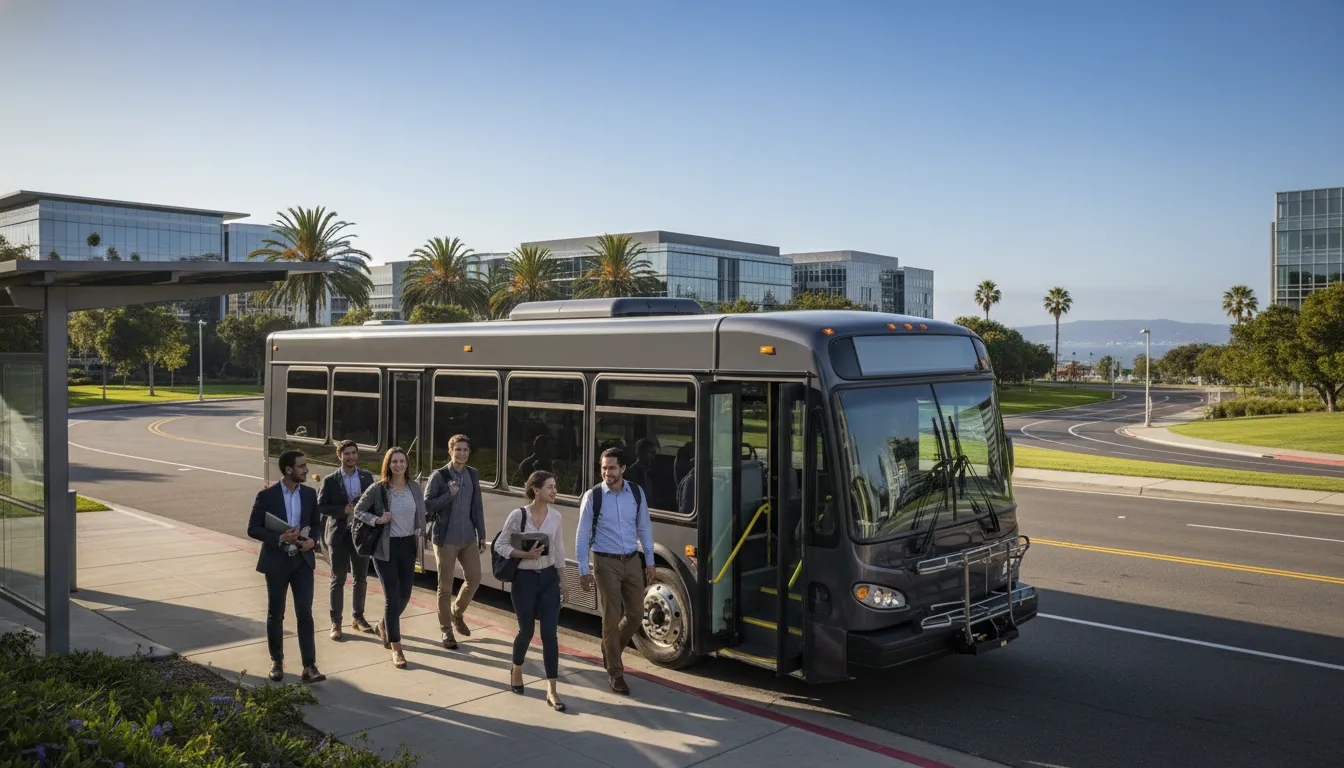
Employees boarding an employee shuttle service at a Bay Area corporate campus
A well-planned employee shuttle connects practical pickup points with the workplace.

How do you plan an effective employee shuttle route?

An effective route starts with real commute patterns, not a line drawn between an office and a popular station. For a Bay Area employee shuttle service, planners must balance employee origins, shift times, bridge traffic, and reliable pickup points. Good plans also leave room to adjust after riders begin using them.

Demand and pickup patterns

Start with an employee survey that asks for home ZIP codes, work locations, shift times, and likely days of use. Protect personal details by grouping responses into broad origin clusters. These clusters may point to transit hubs or central stops in San Francisco, the East Bay, Peninsula, South Bay, or North Bay.

A shuttle should complement the wider commute network rather than copy every transit route. California’s Air Resources Board lists alternative mode services as part of employer-based trip reduction programs. Review available shuttle transit solutions before choosing a direct route, a hub connection, or a mix of both.

A practical planning process

Use the following process to turn employee demand into a route that works on a normal workday. Document each choice so the operations team can test assumptions and explain later changes.

  1. Map employee origins. Group survey responses into useful clusters, then note major barriers such as bridges, hills, tolls, and limited curb access.

  2. Select safe pickup hubs. Favor well-lit stops with legal loading space, simple pedestrian access, and room for the planned vehicle.

  3. Match stops to schedules. Set arrival targets from actual shift starts and ends. Add separate runs when shift changes create distinct demand windows.

  4. Build traffic buffers. Test routes during the hours they will operate. Allow time for common delays without making every trip needlessly long.

  5. Run a limited pilot. Start with the strongest origin cluster and a clear timetable. Record late arrivals, missed pickups, and rider feedback.

  6. Refine service with data. Adjust stop locations, run times, vehicle size, or frequency when ridership and on-time results support the change.

Ridership and schedule reviews

Route planning continues after launch. Track boardings by stop and run, on-time arrivals, capacity use, no-shows, and repeated rider comments. Compare patterns by weekday and shift instead of relying on one busy or quiet trip.

Review the data on a set schedule with HR, facilities, and the transportation team. A low-use stop may need a new time, clearer employee outreach, or removal. A crowded run may need more frequency or a larger vehicle from the available corporate charter bus options.

Keep changes clear and measured. Notify riders before a stop or schedule changes, then watch the next round of results. This cycle helps the route stay useful as office attendance, hiring areas, and shift patterns change.

Choosing the right shuttle vehicle and amenities

The right vehicle keeps each route practical, comfortable, and cost-aware. Start with expected ridership, then check stop patterns, luggage needs, road access, and trip length.

Epic Limousine offers vehicles for groups of 3 to 56 passengers. This range lets an employee shuttle service match each route without forcing every group into the same bus.

Capacity matched to each route

Use a smaller vehicle for executive trips, low-volume shifts, or a route with narrow pickup areas. A mid-size shuttle suits regular office runs with several stops. Larger coaches work well for busy hubs, long routes, or groups carrying bags.

Plan capacity around likely peak demand, not just the daily average. Leave room for ridership growth, but avoid paying for empty seats each day. Epic’s guide to corporate charter bus options gives more context for comparing fleet types.

Decision factor Small vehicle Mid-size shuttle Motor coach
Best route fit Low-volume or executive trips Regular office routes Busy hubs or long routes
Stop pattern Flexible curbside pickups Several planned stops Few high-volume stops
Road access Works in tighter areas Needs standard bus access Needs clear coach access
Storage needs Light personal items Moderate daily bags More luggage capacity
Main planning risk Too few spare seats Poor fit for peak demand Too many empty seats

Amenities that serve the commute

Amenities should support what riders need during that route. Wi-Fi can help on longer commutes, while climate control matters across every season. Entertainment systems may suit long group trips better than short office loops.

Ask how each feature will be used before making it a requirement. Also confirm power access, storage, and boarding needs with the transport provider. Reviewing broader shuttle transit solutions can help teams set useful priorities.

A fleet plan that can adapt

Ridership can change by weekday, shift, season, or office policy. A sound fleet plan reviews passenger counts and adjusts vehicle size as patterns become clear. It also considers a backup vehicle for service gaps.

Route design affects the wider commute, not only the ride itself. The California Air Resources Board lists alternative travel services as part of employer trip-reduction programs. Matching the vehicle to real demand helps that option remain practical for riders and the business.

Planning a Bay Area commute program? Request an employee shuttle service quote or call 415-366-4440.

What should companies ask an employee shuttle provider?

Choosing a provider starts with proof, not a polished sales pitch. Ask how the company manages safety, daily service, and changes after launch. Clear answers will show whether the provider can support a long-term commute program.

Safety, licensing, and chauffeur standards

Ask the provider to show its active operating credentials, insurance, inspection process, and safety policies. Confirm which licenses apply to each vehicle and route. Also ask how the company checks chauffeur records, runs training, and tracks performance over time.

Buyers should request direct answers to these safety questions:

  • Which licenses and certifications cover the proposed service?
  • How often are vehicles inspected and maintained?
  • What screening and training must chauffeurs complete?
  • How are safety concerns logged, reviewed, and resolved?

Epic Limousine holds USDOT and SPAB certifications for relevant transportation needs. Still, each buyer should confirm which credentials apply to the planned routes and passenger groups. A careful review also helps teams compare corporate charter bus options on the same terms.

Communication and backup plans

Reliable service depends on what happens when traffic, weather, illness, or a vehicle issue disrupts the plan. Ask who watches active routes and how riders receive delay notices. The provider should explain its backup vehicle and chauffeur process in plain terms.

Confirm whether riders, dispatchers, and company contacts can view live vehicle locations. Ask how quickly the provider reports missed stops or late arrivals. Companies should also know who has authority to change a route during an urgent issue.

Schedule flexibility matters as teams, shifts, and office days change. Ask how the provider handles new stops, demand spikes, special events, and seasonal shifts. Review any notice periods, added costs, and limits before signing an agreement.

Reporting and account support

A strong employee shuttle service should help the company see how the program performs. Ask which reports are included and how often they arrive. Useful measures may include ridership, on-time results, missed trips, route use, and rider feedback.

Reporting also helps employers assess commute goals. The California Air Resources Board notes that employer trip reduction programs can reduce single-occupancy vehicle commuting. Ask how the provider turns route and rider data into clear program updates.

Finally, meet the people who will manage the account after launch. Confirm the main contact, backup contact, support hours, and response targets. Ask whether the team holds regular reviews and recommends route changes when use patterns shift.

Before making a choice, request sample reports, a launch timeline, and written escalation steps. These details make proposals easier to compare. They also reveal whether the provider offers steady account support or leaves daily issues to the buyer.

What determines employee shuttle service pricing?

Employee shuttle service pricing is quote-based because each program has a different route, schedule, and passenger load. A useful quote starts with the service plan, not a single per-person estimate. Clear details help the provider select the right vehicle and plan enough driving time.

Route and schedule details

Route design often shapes the quote. Providers need each pickup point, destination, expected mileage, number of stops, and estimated travel time. Bay Area traffic patterns also make the service window important, since a route may require more time during peak commute hours.

Frequency matters as well. A weekday round trip, several shift-change runs, and occasional service each require different staffing and vehicle time. Companies comparing shuttle transit solutions should define which days and departure times are essential before requesting a quote.

Vehicle and service needs

Passenger count helps determine the right vehicle size. A smaller group may fit in a van or minibus, while a larger workforce may need a motor coach. The provider also needs to know whether demand stays steady or changes by day and shift.

Amenities and special requirements can affect the service plan. List needs such as Wi-Fi, luggage space, climate control, accessible boarding, or added support at busy stops. Share them early so the quote reflects the right vehicle and operating setup.

Contract length can also shape the quote because long-term service requires ongoing scheduling and fleet planning. State whether the program is a pilot, a fixed-term contract, or an open-ended commute benefit. Employee shuttles can support employer trip reduction programs as an alternative travel mode, according to the California Air Resources Board.

Preparing a useful quote request

Start with a simple route brief and an estimated headcount for each run. Include pickup addresses, worksite destinations, service days, desired arrival times, return times, and any shift changes. Note the planned launch date and contract length.

  • List the minimum and peak passenger count for every departure.
  • Mark required stops and any stops that remain under review.
  • Describe vehicle, amenity, access, safety, and billing needs.
  • Name one contact who can answer route and schedule questions.

A provider can then flag route gaps, suggest a suitable fleet, and build a quote around actual operating needs. To begin that review, share the route brief through Epic Limousine’s contact page.

Launching and improving your shuttle program

A focused pilot route

Start the employee shuttle service with one route that solves a clear commute problem. Review employee home ZIP codes, work schedules, transit hubs, and common traffic delays. Then choose stops that serve a useful cluster without adding long detours.

Set a defined pilot period and keep the first schedule simple. A few dependable runs are easier to assess than many lightly used trips. Match the vehicle to expected ridership, while leaving room for new riders as awareness grows.

Before launch, record the goals that will guide later choices. These may include fewer solo commutes, steadier arrival times, or better access for a hard-to-reach office. California’s Air Resources Board notes that employer trip reduction programs can reduce solo driving through alternative travel options.

Clear launch communication

Tell employees where the shuttle stops, when it runs, and how to reserve or board. Share a simple route map and rider rules before the first trip. Managers should also know how delays and service updates will reach their teams.

Invite employees to try the pilot, but set honest expectations. Explain that early feedback will shape the route and schedule. A short survey can ask about stop access, departure times, comfort, and missed connections. Epic Limousine’s overview of shuttle transit solutions can help teams compare service patterns before refining the pilot.

Measurement and schedule changes

Track ridership for every run, not just total weekly use. Also record on-time departures, on-time arrivals, average delays, and no-show patterns. Review results by route, stop, day, and time so weak points are easy to spot.

Pair those records with brief rider feedback. A full bus may still arrive too late, while a quiet run may serve a small but vital shift. Test one schedule change at a time. Then compare the next set of results with the baseline.

  • Keep or add runs that show steady use and reliable timing.
  • Adjust low-use stops when surveys reveal a safer or easier pickup point.
  • Expand only when demand, staffing, and operating capacity support dependable service.

As needs change, review vehicle size and route coverage with the provider. The available commuter shuttle services can support later route planning across Bay Area offices and transit hubs. Document each change, its reason, and the result so future expansion decisions rest on evidence.

Frequently Asked Questions

How can employee shuttle services improve productivity?

An employee shuttle service gives staff a reliable commute and reduces the stress of driving through Bay Area traffic. Employees can use onboard Wi-Fi to prepare for work, answer messages, or simply rest before their shift. Consistent pickup times may also reduce late arrivals and help teams begin the day focused.

Can employee shuttle schedules be customized?

Yes, employee shuttle schedules can be built around a company’s locations, shift times, hybrid workdays, and employee demand. A provider can adjust routes, pickup points, departure times, and vehicle sizes as commuting patterns change. Companies should review ridership regularly so the service remains convenient without running unnecessary trips.

How can an employee shuttle service reduce commuting emissions?

A shuttle can replace several single-occupancy vehicle trips by moving employees together on planned routes. The California Air Resources Board reports that employer-based trip reduction programs can reduce work-commute vehicle miles traveled by 4% to 76%. Actual results depend on ridership, routes, and program design.

What should Bay Area companies consider when planning employee shuttle routes?

Companies should map where employees live, identify common transit hubs, review shift times, and estimate ridership before selecting routes. They should also account for Bay Area traffic patterns, safe pickup locations, vehicle capacity, and backup plans. Regular employee surveys and ridership reports can show where schedules or stops need adjustment.

Ready to build a better Bay Area employee commute?

Delaying a shuttle plan leaves employees managing stressful, unpredictable commutes while your team absorbs recurring transportation questions, schedule gaps, and preventable daily disruptions. Starting now gives you time to study demand, confirm pickup points, compare vehicle options, and prepare routes before another busy season adds pressure. Early planning can create a more reliable commute for employees and a clearer, more manageable process for the people coordinating service.

Ready to plan a practical shuttle program around your company, locations, schedules, and workforce needs? Request a custom employee shuttle quote to discuss your priorities, compare suitable service options, and begin building a custom transportation plan today. Contact Epic Limousine now so your team has more time to review the plan before service begins.
Your Guide to Corporate Sedan Service for Executives

Travel time often feels like lost time, especially for busy professionals juggling back-to-back meetings. But it doesn’t have to be. Instead of dealing with the stress of driving or the distractions of a public ride, you could be using that time to prepare for a presentation, answer important emails, or take a confidential call. A corporate sedan service for executives transforms your commute into a productive, private mobile office. This investment in efficiency ensures that your team’s workday doesn’t stop when they’re on the move. Here, we’ll cover how this service helps you reclaim your schedule and turn travel into a valuable part of your day.

Key Takeaways

  • It’s About Professionalism, Not Just a Ride: A corporate sedan service provides a consistent, high-end experience that reflects your company’s standards, unlike the unpredictability of rideshares. It’s an investment in your professional image and client relationships.
  • Turn Travel Time into Productive Time: A professional car service gives you a private, quiet space to work on the go. Instead of dealing with traffic and parking, you can prepare for meetings, answer emails, or take important calls, making every minute of your commute count.
  • Prioritize Safety and Quality When Choosing: When selecting a provider, focus on the non-negotiables: fully vetted drivers, a modern and well-maintained fleet, and clear, upfront pricing. These details are the foundation of a truly reliable and professional service.

What Is a Corporate Sedan Service?

A corporate sedan service is a professional, pre-booked transportation solution designed specifically for business travelers. Think of it as your personal chauffeur service, but for work. It’s all about providing a reliable, comfortable, and luxurious ride, whether you’re heading to the airport, meeting a client, or attending a corporate event. Unlike on-demand options, this service focuses on creating a seamless and stress-free experience from start to finish. The emphasis is on punctuality, discretion, and high-end vehicles that allow you to relax or stay productive on the move. It’s a step above, ensuring every part of your journey reflects the professionalism of your business.

The core of a great corporate transportation service is the driver. These aren’t just people who drive; they are professional chauffeurs. They are vetted, trained, and knowledgeable about the local area, ensuring you always take the most efficient route. This level of service transforms your travel time from a logistical hassle into a valuable part of your workday. It’s an investment in efficiency, professionalism, and peace of mind, ensuring you and your team arrive at every destination prepared and composed. When you can count on your ride, you can focus on what really matters: your business.

How It’s Different from Taxis and Rideshares

The biggest difference between a corporate sedan service and a taxi or rideshare comes down to reliability and professionalism. When you book a corporate sedan, you’re reserving a specific high-quality vehicle and a vetted, professional driver. There’s no uncertainty about who will show up or what kind of car you’ll get. Drivers are licensed, insured, and have passed background checks, offering a level of safety and trust you can’t always count on with on-demand apps. Plus, the service is pre-scheduled, so your driver arrives on time (often early), eliminating the stress of waiting for a ride to be accepted.

How It’s Different from Personal or Company Cars

Using a corporate sedan service frees you from the responsibilities of driving, allowing you to use your travel time more effectively. Instead of focusing on traffic and directions, you can prepare for a meeting, answer emails, or take important calls in a quiet, private environment. It also removes the logistical headaches of parking and fuel. For client-facing situations, arriving in a chauffeured luxury vehicle makes a powerful first impression, signaling professionalism and attention to detail. It’s a simple way to provide a premium experience for important guests or to ensure your own arrival is polished and stress-free.

Why Use a Corporate Sedan Service?

A corporate sedan service is more than just a way to get from point A to point B. It’s an extension of your business, reflecting your company’s standards and commitment to quality. When you book a professional car service, you’re investing in reliability, safety, and efficiency for your team and your clients. It removes the guesswork from travel logistics, allowing executives to focus on what they do best. From ensuring on-time arrivals for critical meetings to impressing a potential client, the benefits are clear.

Punctual Service and Reliable Flight Tracking

For anyone who travels frequently for business, punctuality is non-negotiable. A corporate sedan service understands this. One of the biggest advantages, especially for airport travel, is reliable flight tracking. Professional services monitor your flight in real time, so your driver knows if you’re arriving early or facing a delay. This means no more waiting anxiously at the curb or scrambling to find a ride after a long flight. Your car is there when you land, ready to go. This level of dependable airport transportation provides invaluable peace of mind, ensuring a smooth transition from the airport to your next meeting or back home.

Travel with Professionalism and Discretion

When you or your clients step into a corporate sedan, the experience should inspire confidence. Reputable services employ professional drivers who are fully licensed, insured, and have passed thorough background checks. This commitment to safety and security is a core part of the service. Beyond that, professionalism means discretion. You can take a sensitive phone call, review confidential documents, or simply unwind without concern. Your driver is focused on providing a safe, quiet, and private environment. This is a stark contrast to the unpredictability of rideshares and is a key reason why businesses trust a dedicated service for their transportation needs.

Stay Productive in Comfort and Style

Travel time doesn’t have to be lost time. A corporate sedan provides a comfortable, controlled environment where executives can remain productive. Instead of dealing with the stress of traffic or navigating unfamiliar roads, you can use the travel time to prepare for a meeting, catch up on emails, or make important calls. The quiet, clean, and luxurious interior of an executive vehicle allows for focus and relaxation. This dependable transportation fits seamlessly into your schedule, turning a commute into a productive part of the workday. Whether it’s for a single executive or a team needing a corporate shuttle, the goal is to make travel as efficient and comfortable as possible.

Does Your Team Need a Corporate Sedan Service?

Deciding whether to invest in a corporate sedan service comes down to your team’s specific needs. While it might seem like a luxury, it often proves to be a practical tool for efficiency, professionalism, and peace of mind. If your executives are dealing with any of the following scenarios, it might be time to consider a dedicated car service.

For Frequent Airport Travel

If your team members are constantly flying in and out of SFO, OAK, or SJC, you know how stressful airport logistics can be. A corporate sedan service takes the guesswork out of getting to and from the airport. Professional services track flights in real time, so your driver is there whether the plane is early or delayed. This means no more waiting for a rideshare or paying for parking. For executives on a tight schedule, having reliable airport transportation ensures they can move between the airport and their next meeting without a hitch, arriving on time and ready to go.

To Impress Important Clients

First impressions are everything, especially when you’re trying to win over a new client or show appreciation for a valued partner. Arranging for a luxury sedan to pick them up is a powerful statement. It shows you value their time and comfort, setting a professional and considerate tone before the meeting even begins. With a dependable service, you can trust that an experienced driver and a pristine vehicle will provide a comfortable and stylish journey. This small touch of hospitality can go a long way in building strong business relationships and reinforcing your company’s polished image.

For Complex, Multi-Stop Schedules

A day packed with back-to-back meetings across the Bay Area can be a logistical nightmare. A corporate sedan service is designed to handle these complex itineraries with ease. You can book a driver for a set number of hours, giving your executive the flexibility to move between appointments without worrying about finding parking or hailing a new car each time. This is especially useful for roadshows, site visits, or corporate events. Having a dedicated corporate transportation service on standby allows your team to stay productive and focused on the business at hand, not on the traffic.

What Does a Corporate Sedan Fleet Look Like?

When you partner with a corporate transportation service, you get access to an entire fleet of vehicles, not just a single type of car. A professional provider maintains a diverse collection of high-quality vehicles to suit any occasion. Whether you need a quiet ride for one to prepare for a presentation or transportation for your entire department to a company offsite, the right vehicle is available. This flexibility ensures your team always travels with the appropriate level of comfort, space, and style.

Luxury Sedans

Think of the luxury sedan as the classic choice for executive travel. These vehicles, such as the Volvo S90 or Lincoln Aviator, are designed for comfort and sophistication, providing a private and quiet environment perfect for making calls or catching up on emails. Accommodating up to three passengers, they are ideal for solo executives traveling to the airport, heading to a crucial meeting, or taking a client out for dinner. A luxury sedan projects an image of professionalism and attention to detail, ensuring you or your guest arrives relaxed and ready for whatever is next on the agenda. It’s your personal mobile office, ensuring productivity doesn’t stop when you’re on the move.

Executive SUVs

For those times when you need more space, an executive SUV is the perfect solution. With room for five to eight passengers, vehicles like the Cadillac Escalade or Chevrolet Suburban offer plenty of space for small teams and their luggage. These SUVs combine the premium features of a luxury sedan with added versatility and a commanding presence. They are an excellent choice for group airport transfers, taking a team to a conference, or ensuring your clients have a comfortable and spacious ride. The generous interior means everyone can travel together without feeling cramped, making it a practical and stylish option for corporate group travel.

Specialty and Premium Vehicles

A well-rounded corporate fleet extends beyond standard sedans and SUVs to meet every possible need. For larger groups and special events, you’ll find a range of specialty vehicles. Stretch limousines add a touch of elegance for entertaining VIP clients, while mini-buses and shuttles are perfect for moving teams between venues during a corporate event. If you’re planning a company-wide retreat or outing, a charter bus provides a comfortable and efficient way to transport everyone together. Having access to these premium options means you can find the right transportation for any scenario, from daily business travel to once-a-year company celebrations, all from a single, reliable provider.

How to Choose the Right Corporate Sedan Service

When you’re booking transportation for executives, clients, or your team, you need a service you can count on. But with so many options out there, how do you pick the right one? It comes down to looking for a few key signs of quality and professionalism. The right corporate sedan service isn’t just about getting from point A to point B; it’s about providing a seamless, comfortable, and reliable experience that reflects well on your business.

Think of it as choosing a partner for your company’s travel needs. You want someone who is dependable, communicates clearly, and prioritizes safety and comfort. From the driver’s professionalism to the quality of the vehicle and the ease of booking, every detail matters. To help you make an informed decision, let’s walk through the most important factors to consider when selecting a corporate transportation provider. These are the non-negotiables that separate an average service from a truly exceptional one.

Professional, Vetted Drivers

The person behind the wheel makes all the difference. A great corporate sedan service invests in professional, vetted drivers, and you shouldn’t settle for anything less. This means your driver should be fully licensed, insured, and have passed a thorough background check. This commitment to safety is fundamental.

Beyond the official qualifications, a professional driver contributes to the overall experience. They are punctual, discreet, and knowledgeable about the best routes to get you to your destination efficiently. When you know you’re in the hands of a true professional, you can relax, take a call, or prepare for your meeting without any transportation-related stress.

A High-Quality, Well-Maintained Fleet

You expect professionalism from your driver, and you should expect the same from your vehicle. When evaluating a service, take a look at their fleet. A top-tier provider will offer a modern and diverse selection of vehicles, from luxury sedans to executive SUVs, all kept in pristine condition.

A well-maintained car isn’t just about appearances, though arriving in style certainly makes a good impression. It’s about reliability and comfort. A clean, modern vehicle ensures a smooth and comfortable ride, free from unexpected mechanical issues. This reliability is essential for executives who operate on a tight schedule and need to know their transportation won’t let them down.

Flexible Booking and Clear Communication

Your schedule is demanding, and your transportation provider should make booking as simple as possible. Look for a service that offers flexible booking options, whether it’s through an easy-to-use online platform or a 24/7 phone line. The process should be straightforward, not a complicated chore.

Clear communication is just as important. A great service keeps you in the loop. You should receive confirmations for your booking and timely updates, like a message with your driver’s name and contact information before pickup. This level of communication provides peace of mind and ensures a seamless, coordinated experience from start to finish, which is exactly what you get when you book a ride with us.

Transparent Pricing and Reliable Support

No one likes surprise charges or hidden fees. A trustworthy corporate sedan service will be upfront and transparent about its pricing. Look for companies that offer clear rate structures, such as flat rates for common trips like airport transfers. This helps you manage your budget without any guesswork.

Reliable support also includes features like tracking your flight status to adjust pickup times for delays or early arrivals. Once you book a ride, you should have full confidence that it will proceed as planned. This allows you to focus on your business, knowing that your transportation logistics are completely handled. This is especially critical for airport transportation, where timing is everything.

Common Myths About Corporate Sedan Services

If you’ve ever hesitated to book a corporate sedan, you’re not alone. There are a few persistent ideas about professional car services that can make them seem out of reach or overly complicated. Many people assume the cost is too high, that a standard rideshare will do the job just as well, or that the booking process is a headache. These assumptions can keep you and your team from experiencing a more comfortable, professional, and productive way to travel.

Let’s clear up some of these common myths. Understanding the real value and process behind corporate sedan services can help you make a better choice for your business travel needs. From ensuring a great first impression with a client to giving your team a reliable ride to the airport, the benefits often outweigh the perceived drawbacks. A professional transportation service is designed to make your life easier, not harder. So, before you dismiss the idea, let’s look at the facts behind the fiction.

Myth: “It’s too expensive.”

It’s true that a corporate sedan service often has a higher price tag than a standard taxi or rideshare, but it’s a classic case of getting what you pay for. The cost covers more than just a ride from point A to point B. You are investing in reliability, professionalism, and a stress-free experience. Think of it as a mobile office and a personal assistant rolled into one. Your driver will arrive early, the car will be immaculate, and you’ll have a quiet, comfortable space to take calls or prepare for your meeting. When you factor in the value of your time and the importance of punctuality, the cost becomes a smart business expense.

Myth: “Rideshares are just as good.”

While rideshare apps are convenient for casual trips, they don’t offer the same consistency or professionalism as a dedicated corporate car service. With a rideshare, the quality of the vehicle and the experience of the driver can be unpredictable. In contrast, a corporate sedan service provides professionally trained, vetted, and insured chauffeurs. These drivers are career professionals dedicated to providing exceptional service. You are guaranteed a clean, high-end vehicle and a chauffeur who understands the importance of discretion and punctuality, which is essential when you’re traveling for business or transporting important clients.

Myth: “Booking is too complicated.”

The thought of arranging a professional car service might bring to mind complicated forms and back-and-forth phone calls, but that’s largely a thing of the past. Reputable companies have made the process incredibly straightforward. Most offer simple online booking portals, 24/7 phone support, and even dedicated account managers for corporate clients. You can often book your transportation in just a few minutes, whether you’re planning weeks in advance or need a last-minute ride. The goal of these services is to reduce your travel friction, and that starts with an easy and accessible booking experience.

Understanding Corporate Sedan Service Costs

When you’re managing a budget, every expense matters. The cost of a corporate sedan service is a key consideration, but it’s helpful to view it as an investment in your team’s productivity, safety, and professional image. The right service offers transparent pricing that aligns with the value it provides, ensuring there are no surprises along the way. Understanding how providers structure their fees will help you find a solution that fits your company’s needs perfectly. Most professional services offer flexible pricing models and special arrangements for their business clients.

Hourly vs. Flat Rates

Most sedan services offer two main pricing structures: hourly and flat rates. An hourly rate is exactly what it sounds like, you pay for the car and driver for a set amount of time. This is ideal for days with multiple stops or when a schedule is unpredictable. On the other hand, flat rates are perfect for specific, point-to-point trips. For example, many companies provide a set price for airport transportation, which often includes flight tracking to adjust for delays or early arrivals. This flexibility allows you to choose the most cost-effective option for any given itinerary, whether it’s a quick trip across town or a full day of client meetings.

Corporate Accounts and Discounts

If your team travels frequently, setting up a corporate account is one of the smartest moves you can make. These accounts streamline the entire process, from booking to billing. Beyond convenience, they often come with perks designed for the busy professional, like guaranteed Wi-Fi for on-the-go productivity, itemized receipts for easy expense reporting, and drivers who always arrive early. Building a relationship with a provider through a corporate account can also lead to preferred pricing or volume discounts. It’s a way for the service to reward your loyalty while ensuring your team consistently receives a premium, reliable experience tailored to your company’s standards.

Red Flags to Avoid When Choosing a Provider

When you’re booking transportation for executives or important clients, you need absolute confidence in your choice. Knowing what to look for is half the battle; knowing what to avoid is the other half. Keep an eye out for these warning signs to ensure you partner with a truly professional service.

First, pay close attention to their safety standards. A reputable provider will be transparent about how they vet their team. If a company is hesitant to confirm that their drivers are fully licensed, insured, and have passed comprehensive background checks, consider it a major red flag. Your team’s safety is the top priority, and there should be no ambiguity here.

Next, watch for a general lack of professionalism. This can show up in many ways: a messy website, slow response times, or an indifferent tone during your initial inquiry. True professionals, like the team at Epic Limousine, understand that the experience starts long before you step into the vehicle. Punctuality, courtesy, and attention to detail should be standard, not a bonus. If a service seems disorganized or unpolished from the start, it’s unlikely to deliver the seamless experience you need.

Finally, be wary of poor communication and a history of negative feedback. A provider should have a straightforward booking process and be able to answer your questions clearly. If you find a pattern of unresolved complaints or negative online reviews about last-minute cancellations or billing surprises, it’s best to look elsewhere. A reliable partner values their reputation and works hard to maintain it by providing consistent, high-quality service.

Epic Limousine: Your Bay Area Corporate Sedan Service

When your executives travel, every detail reflects on your business. From arriving at SFO on time to making a strong impression at a client meeting in Silicon Valley, the transportation you choose matters. At Epic Limousine, we provide a seamless, professional, and comfortable corporate sedan service designed to meet the high standards of Bay Area businesses. Our commitment is to a 5-star experience, ensuring your team can focus on what they do best while we handle the road.

Our Fleet Options for Executives

First impressions are lasting, and arriving in a pristine, high-end vehicle sets a professional tone before a meeting even begins. Our fleet features a range of luxury sedans perfect for executive travel. You can expect spacious and immaculate vehicles, like the classic Lincoln Town Car or the modern Cadillac XTS, known for their comfortable interiors and polished appearance. Each car is equipped with plush leather seating, climate control, and advanced navigation to ensure a smooth and efficient ride. The quiet cabin provides a private space for your executives to prepare for meetings, take important calls, or simply relax between appointments without the distractions of a typical taxi or rideshare.

Simple Booking and Corporate Accounts

Arranging corporate travel shouldn’t be a complicated task. We’ve streamlined our process with an easy-to-use online booking system that lets you schedule rides in just a few minutes. For businesses with ongoing transportation needs, setting up a corporate account simplifies logistics even further. A dedicated account offers your team priority service, consolidated monthly billing to reduce administrative work, and customized travel solutions built around your company’s specific schedule. This approach saves valuable time and provides a consistent, reliable transportation experience for your entire team. It’s the most efficient way to manage your executive travel needs across the Bay Area.

Related Articles

Frequently Asked Questions

What happens if my flight is delayed or arrives early? This is one of the biggest advantages of using a professional service. We track your flight in real time, so your driver adjusts their arrival accordingly. If your flight is delayed, they will wait. If it lands early, they will be there for you. You won’t be charged for waiting time due to flight delays, which gives you peace of mind knowing your ride is secured no matter what.

Is a corporate sedan service only for top executives? Not at all. While it’s a perfect fit for executive travel, the service is valuable for any situation where professionalism and reliability are important. We often provide transportation for important clients, guest speakers, new hires you want to impress, or small teams traveling together to a conference. It’s a great way to show you value someone’s time and comfort.

How far in advance should I book my ride? For the best availability, especially for airport travel or special events, I recommend booking at least 24 to 48 hours in advance. However, we understand that last-minute needs come up. Reputable services can often accommodate same-day requests, so it’s always worth calling to check for availability even if your schedule changes unexpectedly.

Can I book a vehicle for multiple stops or for an entire day? Yes, absolutely. This is a common request, and it’s where hourly booking is a great option. You can reserve a car and driver for a set block of time, allowing you to move between meetings, site visits, or events without having to book a new car for each leg of the journey. Your driver will be on standby, ready whenever you are.

What really makes this different from just ordering a premium rideshare? The key differences are reliability and professionalism. With a corporate sedan service, you are guaranteed a professional, vetted, and licensed chauffeur, not just a gig worker. The vehicle will be a specific high-end model that is meticulously maintained. The service is pre-scheduled and confirmed, so there is no uncertainty about your driver canceling or the quality of the car you’ll receive.

Charter Bus Rental San Francisco Planning Guide

Planning group transportation in San Francisco can become complicated quickly. A precise itinerary, realistic timing, and a vehicle matched to the group make the difference between a smooth event and a day spent solving avoidable problems.

Request a San Francisco charter bus quote

A charter bus rental San Francisco plan should begin with the people, route, schedule, and special requirements. Give those details to the transportation provider early. Then request a quote based on the actual trip rather than a vague estimate. This guide explains the decisions that help corporate planners, schools, wedding coordinators, and group leaders book with confidence.

Charter bus rental San Francisco planning checklist

Start by creating one shared trip brief. It should be accurate enough for a transportation provider to recommend an appropriate vehicle and build a useful quote. A complete brief also reduces last-minute calls between organizers, passengers, venues, and the chauffeur.

Confirm the passenger count

Use a realistic passenger estimate, not only the number of people invited. Ask whether the count includes coordinators, speakers, chaperones, vendors, or guests joining at a later stop. Tell the provider if the number is still changing and when you expect to finalize it.

Write the full itinerary

List every pickup, stop, and drop-off with a street address. Add desired departure and arrival times, the length of each stop, and any firm event deadlines. Include a primary contact for each location. If passengers will arrive in separate groups, describe how those waves should be handled.

Note luggage and accessibility needs

Tell the provider what the group will carry. Airport luggage, presentation equipment, musical instruments, sports gear, and wedding supplies can affect the vehicle recommendation. Share accessibility needs during the quote process so the transportation plan accounts for them from the beginning.

  • Trip date and alternate dates, if available
  • Passenger count and group type
  • Every pickup, stop, and destination
  • Desired arrival and departure times
  • Luggage, equipment, and accessibility requirements
  • On-site coordinator and backup contact

How do you choose the right vehicle for your group?

The right vehicle is the one that supports the entire trip, not merely the passenger count. A planner should consider luggage, route length, number of stops, desired comfort, boarding needs, and the type of event. Ask the provider to recommend a vehicle after reviewing the full itinerary.

Planning scenario Important details Questions to ask
Corporate event Arrival deadline, multiple offices, presentation materials How should pickups be sequenced?
Wedding shuttle Guest waves, venue access, final return trips How many runs fit the timeline?
Academic trip Chaperones, equipment, scheduled activities What details are needed before booking?
Airport transfer Flight timing, luggage, terminal coordination Where should the group meet?

A larger vehicle is not automatically the best answer. Vehicle availability, loading conditions, and the route all matter. For more context, review Epic Limousine’s guide to renting a charter bus in San Francisco.

Comfort should support the trip

Think about how long passengers will be together and what they need to do during the ride. A short event transfer and a longer Bay Area itinerary create different comfort priorities. Ask which available vehicle best fits the group instead of assuming a feature is included. If the group has a strong preference, state it in the quote request so the team can discuss options.

What affects a San Francisco charter bus rental quote?

Charter transportation is quote-based because each trip has a different operating plan. The date, duration, distance, vehicle fit, itinerary complexity, and special requirements can all affect the quote. Demand and availability may also change by date.

Trip duration and route

A direct transfer has a different operating plan from an all-day event with several stops and waiting periods. Be clear about when service should begin and end. Include all destinations, even if one stop is still tentative.

Vehicle fit and passenger needs

The passenger count is only one factor. Luggage, accessibility, equipment, and desired onboard experience can influence the vehicle recommendation. An accurate request helps the provider avoid recommending a vehicle that does not fit the practical needs of the trip.

Timing, demand, and itinerary changes

Dates with high demand can affect availability. Material itinerary changes may also alter the service plan. Ask what is included in the quote and how updates should be submitted. Do not rely on generic online pricing for a trip with specific requirements. Epic Limousine also explains common considerations in its charter bus rental cost guide.

How to compare quotes clearly

Send the same itinerary and requirements to any provider you are considering. Otherwise, two quotes may describe different service plans. Check that every stop, time window, passenger need, and requested service appears in the response. Ask for clarification when a line item or assumption is unclear. The lowest number is not useful if the plan omits a required stop or does not fit the group.

Plan for San Francisco pickup, parking, and timing

San Francisco presents a combination of dense streets, active loading areas, hills, event traffic, and busy venues. Review Epic Limousine’s broader Bay Area group transportation services while planning routes that extend beyond the city.

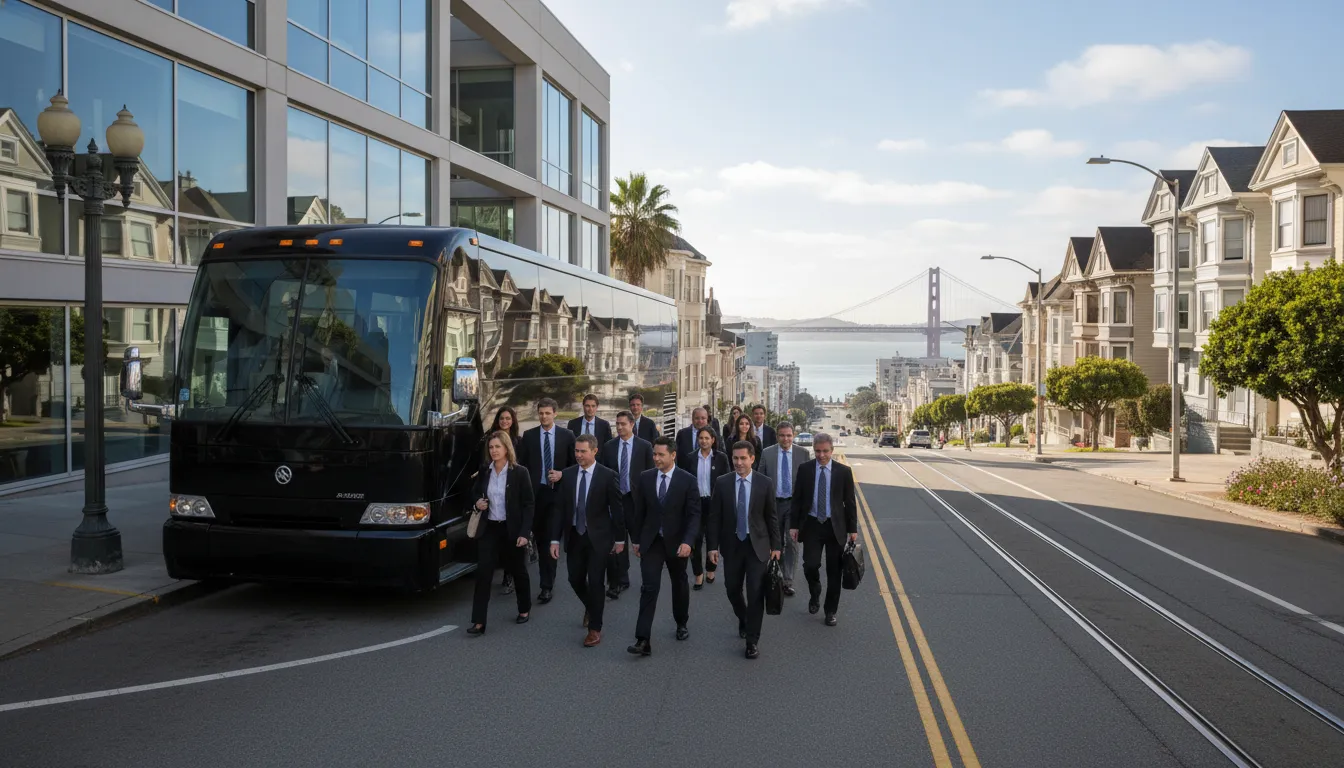
Charter bus rental San Francisco passengers boarding at an event venue
Clear venue access and boarding instructions help groups depart on schedule.

Good planning gives the provider and passengers clear instructions without pretending that every variable can be controlled.

Choose precise pickup points

Do not tell passengers to meet somewhere broad, such as downtown or near the venue. Provide an exact address and a recognizable meeting point. Confirm the location with the venue when possible, especially for a large group or a scheduled event.

Build reasonable time buffers

Create buffer time around important arrivals. A corporate presentation, ceremony, flight, or ticketed event should not depend on an unrealistically tight schedule. Ask the transportation provider to review the proposed timing and route before finalizing the guest itinerary.

Give passengers one communication plan

Send the pickup location, departure time, coordinator’s phone number, and boarding instructions before the trip. Make it clear when passengers must arrive. On the day, route updates through one group coordinator rather than asking every passenger to contact the transportation team.

Coordinate with venues

Ask each venue where a group should load and unload. Confirm the preferred contact and any arrival instructions. Share relevant details with the transportation provider before the event. This small step helps the planner avoid directing passengers to one entrance while the vehicle expects another.

How to book charter bus transportation for an event

  1. Build the trip brief. Gather the date, group size, addresses, schedule, luggage, accessibility needs, and event deadlines.
  2. Request a detailed quote. Share the complete brief so the provider can recommend a suitable transportation plan.
  3. Review the vehicle recommendation. Confirm that it fits the passengers, belongings, route, and event purpose.
  4. Check the itinerary. Review every pickup and destination, then ask whether the timing is realistic.
  5. Confirm the service details. Understand what is included and how to submit changes before the event.
  6. Send passenger instructions. Share precise meeting points, boarding times, and the coordinator’s contact information.
  7. Reconfirm final details. Provide the final passenger count and approved itinerary updates before the trip.

Corporate planners can also use Epic Limousine’s corporate event bus rental guide for event-specific preparation.

Match the transportation plan to your group’s purpose

A useful plan reflects how the group will travel and what must happen on time. The same vehicle may support different trip types, but the communication and itinerary should be tailored to the event.

Corporate transportation

Business travel often depends on precise arrivals, multiple pickup points, and a clear point of contact. Share hard deadlines and identify which stops are optional. If employees are traveling from several locations, decide whether one central pickup or multiple stops creates the clearer plan. Learn more about corporate bus charters.

Wedding transportation

Wedding shuttle planning should account for guest waves, ceremony timing, reception departures, and the final return. Confirm venue access and share the shuttle schedule with guests well before the event. Epic Limousine’s wedding transportation service provides more event-specific information.

Academic and group trips

Schools and organized groups should identify chaperones, head-count procedures, equipment needs, scheduled activities, and the primary coordinator. The trip brief should make responsibilities clear at every stop. Provide families and participants with one approved schedule so everyone receives the same information.

Airport transfers and tours

Airport group travel requires a plan for flight timing, luggage, meeting instructions, and the final destination. A tour itinerary should identify which stops are essential and how long the group expects to spend at each location. Share the plan early so the provider can review the route as a complete trip.

Prepare passengers for a smoother day

The organizer’s work continues after transportation is booked. Passengers need instructions that are simple enough to follow quickly. Send a short trip message several days before departure, then send a final reminder when appropriate.

What to include in passenger instructions

State the exact meeting point, required arrival time, planned departure time, and coordinator contact. Mention any luggage limits or event-specific instructions that the organizer has confirmed. If there are several return times, explain which group should use each departure.

Use one day-of coordinator

Choose one person to communicate with passengers and the transportation team. A backup contact is helpful, but too many decision-makers can create conflicting instructions. The coordinator should carry the current itinerary, know the final head count, and be available at each major transition.

What should you ask before confirming your charter bus?

Before confirming transportation, ask questions that reveal whether the plan is complete. The goal is not to collect generic promises. It is to make sure the provider understands the itinerary and that the organizer knows what to do next.

  • Does the recommended vehicle fit the passengers, luggage, equipment, and accessibility needs?
  • Are all pickup points and destinations included in the quote?
  • Is the proposed timing realistic for the route and event?
  • What details must be finalized before the trip?
  • How should the organizer submit itinerary changes?
  • Who should the group coordinator contact on the day?
  • What passenger instructions should be distributed in advance?

Epic Limousine is a family-owned Bay Area transportation company serving groups with professional chauffeurs and quote-based planning. Family-owned since 2012, the company has built a 4.9-star reputation by helping groups coordinate practical transportation plans. Sharing accurate details early allows the team to recommend a practical approach rather than a one-size-fits-all answer.

Frequently asked questions

How far ahead should I request a charter bus rental in San Francisco?

Request a quote as soon as the trip date, estimated passenger count, and basic itinerary are known. Earlier planning gives you more time to review the recommendation, confirm venue details, and communicate with passengers. Availability can vary by date, so contact the provider rather than relying on a fixed lead-time rule.

How is charter bus rental pricing calculated?

Pricing is quote-based and can reflect the trip date, duration, mileage, vehicle fit, itinerary complexity, demand, waiting time, and special requirements. Provide a complete itinerary and ask what is included. Avoid assuming that a generic online price applies to your specific trip.

Can a charter bus make multiple stops?

Multiple stops can be included in the planning request. List every address, desired arrival time, and expected stop duration. The provider can then review the route and help determine whether the proposed schedule is workable.

What information is needed for a quote?

Provide the date, passenger count, pickup and drop-off addresses, full itinerary, desired timing, luggage or equipment details, accessibility needs, and the trip coordinator’s contact information. Note which details are tentative.

Can charter transportation support weddings and corporate events?

Yes. Group transportation can support weddings, corporate events, academic travel, airport transfers, and other organized trips. Each event needs a tailored itinerary, passenger communication plan, and vehicle recommendation.

Request your San Francisco charter bus quote

Turn your itinerary into a clear transportation plan with Epic Limousine. Share your date, passenger count, stops, timing, and special requirements to receive a quote based on the actual trip.

A detailed request helps the team respond with a vehicle recommendation and service plan that reflect your group. It also gives your coordinator a stronger foundation for passenger instructions and day-of communication.

Call 415-366-4440 to discuss your charter bus rental San Francisco needs and request a quote.