Archives for June 2026

Wedding Shuttle Service Timeline for Bay Area Events

Successful wedding logistics rely on a timeline that starts months before the big day. Coordinating guest movement between hotels and venues requires clear planning to avoid delays. A well-timed shuttle helps everyone arrive ready to celebrate.

Request your custom wedding shuttle service quote to build a practical transportation plan for your Bay Area celebration.

A wedding shuttle service should be booked six to nine months early to ensure you get the vehicles you need for your guest list. Map out all hotel locations and talk to your venue about any traffic or parking issues that could cause delays for your guests. According to Epic Limousine, planners value stress-free travel when moving large groups between hotels and ceremony sites using modern, premium vehicles. Use this early phase to set pick-up points and create clear schedules so you do not run out of vehicle choices later. Planning your guest movement early ensures a smooth experience and allows you to focus on the celebration rather than the logistics of how people arrive.

Organizing group travel for a Bay Area wedding involves many moving parts. This timeline shows when to request a quote, confirm routes, coordinate with hotels and venues, and finalize day-of details.

Wedding shuttle service planning timeline at a glance

Planning for your big day starts months before you walk down the aisle. Setting up a wedding shuttle service early helps you avoid stress. It also ensures your guests have a safe way to travel between venues. Professional companies focus on safety standards and vehicle care to give you peace of mind. You should start your search once you pick your date and place.

Phase one: Early booking and fleet selection

You should start looking for transport about nine to twelve months out. This is vital if you are getting married during a busy season or on a holiday. At this stage, you need to estimate your guest count. This helps you pick the right wedding shuttle service options for your group. You can choose from small vans to large motor coaches that hold 56 people.

Work with your venue to find any parking or traffic issues early. Some places have limited space for large buses to turn or park. It is best to find these bottlenecks before you sign a contract. This helps the service provider plan the best routes for your event.

Phase two: Logistics and guest coordination

About three to four months before the wedding, you should map out your shuttle stops. Most couples choose to pick up guests at local hotels. A clear plan keeps out-of-town guests on a firm schedule. You will need to give the transport company the final list of addresses for all your stops.

Good communication is key to making the service work well. Make sure to share the shuttle times on your wedding website or in guest bags. Tell people where and when the bus will arrive. This prevents late arrivals and helps guests use the service. You can also set up multiple pick-up times to give your guests more choices.
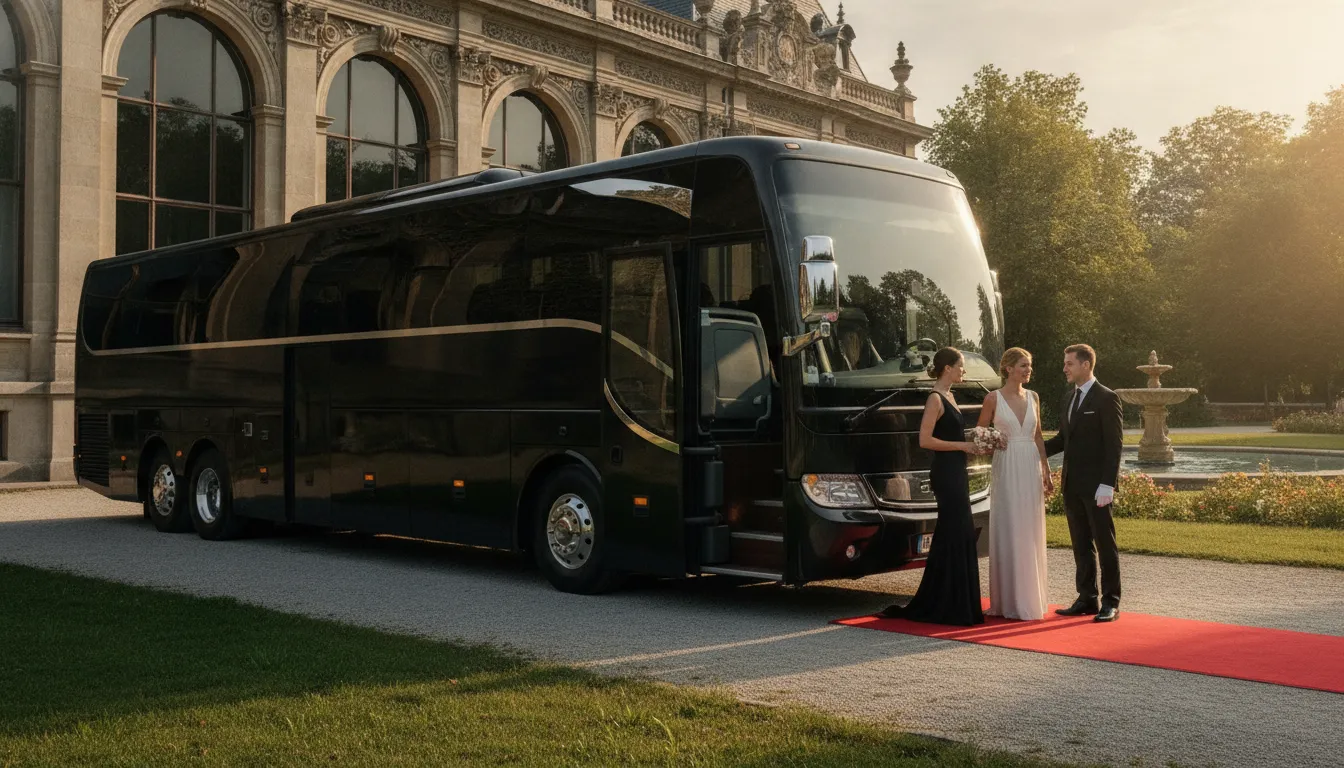
Wedding guests boarding a luxury wedding shuttle service at a Bay Area venue
A clearly communicated pickup plan helps guests board on time.

Summary of the planning timeline

Timeframe Key Decisions Lead Party
9-12 Months. Book date and select fleet size. Couple.
6 Months. Finalize hotel blocks and stops. Planner.
3 Months. Set routes and guest schedules. Company.
1 Month. Confirm final guest counts. Couple.
1 Week. Verify all pick-up addresses. Planner.

A final check one week before the wedding is the last step. Verify the start times and the names of the drivers if you can. This ensures the shuttle service for wedding guests runs smoothly. With these steps in place, you can focus on your joy while the pros handle the road.

How do you build the shuttle route and run-of-show?

Building a wedding shuttle service starts with a clear map. You need to link your hotels, the wedding spot, and the party venue. A good plan keeps your guests on time and reduces stress for the couple. Expert planners look for easy paths and avoid tight spots where big buses cannot turn. You should also think about guest count and bus size when you plan your route.

A well-mapped route saves gas and time. It also helps the driver stay on track. You want to avoid one-way streets or roads with a lot of stop lights. A direct path is best for the first few trips of the day. Later trips can take a more scenic route if the views are nice.

Mapping your stops and routes

First, find all the key places on a map. Look at where guests stay and where the event takes place. You should find any trouble with traffic or parking before the big day. Some venues are hard to reach or have small lots. A shuttle makes it easy for people to get there without any trouble. It also stops guests from getting lost in a new city.

Check the path for low trees or narrow roads. Large buses need more space to turn and move. You must also pick clear spots for people to get on and off the bus. These loading zones should be well-lit and easy to see. Safe spots help keep the flow moving and prevent delays. Make sure there is enough room for the bus to park without blocking traffic.

Think about how guests will walk from the bus to the front door. If the path is long or steep, you might need a smaller van to help. This is vital for guests who have a hard time walking. A good plan accounts for everyone in your group.

Creating the run of show

A run of show is a list of every move the bus makes. It starts with the first pick up at the hotel. You should plan for two or three trips if you have many guests. This helps everyone arrive when they should. It also means no one gets left behind at the bar or hotel lobby. Most planners set a hard stop for the last bus of the night.

Your run of show should list these key items:

  • First pick up time from the hotel.
  • Guest count for each trip.
  • Buffer time for traffic or delays.
  • Cell phone number for the lead contact.

Good planning wedding transportation must include extra time for traffic. Roads in the Bay Area can get busy fast. A ten-minute buffer for each trip can save your schedule. This buffer helps if a guest is late or if the bus has to wait for a train. Your driver will know the best back roads to take if the main route is blocked.

Staying on track with guest flow

Talk to your guests about the shuttle times early. You can put the schedule on your wedding site or in the gift bags. Clear words help more people use the service. Most people like a free ride, more so when the party has an open bar. A shuttle service for wedding guests keeps everyone safe during the night. It also helps with the group bond since everyone travels together.

Drivers also need a way to reach the planner on the day of the event. Quick chats help fix any small issues that come up. If a guest loses a bag on the bus, the driver can find it fast. This level of care makes sure the whole night goes well. You want your guests to remember the fun, not the ride.

Lastly, check the route one more time a few days before the event. Road work or street fairs can pop up at any time. A final check ensures your plan is still the best one. This last step gives you peace of mind as the big day gets close.

What information is needed for an accurate shuttle quote?

Getting a quote for your wedding shuttle service is the first step toward stress-free group travel. To give you a clear and fixed price, we need to know the specific needs of your big day. Precise facts help us build a plan that keeps your guests moving without delays or extra costs. Planning early and working with a manager can help ensure every detail is covered for your date.

Core event details

The most basic info includes the date of your event and the exact pickup and drop-off spots. We need the full street addresses for hotels, the ceremony site, and the reception hall. It also helps to know the total guest count so we can suggest the best wedding shuttle service for your group size. These facts allow us to check vehicle availability and drive times between venues.

The service window

You should decide when the first guest needs to arrive and when the last person needs a ride home. A full service window tells us how many hours our drivers will be on the clock. For large events, pre-planning transport is vital to avoid local traffic blocks and parking issues near the site. This window should account for the ceremony start time and the reception end time.

  1. Guest count and vehicle mix: Tell us how many people need a ride. This helps us pick the right mix of luxury sedans or large motor coaches.
  2. Pickup and drop-off points: Provide full addresses for all stops. We use these to map the best paths and find any road limits.
  3. Detailed schedule: List when guests need to be at the venue. A clear plan helps us set up loops for multiple shuttles if needed.
  4. Site limits: Let us know if a venue has narrow gates or steep roads. Some spots may not fit a full-size bus.
  5. Accessibility needs: Tell us if any guests use chairs or need extra help. We will make sure to provide vehicles that meet those needs.

Local site factors

Does your venue have a tight turn or a low bridge? Knowing about site limits is key to picking the right fleet. We check for road rules that might stop big buses from reaching certain areas. Sharing these details early prevents last-minute changes on your wedding day. You can learn more about wedding shuttle service costs and how site needs affect the final price.

How should venues and hotels coordinate with the shuttle provider?

A smooth wedding shuttle service needs venues and hotels to work well with the driver. When these teams talk early, they avoid small mistakes that can slow down your day. Planners must focus on where buses will stop and how guests will find them. Good teamwork between the hotel staff and the drivers keeps the whole trip on time.

Where will the shuttle load and stage?

Large buses need plenty of room to move and turn. Venues should name a clear spot for guest pick-up and drop-off. Some sites have strict rules about curb space or how long a bus can stay in one place. It is vital to find any likely traffic or parking blocks before the first guest arrives. This check makes sure the bus does not block other cars or safety paths.

Hotels also need to set a loading zone that is easy for guests to reach. A spot near the main door is best for most groups. But if the hotel is on a busy street, the driver might need a side door instead. Planners should ask the hotel team for a map of where the bus can wait between trips. This keeps the street clear and helps the driver stay ready for the next run.

How will you share info with guests?

Clear signs help guests feel sure about where they need to go. Hotels can put a small sign at the front desk or in the main lobby. This sign should list the times the bus will leave and where it will stop. When people know the plan, they are less likely to miss their ride. A trusted wedding shuttle service works best when every guest knows the full schedule.

Venues can also help by putting signs near the exit of the party. These signs should show where the bus is parked for the trip back to the hotel. Planners should give the hotel front desk a list of the times. This way, the staff can answer guest questions with the right facts. Good signs and clear talk from the staff mean fewer people call the couple with questions on the wedding day.

What timing and contacts are needed?

Every plan needs a main person to call if something changes. Planners should give the venue boss the driver’s phone number. They should also give the driver the name of the person in charge at the hotel. It is best to work directly with the event manager to set these contact lists. Having a direct line helps if the bus gets stuck in traffic or a guest leaves a bag on a seat.

Timing is also key for the vendor teams. The venue staff needs to know when the bus will first arrive and when the last trip will end. This helps them manage other vendors who might be using the same loading spots. A clear timeline shows exactly when each bus will be on-site. This plan makes sure the bus is ready to load right when the guests are set to leave. It creates a smooth flow that keeps the mood of the event high and stress low.

Final checks for the month and week before the wedding

Planning a wedding shuttle service needs care as your big day draws near. About 30 days before the event, you should check your guest list size. This count helps you see if your shuttle fleet is still the right fit. If more guests are coming, you may need to add a car to your wedding transportation plan. Checking these facts early ensures you have enough room for each guest.

Thirty day logistics and routing

One month out is the best time to lock in your final route. You should check the pick-up spots at your hotels and the drop-off points at your venue. Make sure the shuttle has a clear path to get in and out. This step is key for group movement and helps you avoid traffic jams. As noted in UC Berkeley transport tips, a clear shuttle timeline and pick-up spots ensure smooth guest travel. You should also name a person to be the main point of contact for the day.

It is also smart to look at the access for all your guests. If anyone has needs for a wheel chair or extra help, tell your team now. They can make sure the cars are ready for those needs. Direct and clear talk with your transport team is part of a high-end service. This keeps everyone on the same page and helps you avoid stress as the date gets close. You want to make sure every guest feels safe and welcome on the ride.

One week schedule and guest updates

When you are one week away, focus on the small details. Send the final shuttle times to all your guests. Clear notes on where and when to meet are key for a good trip. You should list these times on your wedding site or in a guest pack. This helps people know when the bus will leave so they are not left behind. It also cuts down on guest doubt during the busy wedding week. Your guests will thank you for making the ride easy and clear.

You must also share a back-up plan with your lead contact. This plan should say what to do if a guest is late or if a road is closed. Having a plan ready gives you peace of mind. Using a professional dedicated shuttle service is a firm way to move guests for large events. It is a much better choice than asking people to find their own rides or use apps with high fees. A pro team knows how to handle the road and stay on time.

Final 48 hour handoffs

In the last 48 hours, do one final check with your transport team. Confirm the driver name and phone for the day. Give these facts to your wedding planner or a trusted friend. This person will handle the day-of tasks so you can focus on your joy. They can track the shuttle and help guests find their seats. This simple step ensures your guests arrive safe and on time for your big walk. You should not have to worry about the bus on your wedding day.

Make sure your contact person knows the full trip plan. They should have a list of all stops and times. This helps keep the shuttle on track through the day and night. Booking your ride well in advance ensures the cars are ready for your date. With these final checks in place, you can relax and enjoy each moment of your big day. Your wedding will be a time of fun and love for all.

What happens on the wedding day?

A wedding day has many moving parts. A well-run wedding shuttle service takes the stress out of guest travel. The process starts with a clear plan. It ends with a safe trip back to the hotel. A skilled team runs every step so the couple can focus on their vows.

Early setup and guest boarding

Drivers arrive at the pick-up spot well before the first trip. This time is for parking the buses and checking the path for any new road blocks. A dispatcher tracks the fleet to make sure every bus is in the right place. Finding space for large vehicles to move is a key part of the work. The team works through a set of tasks to get ready:

  • Parking the buses in a safe spot.
  • Checking the path for any road blocks.
  • Looking for spots where big buses can turn.
  • Making sure every bus is in the right place.

Talk and updates are vital during this stage. Once the buses are in place, guests can start to board. Staff members count each person to make sure the bus does not get too full. Clear signs help people find the right ride quickly. This keeps the flow of people smooth and avoids long waits. When guests board, they find a cool, clean space to sit.

Managing the wedding schedule

The work does not stop after the first drop-off. A dispatcher watches the local roads for any crashes or heavy traffic. They use GPS to track each bus in real time. If a delay occurs, the team finds a new path to keep the day on track. Drivers also talk to a point person at the venue, such as a planner. This makes sure that the buses are ready when the wedding event ends. Planning wedding transportation also means being ready for guests who need to leave early. A good plan has a bus on site for these needs.

Safe trips home

The final part of the day is getting everyone home. The buses line up outside the venue as the party ends. Staff members help tired guests find their seats and stow any gifts. The team tracks how many people are on each bus to make sure the trip is safe. Drivers make sure everyone gets back to their hotel or car. This focus on safety lets guests have a good time without worry. When the last bus pulls away, the work is done. A team effort with the event manager makes the whole day a success.

What affects wedding shuttle service pricing?

Finding the right price for your day starts with a custom quote. Expert teams do not use a flat rate. They look at your exact plans to give you a fair price. This helps you pay for only what you need. Many things change the cost of a wedding shuttle service. You should share your guest count and route details early. This helps the team find the best cars for your budget.

Vehicle choice and fleet mix

The type of cars you pick is a main factor in your price. A large 56-seat motor coach costs more than a small van. You might need a mix of car sizes to fit your group. Some couples use a large bus for most guests and a sedan for the wedding party. Common vehicles for weddings include:

  • Luxury sedans for the couple.
  • Large SUVs for the wedding party.
  • Mini-buses for smaller groups.
  • Full-sized charter buses for all guests.

Your wedding shuttle service costs go up if you need more cars. Choosing the right size helps you save money. A full bus is better for your budget than two half-full vans. Think about how many people will ride at each time.

Duration and route paths

The service window is an important quote variable. Long gaps between trips, extra return runs, and extended staging can change the vehicle hours required. Share the full schedule so the provider can build an appropriate plan.

Route paths and travel distance also play a part. Busy routes with many stops take more time and fuel. You should check for any slow spots before the wedding day. Narrow roads or tight turns can be hard for big buses. If a driver needs to take a longer path, it might change your price. Good planning helps the cars move fast and stay on time.

Event date and timing

Your event date and required service times affect vehicle availability and the custom quote. Share the date, first pickup, final return, and any schedule flexibility when requesting pricing.

Request a wedding shuttle service quote before your date and preferred vehicle options fill up.

Frequently Asked Questions

How much does a wedding shuttle service cost?

Most firms use a custom quote model for wedding shuttle service rates. The final price depends on the bus size and how many hours you need. Small vans for 18 guests cost less than large buses that seat 56 people. According to Epic Limousine, using a pro service helps with complex group moves between hotels and venues. You should ask for a custom price to fit your exact wedding day plan and guest count.

How far in advance should you book a wedding shuttle?

You should book your wedding shuttle service about six to nine months before your big day. For busy dates or large groups, you might need to book even sooner to make sure the buses you want are free. According to UC Berkeley Alumni, bookings depend on your date and what is on hand. Booking early helps you lock in your plan and ensures your guests have a safe ride on your wedding date.

Can a shuttle handle multiple hotel pickups?

Yes, a pro wedding shuttle service can handle many hotel pickups and drop-off points. This is part of a good plan to help guests get from their rooms to the venue on time. Expert drivers can manage these stops to keep everyone on a tight schedule. It helps to map out each spot and look for traffic jams or parking issues before the wedding. This makes the trip smooth and stress-free for your family and friends.

Why is a professional shuttle better than rideshare?

A professional wedding shuttle service is more trustworthy than rideshare for moving large groups. Drivers stay on a strict timeline, which keeps out-of-town guests on schedule for the wedding party. Shuttles also offer a safer way for guests to travel when the bar is open. Since rideshare can be hard to find in far spots, a pre-booked bus ensures no one gets left behind. It takes the stress out of travel so you can focus on your big day.

Ready to book your wedding shuttle service?

Planning a wedding in the Bay Area takes a lot of work. If you wait too long to book guest travel, you might find that the best cars are soon gone for your date. This can lead to more work for you later and might even cost you more money. By starting your plan now, you can lock in the right buses for your guests and avoid the stress of a late search. A solid plan makes sure that your friends and family get to the venue on time and arrive back at their hotel safely. When you act fast, you get peace of mind knowing that the travel part of your big day is handled. This lets you focus on the fun parts of your wedding while we manage the road for you.

Ready to book? Request a customized wedding transportation quote to set up your shuttle plan today.
Party Bus Rental San Francisco Planning Guide

A party bus rental San Francisco groups can rely on starts with more than choosing a vehicle. The best plan accounts for passenger count, pickup access, realistic travel time, and the experience between stops. In a city of steep streets, busy event districts, and limited curb space, those details can determine whether the group arrives together and on time.

Request a tailored party bus quote from Epic Limousine with your date, guest count, pickup points, stops, and desired schedule.

To book a San Francisco party bus, first confirm the final guest count and itinerary. Then share every pickup, destination, stop, and timing requirement with the transportation provider. Ask which exact vehicle is proposed, what amenities it includes, and how the quote handles waiting time or itinerary changes before signing.

Epic Limousine is a family-owned Bay Area transportation company that has served groups since 2012. Its professional chauffeurs and quote-based planning model help event organizers match the vehicle and route to the occasion. This guide explains the practical questions to ask before requesting a quote.

Party bus rental San Francisco planning essentials

San Francisco presents a different planning problem from a suburban point-to-point trip. A restaurant entrance may have only a short loading zone. A venue may share its curb with rideshare traffic. A scenic stop may be easy for a sedan but unsuitable for a larger vehicle. The itinerary must work for the vehicle, not only look convenient on a map.

For example, an itinerary that combines a Union Square pickup, dinner in North Beach, and a SoMa event should not rely only on map travel times. Each district has different curb activity, and loading a full group takes longer than opening a car door. Epic Limousine can review exact addresses before the trip and help the organizer build a workable order of stops.

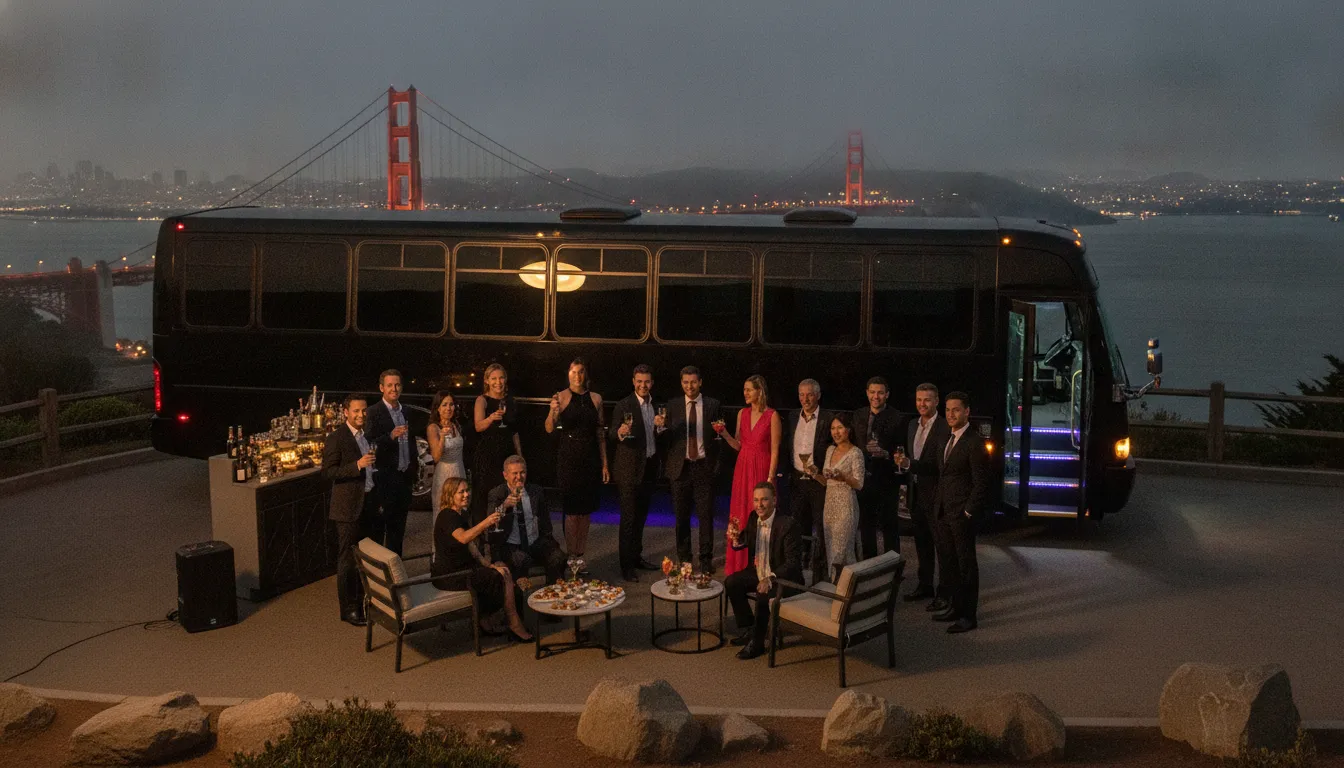
Group celebrating beside a party bus on a San Francisco evening route
San Francisco party bus planning should account for loading time, curb access, and the order of stops.

Start with the event, not the amenities

Define what the transportation must accomplish. A birthday dinner may need one pickup, a restaurant drop-off, and a return. A wedding may require coordinated hotel pickups and a fixed ceremony arrival. A club outing or city tour may involve several stops and more variable timing. These scenarios call for different route plans even when the passenger count is identical.

Epic Limousine offers party buses and limo coach party buses for celebrations, along with minibuses and motor coaches for other group formats. Party buses are generally suited to celebrations where the ride is part of the event. A minibus or coach may make more sense when seated comfort, luggage, or higher passenger capacity matters more than an entertainment-focused cabin.

Give every address before the quote

Share exact pickup and destination addresses, not just neighborhood names. A request that says “Union Square to dinner and then a club” leaves major route questions unanswered. Exact addresses let the provider assess access, likely travel time, and an appropriate loading plan.

For each stop, state whether the vehicle should drop off and leave, wait nearby, or remain available. Waiting and standby needs can change the service plan. If guests will board at different places, identify one group contact for each pickup so the chauffeur is not searching for missing passengers.

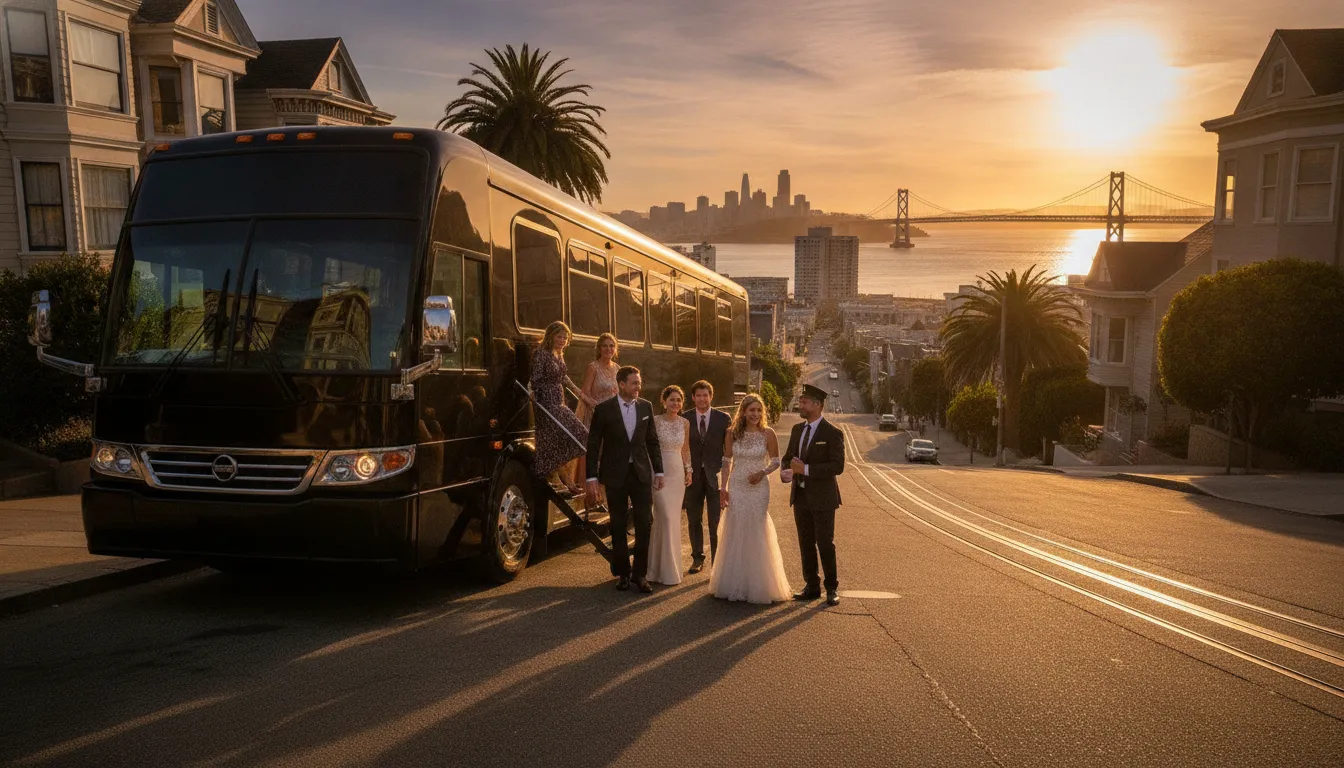
Party bus on a San Francisco route near the city skyline
A workable route accounts for the vehicle, curb access, stops, and realistic loading time.

Build time into every boarding window

A party of 20 rarely boards as quickly as one passenger. Guests need time to gather, store personal items, and find seats. For weddings, conferences, and ticketed events, work backward from the required arrival and add a boarding buffer. This is especially important when a venue has a firm entry time.

San Francisco traffic can shift quickly around major events and peak travel periods. An experienced local provider can help pressure-test the schedule, but the organizer should still avoid stacking stops with no margin. A schedule that allows a few minutes at each transition is more resilient than one that assumes every guest and venue will be ready instantly.

How do you choose the right party bus?

The right vehicle fits the group safely and supports the actual plan. Avoid choosing by a photo alone. Passenger capacity, boarding access, storage, and confirmed amenities all matter. Ask the provider to recommend a vehicle after reviewing the guest count and itinerary.

Use the confirmed guest count

Epic Limousine’s party buses and limo coach party buses typically serve groups of roughly 14 to 30 passengers. Its broader fleet includes minibuses for approximately 20 to 35 passengers and motor coaches for approximately 36 to 56 passengers. Capacity varies by specific vehicle and configuration, so the provider must confirm the limit for the proposed vehicle.

Do not treat the maximum capacity as a planning target without discussing comfort. A group carrying coats, gifts, event supplies, or luggage may need more space. Tell the provider about those items at the quote stage, especially if transportation begins or ends at an airport or hotel.

Match the cabin to the occasion

Confirmed party bus features may include LED lighting, premium sound systems, dance floors, flat-screen TVs, karaoke systems, and bar service capabilities. Features are not identical across every vehicle. If one amenity is essential, request written confirmation that it is available in the vehicle assigned to the trip.

Consider the guest experience as well. A lively cabin can suit a birthday or bachelor or bachelorette celebration. For a mixed-age family gathering, a comfortable minibus or coach may be a better fit. The best choice is the one that serves the event, rather than the vehicle with the longest feature list.

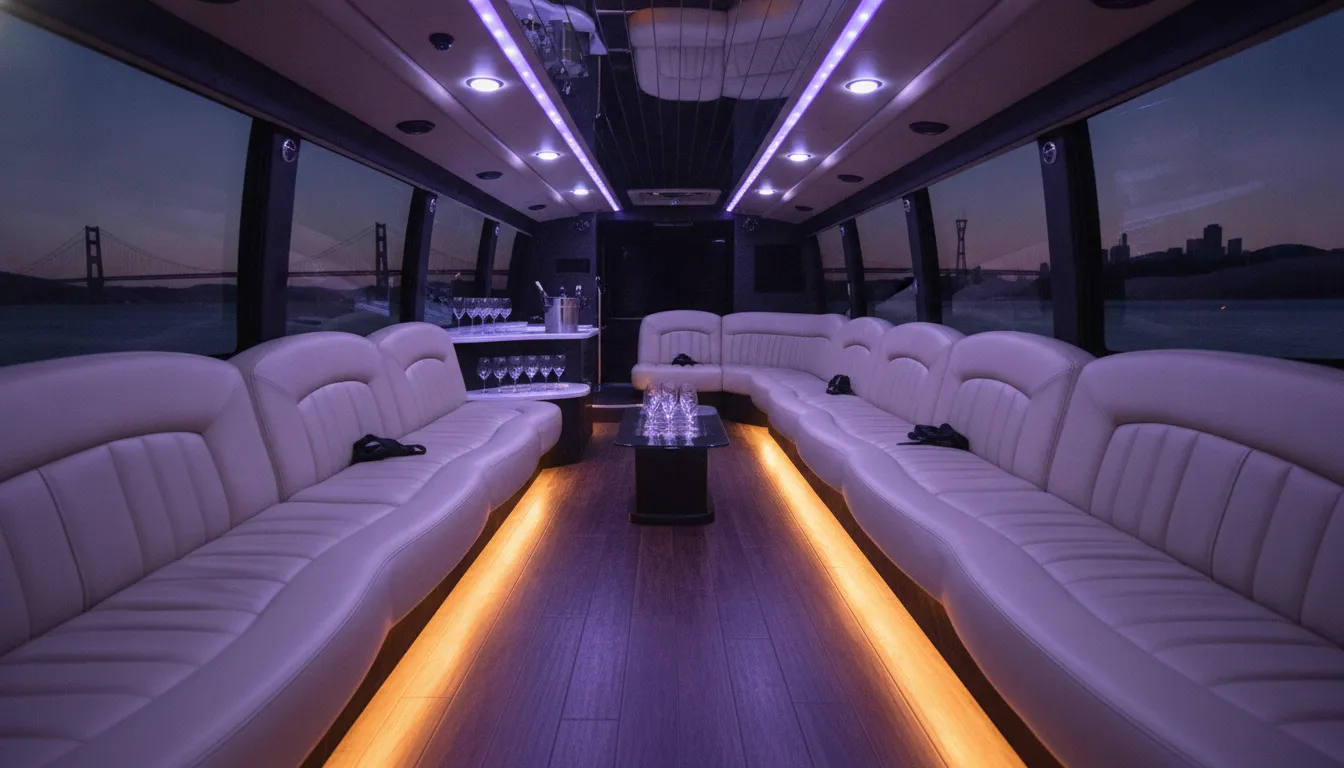
Premium party bus interior with wraparound seating and ambient lighting
Confirm the exact seating layout and amenities for the vehicle proposed in the quote.

Compare party buses, minibuses, and coaches

Vehicle type Typical Epic Limousine capacity Best-fit use Planning question
Party bus or limo coach About 14 to 30 passengers Celebrations, club tours, lively group events Which entertainment features are confirmed?
Minibus About 20 to 35 passengers Wedding shuttles, tours, group transfers How much storage and seated space is available?
Motor coach About 36 to 56 passengers Large groups, conventions, longer trips Will the route and stops accommodate a full-size coach?

Explore Epic Limousine’s private event bus options in San Francisco for the closest service overview. For a celebration that spans more than one part of the Bay Area, the company’s tourism and special event transportation page provides additional context.

What affects a San Francisco party bus quote?

Party bus pricing is quote-based because no two events use the same combination of vehicle, time, route, and service needs. A useful request gives the provider enough detail to build a realistic plan. It also makes quotes easier to compare because each provider is responding to the same itinerary.

Vehicle, date, and service duration

The required vehicle and length of service are central quote variables. The event date and timing also matter because fleet availability changes. A simple transfer and a multi-stop evening can use the same vehicle but require very different operating plans.

Ask whether the quote is based on point-to-point service, hourly charter service, or another arrangement. Epic Limousine supports flexible routing, multiple stops, and standby service when requested. Clarify the included service window and what happens if the event runs later than planned.

Route complexity and special requests

Multiple pickups, distant stops, special staging, or a route that crosses the Bay Area can affect planning. So can accessibility needs, large items, or specific cabin requests. Share these details before accepting a quote. Surprises at pickup are harder to solve than questions during planning.

Do not assume that a lower initial number covers the same service. Compare the exact vehicle, service duration, stops, waiting expectations, and requested features. Ask what is included and what could create an additional charge. Epic Limousine provides personalized quotes rather than publishing a one-size-fits-all rate.

Get a party bus quote after preparing your complete itinerary, so the recommendation reflects the trip you actually intend to run.

How should you plan a San Francisco itinerary?

A strong itinerary is specific enough to guide the chauffeur but flexible enough to absorb real-world delays. It should identify where guests will gather, when the vehicle can load, and which arrival matters most. The most important deadline should anchor the schedule.

Work backward from the fixed arrival

  1. Identify the nonnegotiable arrival. This may be a ceremony, reservation, performance, or venue entry time.
  2. Add unloading and walking time. Guests still need to move from the curb to the entrance.
  3. Estimate travel with local conditions in mind. Discuss event traffic and route feasibility with the provider.
  4. Add boarding time at every pickup. Larger groups and multiple pickup points require more margin.
  5. Set a guest-ready time earlier than departure. Make it clear that this is when passengers should be assembled.

Choose stops that work for the vehicle

Iconic locations can be appealing, but not every stop offers practical loading for a party bus. Ask the provider to review scenic stops before the event. If a chosen location is difficult, a local transportation team may be able to recommend a safer or more workable alternative nearby.

For a city outing, limit the number of stops to what the schedule can realistically support. More stops mean more boarding, head counts, and opportunities for delay. A focused itinerary often creates a better guest experience than trying to cover every landmark in one evening.

Assign one transportation lead

Choose one organizer to communicate with the provider and chauffeur. That person should have the final itinerary, passenger list, and contact information for the group. If guests board at several locations, appoint a pickup captain at each one.

The transportation lead should also tell guests what they may bring and when they must be ready. Clear instructions reduce last-minute questions. If the itinerary changes, route the update through the lead instead of asking several people to contact the chauffeur independently.

What should you confirm before booking?

A written confirmation should make the event plan easy to understand. Review it while there is still time to correct addresses or timing. If any part of the service is unclear, ask before signing.

Use this booking checklist

  • Exact event date and service window
  • Final passenger count and the confirmed capacity of the proposed vehicle
  • Every pickup, stop, destination, and expected waiting period
  • Vehicle type, seating arrangement, and essential amenities
  • Storage, accessibility, or special boarding requirements
  • Quote inclusions and potential additional charges
  • Change, cancellation, and overtime terms
  • Primary organizer and day-of contact information

Confirm safety and service standards

Ask how the provider maintains vehicles and prepares chauffeurs. Epic Limousine emphasizes preventive maintenance, GPS-based routing, and professional chauffeur training. The company also brings a 4.9-star reputation and more than a decade of Bay Area service to event planning.

For additional background on federal motor carrier safety programs, organizers can consult the Federal Motor Carrier Safety Administration. The goal is not to turn the organizer into a compliance expert. It is to choose a provider willing to answer direct questions about safe operations.

Why plan with Epic Limousine?

Epic Limousine combines local Bay Area experience with a fleet that can support celebrations, private events, weddings, tours, and larger group movements. The company is family-owned, has served the region since 2012, and uses professional chauffeurs. Those qualities matter when an itinerary must work across busy streets, multiple venues, and a fixed event schedule.

The planning process is personalized. Instead of forcing every event into a standard package, Epic Limousine reviews the requested date, group size, route, and service needs before providing a quote. That approach helps match the trip with an appropriate vehicle and makes it easier to identify route or timing concerns in advance.

Event planners can also review Epic Limousine’s company background and service approach. When ready, submit the complete trip plan through the contact page for a tailored recommendation.

Frequently asked questions

How much does a party bus rental in San Francisco cost?

Pricing is quote-based. The vehicle, event date, service duration, route, number of stops, waiting time, and special requests can all affect the quote. Share a complete itinerary to receive the most useful estimate.

How many passengers can a San Francisco party bus accommodate?

Epic Limousine’s party buses and limo coach party buses typically accommodate approximately 14 to 30 passengers. Its broader fleet includes minibuses and motor coaches for larger groups. Confirm the capacity of the exact proposed vehicle before booking.

How far ahead should I reserve a party bus?

Reserve as soon as the event date, group size, and basic itinerary are known. Earlier planning generally provides more vehicle choice, particularly for popular dates. Ask about availability even if the event is approaching.

Which amenities are available on a party bus?

Available features may include LED lighting, premium sound systems, flat-screen TVs, dance floors, karaoke systems, and bar service capabilities. Amenities vary by vehicle, so request written confirmation of any feature essential to the event.

Can a party bus make several stops?

Yes, multi-stop and flexible-routing service may be available. Provide all exact addresses and expected waiting periods when requesting the quote. The provider can then assess timing and vehicle access for each stop.

Request your San Francisco party bus quote

A successful group ride begins with a realistic plan. Gather the event date, confirmed head count, exact addresses, desired timing, and essential amenities. Then let Epic Limousine review the route and recommend an appropriate vehicle for the occasion.

Request a quote from Epic Limousine and turn your San Francisco itinerary into a coordinated transportation plan.

School Field Trip Bus Safety Checklist

School bus crash rates are twice as high on field trips as on routine routes. This makes a careful review of your school field trip bus rental a top priority for every local teacher. A strict safety plan ensures that every student returns home safely.

A school field trip bus must meet strict safety standards to protect students on the road. The CDC reports that bus crash rates are 2.1 times higher on field trips than on routine routes. To lower these risks, planners should confirm that the rental company holds a valid TCP license and follows a maintenance plan. You must also check that every driver has passed a background check and that the bus passed its last state test. A good safety checklist includes seeing proof of insurance and knowing that the vehicle is ready for student use. These simple steps help you find a rental company that puts child safety first so you can plan with trust and ease.

You can prevent many travel risks by doing your research well in advance. Our guide shows what to look for when you talk to rental providers. We find that School field trip bus safety starts before booking, and the path begins with:

School field trip bus safety starts before booking

Good planning is the first step to a safe trip. Before you ask for a price, you must know your needs. This helps you choose the right school field trip bus for your group. A safe ride starts with clear facts. You should find all facts early to avoid risks later.

Find student and adult needs

Start by getting a firm headcount. You need to know how many kids and adults will ride. U.S. rules say a school bus holds 11 or more people. This count helps the bus firm pick the right bus. It also means there is a seat for every person on board.

Ask about special needs too. Some students may need a bus with a ramp. It is best to list these needs now. You should also plan for adult guides. Most schools need one adult for every ten kids. Having enough adults keeps all safe and calm.

You must also have health forms ready. Keep a health form for each child on the bus. This is vital if a nurse needs to help a student during the trip. Planning for these facts shows you put safety first.

Map the route and timing

Field trips often go to new places. These odd routes carry more risk. In fact, CDC data shows bus crashes happen 2.1 times more often on these paths than on daily school routes. This is why you must map your path with care. Know every stop and rest area before you leave.

Timing is just as vital. Think about traffic in the Bay Area. Build in extra time so the driver does not feel rushed. A rushed driver may take risks on the road. Clear timing helps all stay safe and on track.

List all stops along the way. Will you stop for lunch? Is there a spot for a bathroom break? Share these stops with the bus firm. This lets them check the route for low bridges or tight turns. Booking a safe field trip bus depends on these small facts.

Check school and state rules

Your school board likely has its own safety rules. Read these before you call any bus firm. Some boards only allow some types of buses. Others need high levels of insurance. Knowing these rules saves you time and keeps you in line with school rules.

You should also look for pro firms. A good firm follows all state rules. In California, buses must follow CPUC rules and have a TCP license. Ask about the firm’s upkeep plan and driver training. Safe firms will gladly share these facts with you.

Use this pre-booking checklist to stay ready:

  • Confirm the final count of students and staff.
  • List any students who need a lift or ramp.
  • Write down the full route with every stop.
  • Check your school board’s bus safety list.
  • Gather health forms for every person.
  • Set a clear time for leaving and coming back.

Take one final headcount before the bus leaves the school. Do this again before you leave the trip site. This simple step ensures no child is left behind. It is a key part of any school trip plan.

How do you vet a field trip transportation provider?

Planning a trip for students means putting safety first. Choosing the right school field trip bus firm is the key step for any teacher or parent. The team must follow all laws. A good check will give you peace of mind before the group hits the road.

Check safety records and licenses

Safety is not just a goal; it is a rule. Research shows that bus crash rates are 2.1 times higher on trips that are not part of a daily route. This fact makes it key to pick a group with a clean record. Ask the firm for their safety score and check their state license. In the Bay Area, firms must have an active TCP license to take riders for hire.

Review the fleet and repair logs

A top firm will keep a luxury fleet of buses that get fixed often. Ask how many times they check their buses and if they keep logs of every fix. Buses must hold at least 11 people by law. Make sure the bus you rent is the right size and has passed all local tests.

Review chauffeur training and safety plans

The person at the wheel is as key as the bus itself. Elite firms put their drivers through deep checks and safety drills. They should know the best routes and how to handle a big crowd of kids. Ask if the drivers have special training for student trips. Also, talk about safety plans, such as taking a head count before and after each stop to keep every student safe.

  1. Check that the firm has an active TCP license and meets all state rules for travel.
  2. Ask to see the latest safety score from the federal or state records.
  3. Ask for proof of insurance that covers the whole group and the type of trip you have planned.
  4. Confirm that every driver has passed a drug test and a full background check.
  5. Check the bus in person to make sure it is clean and has all the safety gear needed.
  6. Ask how the firm handles a breakdown or a delay during the trip.

By following these steps, you can find a partner that values your students as much as you do. When you are ready to plan your next outing, you can rent a charter bus that meets these high bars. This work saves you stress. Your students will enjoy a fun day, and you will know they are in good hands.

Choose the right vehicle for your student group

Planning a trip for students starts with finding the best way to travel. You need to match the bus to the size of your group. Safety and comfort are the main goals for any school field trip bus choice. Our team helps you pick the best ride for your needs. We focus on making the trip easy for both teachers and students.

Match the group size

Picking the right bus size helps keep everyone together. Small groups of 10 to 14 people can use a large van. These vans are great for quick trips or small clubs. For larger classes, a full size charter bus is the better pick. Large buses can hold up to 56 people at once. Federal rules define a school bus as any ride that holds 11 or more people to move students to school events. Using a bus with the right size makes sure no one is left behind. It also helps you stay within your budget by not paying for empty seats. You should count both students and staff when you book your ride.

Check safety and storage

Safety is the top goal for any school trip. You want a driver who knows the roads well. Research shows that bus crashes are 2.1 times more likely on new routes than on daily school runs (CDC). This makes choosing an expert service vital for your peace of mind. You should look for a firm that follows a strict care plan for their fleet. Our luxury fleet includes buses that meet high safety rules. We check each bus to make sure it is ready for the road.

Storage space is also key for longer trips. If students bring bags or sports gear, you will need a bus with large bays. Vans offer small room for bags. Charter buses have big storage areas under the bus. This keeps the aisles clear and safe for everyone to walk. It also keeps student gear dry if it rains during the trip. Having enough room for all bags is a must for night events.

Look at trip length

Short trips across the city might only need basic seats. But for long drives, students need more comfort to stay happy. Air cooling and soft seats help keep students calm and ready to learn. You should also check for a restroom on the bus for trips that last many hours. A charter bus rental often gives these extra perks to make the ride smooth for everyone. These perks can change a long day into a fun time for the whole group. Kids will feel more rested when they arrive at the site.

Before you leave, you must check that every student is on the bus. Experts suggest taking a headcount before the bus starts and again before you return. This simple step prevents missing students and keeps the trip on track. It is one of the most vital tasks for any field trip leader. It only takes a minute but saves a lot of stress.

Vehicle Type Seats Best Use Top Perk
Large Van Up to 14 Small groups Easy to park
Mini Bus 24 to 35 Mid-sized classes Smooth ride
Charter Bus Up to 56 Large groups Restroom on board

What belongs on the day-of safety checklist?

The day of the trip is often the most busy time for teachers and staff. Having a clear plan helps keep kids safe and on track. Research shows that bus crash rates are 2.1 times higher on trips to new places than on daily school routes. A strong safety list for your safe field trip bus can help prevent small errors from becoming big problems.

Check rosters and headcounts

Start your day with a full roster check before anyone gets on the bus. Each adult should have a list of their assigned students and their cell numbers. It is vital to take a full student headcount before you leave and before you return to school. This ensures that every child is accounted for at all times.

When you book a school bus, make sure you have extra copies of the roster. Give one copy to the driver and keep one at the school office. This helps in case of an emergency. Always count heads twice to be sure of the number.

Brief the students and staff

Before the bus pulls away, talk to the students about the rules. Remind them to stay in their seats and keep the noise down so the driver can focus. Explain where the emergency exits are and what to do if there is a problem. Staff should also know their roles in a crisis.

Each adult should know who to call if a student gets lost or hurt. Make sure all staff have the school’s emergency contact list. Keep a first aid kit on the bus and know who is trained to use it. Clear rules help keep the trip calm and safe for everyone.

Manage loading zones and gear

Pick a safe spot for students to load and unload the bus. This area should be away from other traffic and easy to see. Check that all gear is stored safely in the luggage bays. Nothing should block the aisles or the exits inside the bus.

When you arrive back at school, coordinate the pickup for each student. Ensure that parents know exactly where to meet the group. A smooth return is just as important as a safe departure. Double check the bus for any left items before the driver leaves.

What affects a school field trip bus quote?

Booking a school field trip bus involves many parts that change the final cost. Each trip is unique, and bus firms look at many details to give a fair price. Knowing these facts helps you plan well and stay on your budget. Giving full info from the start leads to a better price for your school. It also helps the driver prepare for the specific needs of your group.

Group size and bus choice

The number of people is the first thing a firm checks. Federal rules define a school bus as a motor vehicle for 11 or more people. If you have a large class, you may need a big bus. Small groups might fit in a van. The bus you pick sets the base price for the day. Using the right bus size ensures every student has a seat while keeping costs low.

Bus features also play a part in the quote. Nice buses with more comfort often cost more than basic ones. If you want a safe field trip bus with modern safety tools, it might change the rate. Picking the right size for your group keeps you from paying for empty seats you do not use. It also helps you stay green by using less fuel for your travel.

Miles, time, and stops

The path you take is a big part of the quote. Firms look at how far the bus will drive. Long trips use more fuel and cause more wear on the bus. They also count how many hours the driver is at work. Some trips stay in town, while others go across the Bay Area for a full day. The total time for the trip starts when the bus leaves the lot and ends when it returns.

The number of stops on your path matters too. Each extra stop adds time and work for the driver. When you book a school bus, list every place you plan to visit. This includes stops for lunch or breaks. Clear plans help the firm find the right cost based on time. It also prevents surprise fees if the route changes on the day of the trip.

Access, dates, and wait time

Access needs are another key factor for your quote. If students need a lift for a wheelchair, tell the firm early. These buses have special gear and may cost more to run. Making sure every student can ride safely is vital for any school trip. Experts say you should check all plans at least 24 hours before you leave to avoid problems. This check helps confirm the driver knows about any special gear required.

The date of your trip can change the price as well. Some months are very busy for field trips. If you book during a busy time, the rates might be higher. Mid-week trips often cost less than weekend ones. Also, think about the time the bus sits and waits for the students. Waiting time is part of the cost because the driver must stay with the bus. Planning early helps you find the best date and price for your school field trip bus needs.

Plan for Bay Area routes and loading zones

Organizing a safe field trip bus in the Bay Area takes smart map work and timing. City streets in San Francisco and Oakland have tight turns that large coaches cannot make. You should work with your driver to find the best paths through bridge tolls and airport traffic. Bridge delays can add a lot of time to your trip, so building a buffer into your plan is a wise move.

Map out city loading zones

Finding a legal spot to load students is a key part of any book a school bus plan. Many city spots do not have private lots for large rigs. You must find marked bus loading zones near your stop to avoid blocks and fines. Some spots need a permit from the city, so check these rules weeks before you go. Clear zones help keep students safe and away from active cars.

Manage bridge and airport traffic

Bay Area traffic can change fast, mostly near the Bay Bridge or San Francisco International Airport. Large groups often face longer trip times than a single car would. Federal rules say a school bus is a vehicle for 11 or more people, and these big rigs move slower in heavy city jams. You can find more on these rules at the NHTSA website. Aim to avoid peak drive times to keep your group on track.

Align with your driver

Keep a clear line of talk with your driver during the day. They know the best ways to go up steep hills and through tight zones. While your driver handles the wheel, you should focus on the group. Taking a head count before you leave and when you return is a key safety step. You can view safety forms and more tips in this field trip guide. A well-set team makes sure every student stays safe from start to finish.

Build a field trip transportation timeline

Planning a safe school field trip bus ride takes time and care. You should start the process weeks before the big day to ensure you get the best service. A clear plan helps the school, the bus firm, and the students stay safe and on track.

Start your search early

When you need to book a school bus, start your search at least two months out. This lead time lets you look at many firms and their safety files. You can check if they have the right bus for your group size. Federal rules state that a bus for students must have 11 or more seats to be a school bus. Booking early also helps you find the best rates for your school budget.

Talk to the bus firm about your route and all your stops. Make sure they know where you want to go and what time you must be back. This talk keeps everyone on the same page. It stops last-minute stress for you and the school team. You should also ask about the driver’s training and the age of the bus.

Confirm facts 24 hours out

One day before the trip, you should check all your plans again. Call the bus firm to make sure the time and place are still the same. Ask for the name of your driver and a phone number to reach them. This helps if the bus is a few minutes late. You should also gather all emergency forms for the kids. Keep these forms in a folder that stays with a lead teacher on the bus.

Check that you have the right gear for the day. A quick check of these small facts makes the whole day go much better for everyone. Use this list to stay on track:

  • Confirm the final headcount of students and staff.
  • Pack a first aid kit and any needed medicine.
  • Check the weather report for rain or cold winds.
  • Bring snacks and water for the ride.

Manage the day of the trip

When the bus pulls up, greet the driver and do a quick check of the ride. You should count every student before they get on. A headcount ensures that no one is missing. It is a simple step that keeps every child safe. Make sure the kids know the bus rules before the engine starts.

Safety is the top goal for every trip. Research shows that bus crash rates are 2.1 times higher on new routes than on daily runs. Because of this, you must help the driver stay focused. Keep the noise level low so they can drive well. When the trip ends, count the kids again before they leave the bus. This final check brings the day to a safe and happy close.

Frequently Asked Questions

How much is it to rent a school bus for a field trip?

The cost to rent a bus depends on how far you go and how long you stay. Most rental firms in the Bay Area charge by the hour or by the mile. Prices also shift based on the season and the bus size you choose. It is smart to request a quote early to find the best rate. Planning ahead helps your school stay within its budget while getting safe and trusty transport for students.

What safety measures should I look for in a field trip bus rental?

Safety is vital since school bus crashes happen at a rate 2.1 times higher on nonroutine routes than on routine ones. You must ensure the firm has a valid TCP license and follows a firm upkeep plan. Every bus must pass a standard safety check before each trip to ensure it is in good shape. Checking these facts helps keep students safe and secure while they travel to their stop. Good driver training and background checks are also key for any quality charter bus service.

Are there special rules for buses used for school activities?

There are clear US rules for all vans or buses that move students to and from school events. A Multifunction School Activity Bus, or MFSAB, is a type of bus used for these trips. According to the NHTSA, these buses must meet most school bus safety standards. They do not need to have stop arms or flashing lights on the outside of the bus. This is because they do not make regular stops at home or school bus stations like yellow buses.

Can you legally drive a school bus for personal use?

You can drive a school bus for personal use, but you must follow clear state and US laws. If the bus carries more than ten people, you usually need to hold a commercial driver license. Many states also require you to remove stop arms and cover any school name on the bus. For most groups, it is easier and safer to work with an expert firm that provides a trained driver.

Need to book a safe field trip bus for your Bay Area school?

If you do not book your bus early, you might have to use a firm that does not meet your high safety rules and face costs. Waiting also means you could have few dates left as other area schools fill up the schedule, so you should secure your good bus now. Use our field trip bus guide to help you plan now and ensure a safe ride for every child on the trip.

Ready to request a quote for your next school field trip? Request a quote online to book your safe bus and ensure your students have a great ride through the San Francisco Bay Area today.