
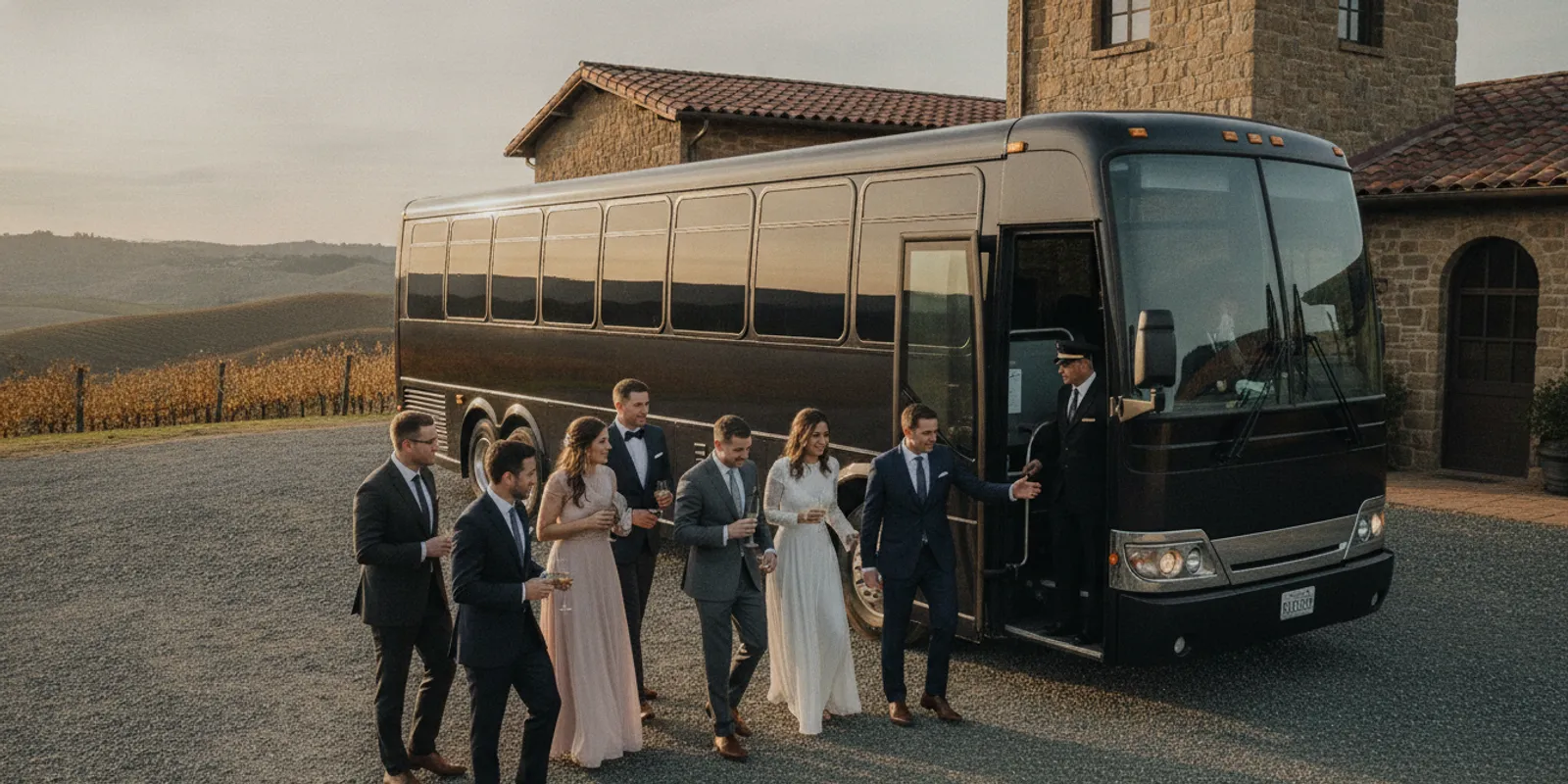
For wedding transportation for a Napa Valley celebration, start with the guest list, lodging locations, ceremony and reception addresses, and the hours when guests need rides. Then choose a vehicle plan that fits those numbers and the venue schedule. A shuttle loop can help connect hotels and venues, while reserved rides may suit a smaller wedding party.
What should you decide before booking?
Set the basic trip plan before comparing vehicles. A clear plan helps avoid guessing about capacity, service hours, and the number of trips required.
Write down the following details:
- Estimated number of guests who may need a ride, separate from the total invitation count.
- Where guests will stay, including hotel names or clusters of lodging.
- Exact ceremony and reception addresses, plus any separate photo locations.
- Start and finish times for the events, including when guests should arrive.
- Whether rides are needed before the ceremony, after the reception, or both.
- Any mobility, luggage, child-seat, or other access needs that should be discussed.
- Who will coordinate pickup questions on the wedding day.
Use the list to create one transportation brief for your planner, venue, and provider. If the event includes a large guest group, review the available vehicle options early. For a smaller wedding party, compare the route and timing with the guidance on choosing a vehicle for a wedding party.
How do Napa Valley routes affect the plan?
Route details matter because guests may travel between different towns, lodging areas, and winery or vineyard venues. Build the schedule around actual addresses and loading conditions, rather than relying only on straight-line distance.
Ask the venue or planner about the designated drop-off point, bus or shuttle access, parking instructions, and any restrictions for larger vehicles. Confirm whether guests can wait indoors or under cover and whether vehicles can remain on site. Share those answers with the transportation provider before settling on the itinerary.
For a route with several stops, list each stop in order and give the planned arrival time. Note whether the driver should wait, return later, or complete a series of transfers. Napa Valley’s official travel guide includes general visitor information for the region; consult it alongside the venue’s own access instructions: Visit Napa Valley.
Epic Limousine offers wine-country transportation and serves Napa Valley among its regional destinations. Wedding travel has its own schedule, so specify that the reservation is for a wedding rather than assuming a standard winery tour itinerary.
Which vehicle arrangement fits your guest count?
Choose an arrangement by matching usable passenger capacity to the number of guests riding each trip. The right answer may be one larger vehicle, several smaller vehicles, or a repeating shuttle, depending on your schedule and pickup points.
| Arrangement | Can suit | Confirm before booking |
|---|---|---|
| One group vehicle | Guests traveling together on a shared route | Passenger capacity, luggage, access, and loading location |
| Multiple vehicles | Separate groups, staggered schedules, or different pickup areas | How vehicles coordinate and whether arrival times differ |
| Shuttle loop | Repeated transfers between lodging and an event venue | Loop duration, frequency, service window, and final return |
| Reserved smaller rides | Wedding party or guests with distinct pickup needs | Individual addresses, pickup times, and waiting arrangements |
These are planning formats, not fixed vehicle recommendations. Epic’s fleet ranges from luxury sedans to motor coaches, with capacities across vehicle categories. Compare the intended group size and route against the fleet information, and ask about any comfort or accessibility requirements that could affect the choice.
For a broader overview of group travel options, see the charter bus guide and the motor coach group travel page. A recurring hotel-to-venue route may call for a different setup from a single transfer; the event shuttle planning guide can help you think through loops and pickup windows.
How should you build the wedding-day schedule?
Build the schedule backward from the time guests need to be seated or ready. Include loading time, the drive, a buffer for delays, and a clearly identified final pickup after the celebration.
Make a simple timeline with these checkpoints:
- Set the guest arrival deadline at the ceremony or reception.
- Estimate travel time for each route with the planner or venue, then add a practical buffer.
- Decide when the first pickup begins and how often the vehicle returns, if using a loop.
- Identify the last departure time for guests who leave before the reception ends.
- Confirm the final departure and where guests will be dropped off.
- Share the schedule with the coordinator and a named transportation contact.
Keep the guest-facing instructions straightforward. Tell guests where to board, what time to be there, and whether the vehicle will make more than one trip. If plans change, identify who is authorized to relay updates so that the driver receives one clear direction.
For weddings with a dedicated party vehicle, the article on wedding transportation services provides a relevant starting point. If the plan also includes a larger group transfer, consider details covered in the wedding shuttle guide.
What should you include in a quote request?
A useful quote request explains the actual itinerary and service window. Include enough information for the provider to understand the number of trips, stops, and passengers instead of asking for a price based only on a date.
- Event date and approximate passenger count for each trip.
- Pickup, ceremony, reception, and return addresses.
- Requested pickup and drop-off times, including the final return.
- Whether the service is one-way, round trip, hourly, or a shuttle loop.
- Vehicle preferences, if you have them, and any needs related to access or luggage.
- Venue instructions, parking details, and a day-of contact person.
- Any schedule changes you already expect, such as a separate photo stop.
Ask what is included in the proposed service period and how timing changes are handled. Because pricing is customized, the itinerary and service window are important context for a specific quote. For other budget-planning considerations, see the guide to wedding limo costs and the shuttle quote guide.
What should you verify before confirming?
Review the final itinerary and vehicle plan in writing before confirming the reservation. A short final check can catch address, timing, or communication gaps while there is still time to clarify them.
- Check that every address and stop is correct.
- Confirm the passenger plan for each trip, not just the total wedding attendance.
- Verify the start time, service end time, and expected return schedule.
- Ask who to contact about day-of coordination and how changes are communicated.
- Make sure venue access and loading instructions have been shared.
- Give the final guest instructions to the planner or designated coordinator.
Epic Limousine is a family-owned Bay Area transportation provider, with service options for events and group travel. You can learn more about the company on the About Us page, explore available transportation services, or review customer reviews as part of your decision process.
How can you make the plan easier for guests?
Guest instructions work best when they answer the practical questions before anyone has to ask. Give the same concise information on the wedding website, invitation insert, or day-before message, and keep the details consistent if a schedule changes.
Include the pickup location by its recognizable name and exact address, the time guests should arrive, and the planned departure time. Explain whether the shuttle runs more than once, whether seats are first come first served, and whether guests should expect a return ride. If the pickup spot is difficult to identify, provide a landmark approved by the venue rather than relying on a vague direction such as “near the entrance.”
Consider guests who may not be familiar with the area. Tell them how much time to allow to reach the boarding point from their lodging, whether they need to walk from the hotel lobby, and whom to contact if they are delayed. Avoid asking the driver to field individual guest calls while managing the route. A coordinator can collect questions, relay a confirmed change, and keep the day moving.
If guests have separate schedules, label the ride options clearly. For example, identify the departure intended for ceremony arrival and the later trip for guests who are joining only the reception. Do not promise a departure that is not part of the booked service. Share the final plan with the venue, planner, and transportation provider so each party works from the same version.
How should you plan for accessibility and comfort?
Discuss access needs before the vehicle and itinerary are finalized. This gives the provider and venue time to confirm whether boarding arrangements, walking distances, and stops fit the people who will ride.
Ask guests privately whether they need assistance with steps, longer walks, or a particular boarding arrangement. Then confirm the details with the transportation provider rather than making assumptions based on the vehicle category. Ask about the specific vehicle being proposed, the loading surface, the distance from the drop-off point to the ceremony, and whether another route or drop-off location is available.
Comfort also depends on the length and shape of the trip. Multiple stops, waiting periods, and long gaps between departures can affect guests differently. When you compare plans, consider whether guests can sit while waiting, how luggage or personal items will be handled, and how the final ride home lines up with the event schedule. For a mixed-age group, make sure the transportation plan does not require every guest to follow a fast-moving series of transfers.
Provide accurate information about needs such as mobility equipment, child seats, or additional space when requesting a quote. Ask what arrangements are available and confirm them in writing. If a guest’s needs change, update the coordinator and provider as soon as practical so the plan can be reviewed.
How can the planner coordinate a multi-stop itinerary?
A multi-stop wedding route needs one master itinerary with a clear owner. Record each pickup and drop-off in sequence, then share the same version with the venue, planner, and transportation contact.
For each stop, note the address, planned arrival and departure, who is boarding or leaving, and whether the vehicle is expected to wait. If a photo stop is optional, mark it as optional rather than building it into the confirmed schedule. This distinction helps everyone understand which timing is fixed and which can be removed if the day runs late.
Keep the route manageable. Every additional stop adds coordination: guests need to know where to board, the driver needs accurate directions, and the venue may have a limited loading window. Before adding a stop, ask whether it contributes enough to the celebration to justify the added time and whether it affects the next scheduled arrival.
Choose one person to approve changes on the day. That person should be able to reach the planner and transportation contact, and should tell guests only what has been confirmed. If the timeline slips, decide in advance which optional stop or wait period could be shortened without disrupting the ceremony or the final return.
A simple Bay Area wedding transportation decision checklist
Use this checklist to turn the planning discussion into decisions you can confirm. Resolve the items in order, because the rider count and route shape affect vehicle choice and service time.
- Gather lodging addresses and estimate likely riders for each trip.
- Confirm ceremony, reception, and any photo-stop locations with the venue.
- Ask about loading zones, access limits, parking, and vehicle turnaround.
- Decide whether guests need one transfer, multiple departures, or a repeating shuttle.
- Match the passenger plan to vehicle capacity, luggage, and access requirements.
- Build pickup and return times backward from event milestones, with a buffer.
- Assign a coordinator to share accurate guest instructions and approve changes.
- Request a quote using the date, addresses, times, passenger counts, and service format.
- Review the written itinerary and make sure every party has the final version.
When you compare proposals, look beyond the vehicle name. Check that each proposal describes the same route, coverage period, passenger estimate, and number of trips. If one option assumes a single group departure and another assumes repeated loops, they are not direct comparisons until the service plan is made consistent.
It can help to separate essential transportation from optional rides. For instance, a core hotel-to-venue shuttle may be necessary for guests without other arrangements, while a dedicated party ride or photo transfer may be a separate choice. Establish the priorities with your planner before the final vehicle request, then ask for the itinerary to show which ride serves which group.
For region-specific travel context, the official Napa Valley visitor guide can be read alongside directions and access notes provided by each venue. Use the venue’s instructions for the final operational details, since each property has its own layout and procedures.
Frequently Asked Questions
When should we arrange wedding transportation?
Start once you know the venue, event date, guest lodging plan, and approximate number of riders. Sharing those details early makes it easier to compare a shuttle loop with other arrangements.
Should we transport every wedding guest?
Not necessarily. Estimate who is likely to use the service based on lodging, venue location, and your plans for guest arrival and departure. Give guests clear instructions about whether transportation is available to everyone or only specific groups.
Is a shuttle loop better than a single transfer?
A loop can fit a plan with multiple groups or staggered arrival times between lodging and a venue. A single transfer may be simpler when the group can travel together at one time. Compare the schedule and total trips before choosing.
What details should we ask the venue about?
Confirm vehicle access, loading and unloading locations, parking, turnaround space, and any limits on vehicle size or arrival times. Share the venue’s directions with the transportation provider.
Can we include a winery stop on a wedding itinerary?
You can ask about a route that includes a winery or other stop, but specify the address, requested duration, and how it fits the event schedule. Confirm that the venue and transportation arrangements work for the full itinerary.
What if our final guest count is not settled?
Provide your current estimate and explain when you expect to have a firmer count. Ask how the vehicle plan and quote may change if the number of riders shifts.
Ready to plan wedding transportation?
Gather your addresses, approximate rider counts, and event timeline before requesting a quote. With those details in hand, you can compare arrangements that suit your Napa Valley celebration and give guests a clearer plan for getting there and home.
With a shared itinerary and clear guest instructions, transportation can become one less uncertainty on the wedding day.