
To understand how to pick wedding transportation, start with the total number of riders, each pickup and drop-off location, the timing between events, and any mobility or comfort needs. Then compare vehicle styles and service details with your venue and transportation provider before requesting a customized quote.
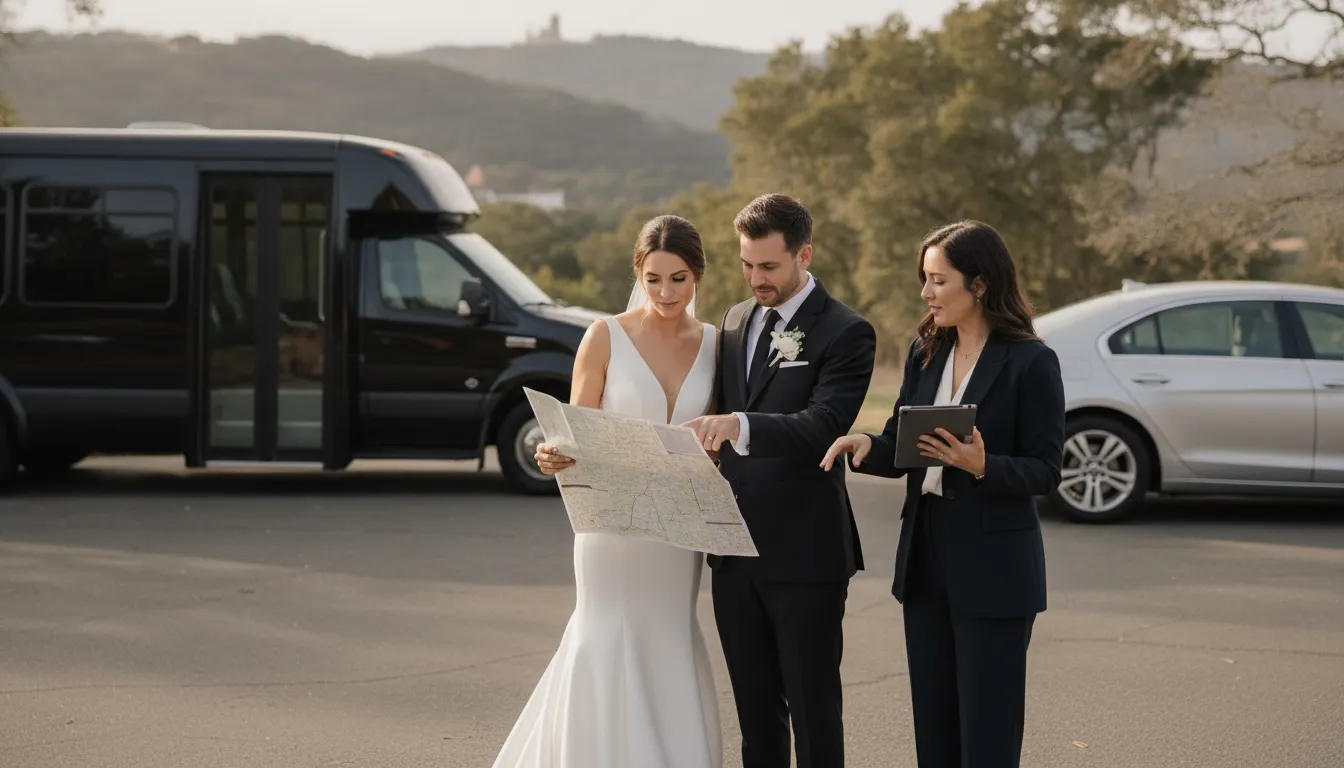
Wedding transportation works best when it is planned around the people and places involved, not chosen from a vehicle list alone. Bay Area celebrations may connect hotels, ceremony sites, reception venues, and photo locations, so a clear decision process can make the day easier to coordinate.
That groundwork gives you a more useful way to weigh guest movement, venue access, and the priorities that matter most to your wedding. Begin by mapping who needs a ride, where they need to go, and what the day requires.
Start with the people, places, and priorities
The best first step is to map who needs transportation, where they need to go, and what the day requires. Guest count, the distance between locations, the schedule, and venue access give you a practical foundation for choosing wedding transportation without starting with a vehicle list.
Separate wedding-party and guest needs
Begin with a complete rider list. Count the wedding party, immediate family, guests staying at hotels, and anyone who may need a planned ride between venues. The wedding party may need transportation that follows a different sequence from a guest shuttle, especially when preparation, photos, ceremony, and reception locations do not share the same address.
Note attire, luggage, garment bags, mobility considerations, and any other comfort needs that affect boarding or storage. Keep these details together rather than relying on an informal headcount. If your plan includes multiple groups, a wedding transportation service can review the separate movements as one coordinated plan.
List every location and movement
Write down the pickup and drop-off address for each movement: hotels, homes, preparation sites, ceremony venues, reception venues, and the final return point. Include the order in which people travel and identify locations that are remote or difficult to reach. When venues are far apart, guest transportation can reduce uncertainty and make the itinerary easier for attendees to follow.
For additional planning context, review this guide to wedding guest shuttle planning and the wedding shuttle service timeline. Then turn your notes into a simple decision worksheet with four columns: rider group, pickup and drop-off locations, required time window, and special considerations. Share that worksheet when you request a wedding transportation quote, so the provider can respond to the actual plan rather than a single passenger estimate.
How to pick wedding transportation for your guest count
Choose transportation by matching each group’s size and role to the day’s logistics, rather than trying to place every guest in one vehicle. Separate wedding-party rides from guest shuttles, then confirm the vehicle fit, loading locations, comfort needs, and schedule with your transportation provider.
Guest count is only the starting point. Consider who needs transportation, whether riders are traveling together or from several hotels, and whether the vehicle must make repeated stops. A smaller vehicle can make sense for the couple or wedding party, while a shuttle-style option may simplify guest movement between lodging, ceremony, and reception locations. If the event involves several groups, a coordinated mix can be more practical than one large vehicle.
| Vehicle style | Best use case | Comfort and experience | Logistics to confirm |
|---|---|---|---|
| Sedan or SUV. | Couple, VIPs, or a small wedding-party group. | Private, focused transportation with room to plan around individual preferences. | Pickup order, attire or luggage, and whether multiple vehicles are needed. |
| Limousine. | Wedding-party movement, portraits, or a special arrival. | A celebratory setting that keeps the wedding party together. | Passenger grouping, photo schedule, venue access, and loading area. |
| Shuttle. | Moving guests between hotels, ceremony, and reception. | Organized shared travel that can reduce individual driving decisions. | Guest pickup points, departure sequence, return trips, and venue instructions. |
| Motor-coach-style option. | Larger guest movements or consolidated group transportation. | One coordinated travel plan for a substantial portion of the guest list. | Road and driveway access, parking, loading location, and the full itinerary. |
Epic Limousine serves the San Francisco Bay Area with a fleet ranging from sedans to motor coaches. This supports different wedding transportation needs without assuming that one vehicle fits every event. You can explore the fleet and compare the planning considerations for your group.
For the wedding party, review guidance on how to choose a wedding party limo or use the wedding party bus rental guide when a shared celebration vehicle fits the plan. For broader guest movement, see Epic’s wedding transportation services and provide the guest count, locations, and schedule for a tailored recommendation.
How venue logistics shape the right vehicle
The right wedding vehicle must fit the venue as well as the guest list. Loading zones, driveway geometry, parking, and the movement between hotels, ceremony sites, and receptions can matter as much as passenger count.
Check the arrival and departure points
Ask each venue where vehicles may load and unload, whether a full-size vehicle can approach the entrance, and where it can wait between trips. A narrow driveway, turning limitation, steep approach, or restricted parking area may change which vehicle is practical. Do not assume that a vehicle that fits the guest count will fit the property.
Request the venue’s preferred pickup location and share it with the transportation provider. Photos, a site map, or a contact person can help clarify the approach before the wedding day. The provider can then evaluate the route and recommend an option that matches the access conditions rather than relying on a vehicle label alone.
Map every movement between locations
Hotel pickup, ceremony arrival, reception departure, and returns may involve different loading points. If the ceremony and reception are separate, decide whether guests need a continuous shuttle plan or transportation only for selected transfers. Remote or difficult-to-reach venues also make coordinated guest transportation more useful, particularly when personal parking and navigation would add friction.
For a multi-stop plan, document who is riding, where each group boards, and which venue receives each arrival. A San Francisco wedding shuttle service can be evaluated against that complete movement plan. For a hotel-to-ceremony transfer, review the hotel-to-ceremony wedding shuttle approach separately from the reception return.
Confirm the plan with both sides
Venue access and event traffic can change how a schedule works in practice. The Federal Highway Administration notes that advance planning and coordination support traffic-control strategies and real-time information sharing during events: FHWA event traffic planning guidance. Confirm the final loading instructions, route assumptions, and vehicle fit directly with the venue and transportation provider before booking.
Build a wedding-day transportation schedule
The most useful wedding transportation schedule connects each ride to a specific event, location, and responsible person. Start with the guest count, distance between locations, and the day’s schedule, then confirm the details with your venue and transportation provider before sharing the final itinerary.
- List every event and rider group. Write down the ceremony, photographs, reception, after-party, and any hotel or airport movements. Note who needs transportation for each leg, including the wedding party, immediate family, guests, and vendors whose arrival affects the schedule.
- Define pickup windows. Give each group a clear pickup location and a practical window rather than one vague departure time. Identify where guests should wait, who will confirm that the group is ready, and what happens if the event schedule changes. Do not assume the same pickup plan works for every vehicle.
- Map every stop in order. Place hotels, residences, ceremony venues, photo locations, reception sites, and return destinations in sequence. Share the addresses and access instructions with the provider. For Bay Area events, advance coordination can help stakeholders prepare operational strategies and share real-time information on the event day, as the Federal Highway Administration explains.
- Account for photographs and transitions. Mark when the wedding party leaves the ceremony, where photographs occur, and when guests move to the reception. Treat these as separate schedule points so the driver, coordinator, and venue are working from the same plan.
- Plan the return trips. Decide whether guests return to one hotel, several hotels, or different destinations. Include the after-party if applicable, and state whether return service is grouped or staggered. The wedding shuttle service timeline can help you organize these movements.
- Share the itinerary. Send the current schedule to the venue, planner, transportation provider, and key family members. Include addresses, contact names, pickup points, and the version date so outdated instructions are easier to identify.
- Assign a day-of contact. Choose one person to answer operational questions and communicate approved changes. The couple should not have to coordinate every vehicle while preparing for the ceremony. Review the plan with your wedding transportation provider and confirm which decisions the day-of contact may make.
Plan accessibility, comfort, and guest experience
The right plan starts by matching each guest’s needs to the actual vehicle, pickup path, and schedule. Ask about mobility devices, boarding surfaces, seating preferences, weather exposure, attire, children, and older guests before finalizing transportation. Accessibility can involve both vehicles and facilities, so confirm the details with the provider and venue rather than assuming a service includes specific equipment or boarding support. The Federal Transit Administration defines accessible service by reference to applicable vehicle and facility requirements: review the FTA accessibility guidance.
Plan the boarding experience
Ask whether a guest can board comfortably with a wheelchair, walker, cane. Or other mobility aid, and whether the device can remain with the guest or must be stored. Confirm the vehicle’s entry steps, lift or ramp availability if relevant, door clearance, loading surface, and space for the device. Then ask the venue about curb cuts, stairs, gravel, slopes, narrow driveways, and the distance from the unloading point to the ceremony or reception. Mobility needs should be discussed directly with both parties before you select a vehicle.
Make comfort part of the itinerary
Seating preferences may include easier access near a door, room for formalwear, climate control, or a place to settle safely before the ceremony. Check whether rain, heat, wind, or uneven outdoor paths could affect boarding. Children and older guests may benefit from shorter walks, clear pickup instructions, and a familiar adult assigned to help them find the vehicle. For larger groups, a wedding guest shuttle plan can organize hotel, ceremony, and reception movements while keeping individual needs visible.
Before requesting a quote, ask: What boarding support and equipment are available? What vehicle access details should the venue confirm? Can seating or pickup arrangements be adjusted for specific guests? Who should receive day-of updates if weather or access conditions change? Share those answers when reviewing wedding transportation services, so the proposed plan reflects the people and places involved.
Questions to ask before you request a wedding quote
The best quote request gives the provider enough detail to match the vehicle, people, schedule, and venue conditions to your plans. Before contacting a transportation company, gather your itinerary and ask questions that clarify what will be coordinated, what can change, and what the quoted service actually includes.
Use this checklist when comparing options for wedding transportation services:
- Vehicle assignment: Which vehicle type is being considered for each group, and how will the assignment be confirmed? Ask whether a backup plan exists if the assigned vehicle becomes unavailable, without assuming a guarantee.
- Service window: What start and end times are included? Clarify whether the service covers hotel pickups, the ceremony, reception transfers, photos, and return trips, or only a defined portion of the day.
- Routes and stops: Can the itinerary include multiple hotels, a separate ceremony venue, a photo location, or a late-night return? Share every planned stop and ask how route changes should be communicated.
- Driver coordination: Who is the day-of contact for the couple, planner, venue, and driver? Confirm how pickup instructions, timing updates, and group changes will be shared.
- Venue instructions: What loading zones, driveway restrictions, parking rules, or staging instructions should the provider receive? Venue access is a core part of event transportation planning, particularly when locations are remote or difficult to reach.
- Accessibility and comfort: Explain mobility needs, boarding concerns, seating preferences, attire, and guest considerations in advance. Ask what equipment and vehicle access are available, then confirm the boarding path with both the provider and venue.
- Changes and cancellation: What are the written terms for changing the itinerary, reducing or expanding service, postponing, or canceling? Request the policy in writing rather than relying on an informal explanation.
- Quote inclusions: Does the quote identify the vehicle, service window, stops, driver coordination, and any stated fees or conditions? A clear scope makes it easier to compare customized solutions fairly.
Send the provider your guest groups, pickup addresses, venue contacts, ceremony and reception details, planned stops, accessibility needs, and preferred service window. If a party bus is under consideration, the wedding party bus guide can help you organize the questions. Then use the contact page to request a quote based on your actual itinerary.
A simple Bay Area wedding transportation decision checklist
A practical decision starts with the details that affect the entire guest experience, not just the vehicle style. Before requesting a quote, confirm the following with your planner, venue, and transportation provider.
- Riders: List the wedding party, guests, children, and anyone who may need a separate pickup. Passenger counts help an event organizer evaluate vehicle selection and routing.
- Locations: Write down every hotel, ceremony site, reception venue, photo stop, and final drop-off. Note whether locations are remote or difficult to reach, and identify the route each group actually needs.
- Venue access: Ask where vehicles may load and unload, whether parking or turning space is limited, and who will direct drivers on arrival. Confirm venue-specific rules rather than assuming a large vehicle can reach the entrance.
- Schedule: Share ceremony, photography, reception, and departure times, including any planned transfers. A written timeline gives everyone the same reference point for coordinating a Bay Area event.
- Accessibility: Explain mobility needs early and ask about boarding equipment, vehicle configuration, and paths from pickup areas to entrances. Confirm the plan directly with both the venue and provider.
- Comfort: Consider how long guests will ride, what they will carry, and whether they need a quiet, shared, or more private arrangement. Epic Limousine provides customized transportation solutions with professional drivers and well-maintained vehicles.
- Contact person: Assign one day-of coordinator who can communicate schedule or access changes to the provider. This keeps the couple from managing transportation while preparing for the ceremony.
- Quote details: Send the complete itinerary, rider count, locations, access notes, accessibility needs, and preferred contact person when you request a quote. You can also review the San Francisco wedding shuttle service before contacting the provider.
Request a Quote for Wedding Transportation
Frequently Asked Questions
How do you choose the right wedding transportation for your guest count and itinerary?
Start with the total number of riders, then separate wedding-party transportation from guest transportation. Add each pickup and drop-off location, the ceremony and reception schedule, luggage or attire needs, and any mobility considerations. This information helps the provider recommend one vehicle or a coordinated combination that fits the actual plan.
How far apart should wedding venues be before arranging guest transportation?
Distance is only one factor. Guest transportation becomes especially useful when ceremony and reception locations are separated, difficult to reach, unfamiliar to guests, or connected by routes with limited parking. Review the full route with the venue and provider, including loading areas, driveway access, parking, and hotel pickups.
When should you provide transportation for wedding guests?
Consider transportation when guests are staying in hotels, traveling between multiple venues, attending a remote celebration, or navigating a location where parking is limited. It can also simplify the day for guests who prefer not to drive. Build the service around the people who need it and the movements your itinerary requires.
What accessibility questions should you ask before booking?
Describe each guest’s mobility needs directly and ask how boarding, seating, mobility devices, and the path from pickup to venue entrance will be handled. Confirm the vehicle’s available equipment and the venue’s surfaces, ramps, and loading access with both parties. Accessibility planning should address the complete trip, not just the vehicle.
What information should you prepare before requesting a wedding transportation quote?
Prepare the event date, estimated rider count, guest and wedding-party groups, pickup and drop-off addresses, venue contacts, itinerary, desired service window, luggage or equipment details, and accessibility requirements. Also note possible route changes and return-trip needs. A complete request gives the provider a clearer basis for a customized transportation plan.
Get started with a clear wedding transportation plan
With your guest count, venues, schedule, and accessibility needs in view, a customized transportation plan can make wedding-day coordination easier for everyone involved. Share those details with Epic Limousine so the team can help you evaluate the right service approach for your Bay Area celebration. Request a Quote to begin the conversation.