
A corporate shuttle in Palo Alto works best when its route, stops, and operating hours match a specific rider need. Start by defining who will ride and when, then map demand, confirm safe pickup points, and share a clear schedule. A focused plan helps employers compare service options without assuming every route needs the same setup.
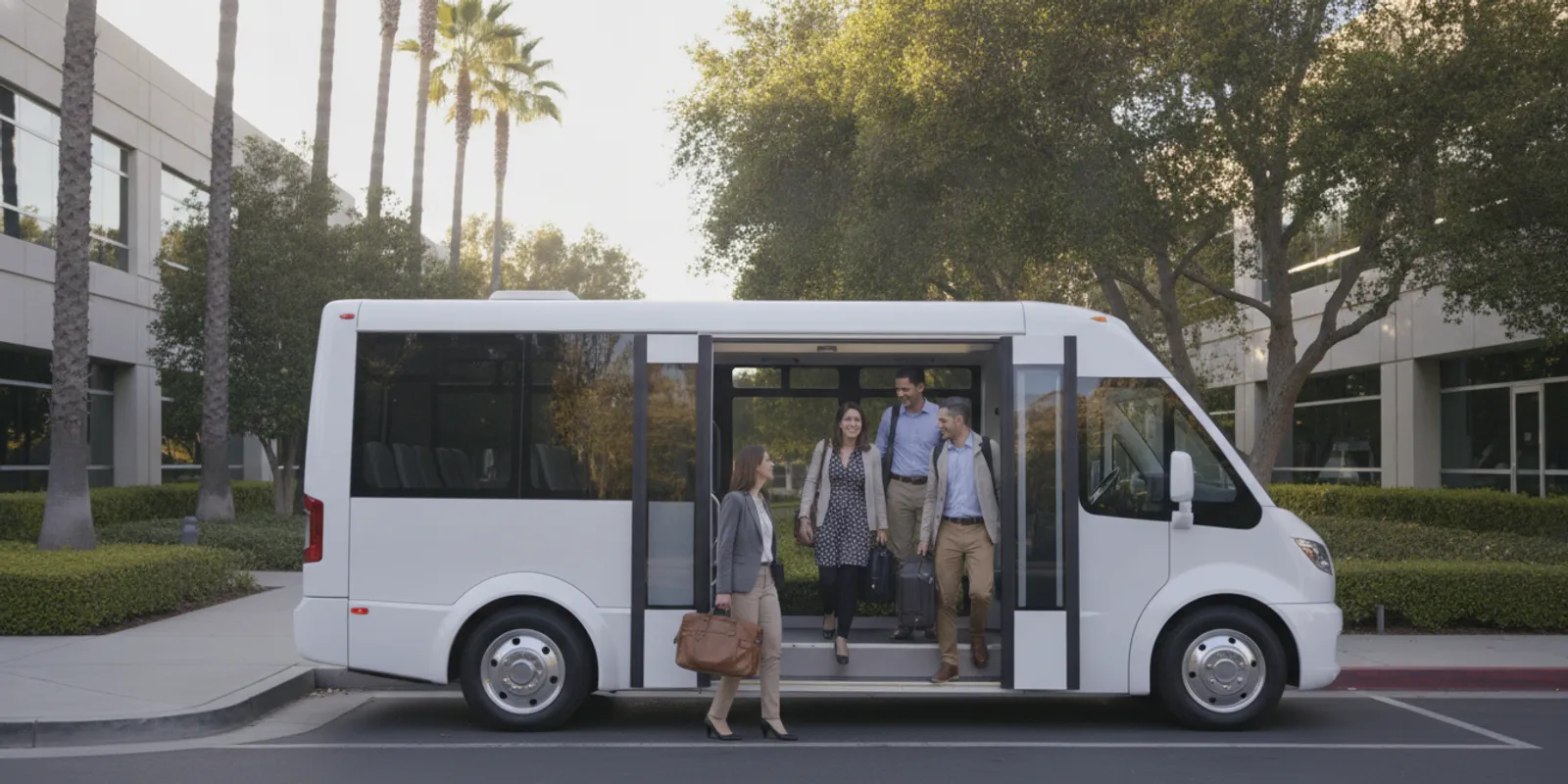
What should you decide before designing a route?
Define the shuttle’s purpose, rider group, and desired outcome before drawing a route. A commuter trip, campus connector, conference loop, and evening event shuttle each have different timing and stop requirements.
Write down the service problem in plain terms. Is the goal to connect employees with transit, move staff between buildings, link a hotel with a conference venue, or coordinate group arrivals for a special event? A clear purpose helps narrow the service window and prevents the route from collecting unnecessary stops.
Then identify the people who will use the service and the information you have about their trips. Useful planning inputs include:
- Approximate number of riders by day and time, based on available internal information.
- Common origin areas or transit connections, without assuming every employee travels from the same place.
- Worksite or event locations that should be served.
- Arrival deadlines, shift changes, and the latest reasonable return trip.
- Whether service is one-time, seasonal, recurring, or tied to a specific event.
- Any mobility, boarding, luggage, or equipment needs that should be addressed.
Use these details to prepare a short service brief. If your team is comparing a shuttle with a larger group vehicle, review the practical distinctions in this bus-versus-shuttle planning guide. For a recurring employee program, the employee shuttle planning guide can help organize the questions to resolve before requesting service.
How do you design a practical Palo Alto shuttle route?
A practical route serves the most important origins and destinations while keeping the trip understandable and repeatable. Build it around rider demand, workable travel time, and safe, authorized stopping locations.
Begin with a map of the workplace or event destination, nearby transit connections, and the places riders need to reach. Palo Alto employers may consider local connections such as the Caltrain station, but a route should reflect the organization’s own rider pattern rather than copy another provider’s service. Stanford describes its campus shuttle as connecting the main campus with the Palo Alto Transit Center and other destinations; treat that as an example of a campus connection, not a promise that its routes or access fit another employer’s needs. See Stanford’s campus shuttle information and verify current details directly with the provider.
For each proposed stop, check whether passengers can wait comfortably and board safely. Confirm access permission where needed, curb or driveway conditions, pedestrian access, and a clear place for the vehicle to load. Do not assume that a convenient-looking curb is an approved pickup point. Identify a backup stop in case access changes.
Route planning often involves tradeoffs. More stops can bring service closer to riders, but can also lengthen the trip and make arrival times less predictable. A direct route may be faster, but could be less useful if riders must travel a long way to the pickup point. Compare a small number of route patterns and record why each stop is included.
- List the required endpoints and any essential connection points.
- Group potential riders by origin or destination instead of adding stops one by one.
- Estimate the full trip, including loading and unloading time.
- Review traffic-sensitive segments and possible alternate routing.
- Confirm permission, curb access, and passenger waiting conditions at every stop.
- Decide how schedule changes, closures, and missed connections will be handled.
For programs with several buildings or a defined loop, ask whether a shuttle-style vehicle or a scheduled charter route better suits the pattern. See the available fleet information and charter bus overview when assessing vehicle types. The right fit depends on the trip plan and confirmed passenger needs, not on a label alone.
How should you choose stops and service windows?
Choose stops that riders can find and use, and set service hours around actual arrival and departure needs. A useful timetable includes enough time for boarding and the full trip, rather than only the time the vehicle leaves its first stop.
Decide whether the service should cover a peak commute, a broader shift window, a midday connection, or a one-off event. For recurring commuter service, consider how early and late trips align with work schedules and transit connections. For a conference, build the window around registration, session changes, and the planned end of the program. For an event, coordinate arrival waves and the last return trip with the event lead.
Document each stop with a name, precise location description, direction of travel, and pickup time. If a large campus has multiple entrances, use the entrance riders should approach rather than a general building name. Make the instructions easy to recognize from the sidewalk and on a phone screen.
Use this comparison to narrow the service pattern before asking for a proposal:
| Program type | Typical route pattern | Timing to define | Planning emphasis |
|---|---|---|---|
| Employee commute | Transit connection or a small set of origin stops to a workplace | Arrival peaks, shift starts, and return windows | Rider demand, transfer time, recurring schedule |
| Campus connector | Loop or point-to-point links between buildings or access points | Operating span, loop frequency, breaks | Stop access, clear wayfinding, campus permissions |
| Conference | Hotel, transit, or parking locations to the venue | Arrival, session breaks, closing time | Guest instructions, crowd flow, event contact |
| Special event | Designated pickup locations to and from an event site | Arrival waves and final return trip | Group coordination, loading area, contingency plan |
Ask the vendor to identify assumptions in the proposed schedule. For example, have them state which stops, dwell times, service dates, and operating hours are included. That makes it easier to compare plans fairly and see whether a lower-cost option omits a required trip. Epic’s shuttle quote planning resource and employee shuttle quote page offer relevant starting points for organizing a request.
What belongs in a rider manifest and day-of plan?
A manifest should give coordinators enough information to manage the trip without collecting unnecessary personal details. Agree on what is needed, who can access it, and how the information will be updated before the first service day.
For a small, recurring commuter route, a stop-by-stop schedule and expected rider counts may be sufficient; do not assume a named passenger list is always necessary. For a conference or event, an attendee roster or boarding list may help organizers manage group arrivals. Confirm the appropriate method with the event lead and service provider, and follow the organization’s privacy and data-handling policies.
Prepare a day-of brief that names a primary coordinator and a backup. Include:
- Service date, operating hours, and planned route version.
- Stop names, exact meeting points, and scheduled pickup times.
- Expected passenger counts at each stop, or the agreed boarding method.
- Coordinator and vendor contact details shared through suitable channels.
- Instructions for late riders, missed pickups, and route disruptions.
- Any confirmed access, boarding, mobility, or equipment arrangements.
Keep the document current. If a stop, time, passenger count, or vehicle need changes, identify who can approve the change and how the update reaches the driver and riders. For more on preparing staff and trip details, use this employee shuttle service resource alongside your own internal operating procedures.
How can rider communication prevent confusion?
Send riders one consistent set of instructions with the schedule, stop locations, and a contact for changes. Repeating the same details across the invitation, calendar notice, and day-of reminder reduces conflicting directions.
Include the following in each rider-facing notice:
- Who is eligible or invited to use the service.
- Service dates and operating window, including the final return trip if applicable.
- Stop names, map links or recognizable location descriptions, and pickup times.
- Whether advance registration or a pass is required, if applicable.
- What to do if a rider is delayed, cannot find the stop, or misses a trip.
- A way to report a schedule or access concern before ride day.
For a campus or multi-building loop, provide simple wayfinding and name each stop consistently. For conferences, direct visitors to a specific entrance or gathering point and identify the event contact. For recurring service, tell employees how and when schedule updates will be communicated. Avoid promising real-time vehicle tracking unless it is explicitly included and confirmed for the service.
A short pilot can surface confusion before the full program begins. Ask a small group of riders to review the instructions, then adjust unclear stop names and timing language. Record the final version and date so coordinators do not distribute an outdated schedule.
How should accessibility be included in the plan?
Raise accessibility needs early, describe the boarding and travel requirements, and confirm the available arrangement with the provider before service is finalized. Do not assume a particular vehicle or stop is suitable without confirming the details.
Consider the complete trip, not just the vehicle. A usable plan may depend on the path to the stop, curb conditions, boarding method, seating, mobility devices, and the time available to board. Ask riders how to provide an accommodation request through an appropriate channel, and share only the information needed to coordinate the service.
When requesting a quote, specify known requirements and ask the vendor to explain what can be accommodated, what vehicle configuration is proposed, and whether any limitations apply. Check that the pickup point itself is reachable and that the schedule allows reasonable boarding time. If a need is not yet known, establish a process and deadline for confirming it rather than leaving it unaddressed.
What should you ask a shuttle provider?
Ask vendors to respond to the same written route, schedule, and rider requirements. Comparable questions make it easier to spot differences in coverage, assumptions, and coordination responsibilities.
- Which vehicle and passenger capacity are proposed for the stated rider pattern?
- Which stops, service dates, operating hours, and trips are included?
- What assumptions affect timing, routing, loading, and the quoted scope?
- How should the employer confirm a route, stop permissions, and access instructions?
- What accessibility requirements can be accommodated, and what must be confirmed?
- Who is the day-of contact, and how are delays or changes communicated?
- What information should the employer provide, and how will rider lists be handled?
- How are changes to the schedule, passenger count, or itinerary requested?
- What is excluded from the proposal, and when must final details be provided?
Provide each vendor with the same brief: origin and destination points, service dates, stops, expected rider counts, timing, accessibility considerations, and coordinator details. If the program includes a conference or corporate event, see the convention shuttle information and corporate event transportation guide. For larger groups, review the motor coach group travel information as another planning reference. These resources can help frame the conversation; confirm the specific requirements and service scope directly.
Frequently asked questions
How far ahead should a Palo Alto employer plan a shuttle?
Start once the need, dates, and likely route are known. More lead time gives the employer and provider room to confirm stops, access, vehicle needs, rider communications, and any accommodations. Timing depends on the service scope and availability, so ask directly rather than relying on a fixed lead-time rule.
Should an employer use a fixed route or make stops on request?
A fixed route is easier to explain and repeat when rider demand follows predictable origins and schedules. Stops on request may suit a different pattern but require clear rules and coordination. Compare the trip time and passenger needs, then confirm that the chosen setup is available for the proposed service.
Does a shuttle need a passenger manifest?
Not every program needs named passenger information. A commuter route may be planned around expected counts and stop schedules, while an event organizer may need a boarding list. Decide what information is necessary, who can view it, and how it will be kept current under your organization’s policies.
Can an employer connect a shuttle with Caltrain?
A transit connection can be considered when it matches rider demand and the schedule allows time for the transfer. Confirm the exact station pickup location, access rules, operating hours, and trip timing with the relevant parties. Do not assume another organization’s shuttle permits general public or employer use.
What information should go in a shuttle quote request?
Include the service purpose, dates, origin and destination, proposed stops, operating window, expected passenger counts, known accessibility requirements, and a coordinator contact. State which details are confirmed and which are estimates. Ask vendors to identify exclusions and assumptions in their proposals.
How can an employer tell whether the plan is working?
Choose a few measures that match the program’s purpose, such as whether scheduled trips ran, whether riders could find stops, and whether the schedule served the intended arrival window. Collect feedback through an appropriate channel and review it with the coordinator before making route changes.
Plan your Palo Alto shuttle with a clear brief
A well-defined route and service window give the employer, riders, and provider a shared starting point. Epic Limousine provides transportation planning for groups; use the brief above to explain your needs and confirm the proposed scope.
Before service begins, review the final itinerary with the coordinator, confirm stop access and rider instructions, and share one current version of the plan with everyone who needs it.