
Moving a large group across the San Francisco Bay Area is not simply a matter of reserving enough seats. Successful event transportation connects the guest list, venue rules, traffic patterns, vehicle mix, and day-of communication in one practical plan. A well-built plan helps attendees arrive together, gives organizers fewer moving parts to manage, and keeps the experience polished from the first pickup through the final return trip.
Request your event transportation quote or call 415-366-4440 to discuss your Bay Area group, itinerary, and vehicle needs.
Epic Limousine is a family-owned Bay Area transportation company that has served groups since 2012. Its fleet ranges from luxury sedans to 56-passenger motor coaches, allowing planners to build a coordinated solution around the event rather than forcing every guest into the same travel pattern.
Start event transportation planning with the guest journey
Begin by tracing the trip from each guest’s point of view. Where will attendees be before the event? When must they arrive? Where can they safely board? What happens after the final session, dinner, or celebration ends? These questions expose gaps before they turn into curbside confusion.
For a conference, the journey may begin at San Francisco International Airport, Oakland International Airport, or several downtown hotels. A wedding may require separate pickups for the wedding party and guests, followed by late-night returns. A company event might connect an office, an off-site venue, and an after-party. Each pattern needs a different route and vehicle plan.
Build a transportation manifest
Create one working manifest with passenger counts, pickup groups, contact details, accessibility needs, and luggage estimates. Separate confirmed passengers from tentative guests. If attendees are arriving by air, include flight numbers and arrival windows so the plan accounts for realistic baggage and boarding time.
Assign one owner to update the manifest. Multiple versions circulating among vendors and planners can create mismatched counts. Set a firm date for the final count, while also discussing how late changes will be handled.
Map every pickup, stop, and return
List each location with a street address, desired arrival time, loading instructions, and on-site contact. A useful itinerary distinguishes between the time a vehicle arrives, the time boarding begins, and the time it must depart. This detail matters when a group must clear security or walk from a hotel lobby to a designated bus zone.
Ask venues to confirm loading areas early. A motor coach may not be able to use the same entrance as a sedan. Downtown San Francisco streets, private campuses, wineries, and waterfront venues can each have distinct access rules. Epic Limousine’s corporate event transportation service can help planners evaluate these operational details.
Choose vehicles around group size and event flow
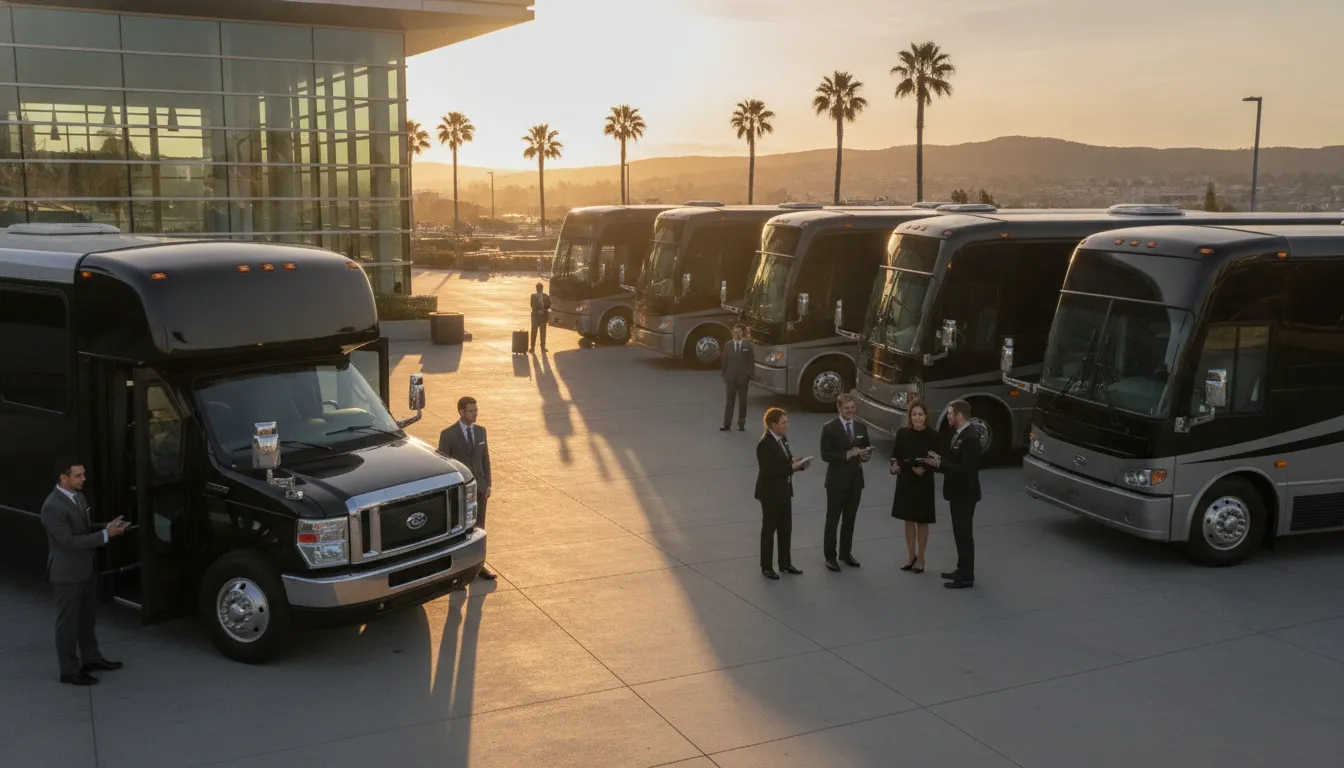
The best vehicle plan is rarely based on passenger capacity alone. A single full-size coach can be efficient for one large group moving together. Several smaller vehicles may work better when guests arrive in waves, use different hotels, or need staggered returns. The goal is to support the event schedule without creating unnecessary trips or idle time.
Match capacity to real passenger needs
Passenger count is the starting point, but planners should also account for luggage, mobility needs, equipment, and comfort. Airport transfers require more cargo space than a short hotel-to-venue shuttle. An executive group may prioritize a more private vehicle, while a large conference audience may benefit from motor coaches.
Epic Limousine offers vehicles from luxury sedans through 56-passenger coaches. Its corporate event bus rental options give planners room to select a fleet that fits the actual itinerary. Avoid filling every vehicle to its theoretical limit, since a small capacity buffer helps accommodate late additions.
Decide between continuous shuttle and scheduled departures
A continuous shuttle loop works well when guests arrive over a broad window and the route is short. Scheduled departures are often clearer when the group must reach a program at a precise time. For long distances or multiple stops, a timed route usually gives organizers better control.
| Service pattern | Best fit | Planning priority |
|---|---|---|
| Continuous loop | Short routes with flexible arrivals | Frequent service and clear pickup points |
| Scheduled departures | Programs with fixed start times | Firm boarding and departure times |
| Staggered returns | Receptions and evening events | Early, main, and final departure options |
| Multi-route service | Several hotels or pickup zones | Named routes and route-specific manifests |
Return service deserves equal attention. Guests may leave a reception or corporate gathering at different times. A planned early return, main return, and final sweep can provide flexibility without leaving vehicles running without purpose.
Account for Bay Area traffic and venue logistics
Bay Area event transportation planning requires local judgment. Traffic can change sharply by time of day, and a short distance on a map may cross a bridge, pass a stadium, or move through a dense downtown corridor. Build the schedule around realistic travel conditions rather than ideal drive times.
Use buffers that match the route
A transfer between SFO and downtown San Francisco needs time for airport pickup procedures and changing freeway traffic. A route crossing the Bay Bridge needs a different buffer than a short transfer within one neighborhood. Trips to wine country should consider both distance and the timing of venue appointments.
Ask the transportation provider to review the route at the same time of day and day of week as the event. Also check for major games, concerts, conventions, street closures, and festivals. These factors can change staging access and increase travel time even when the route itself remains open.
Confirm curb access and staging
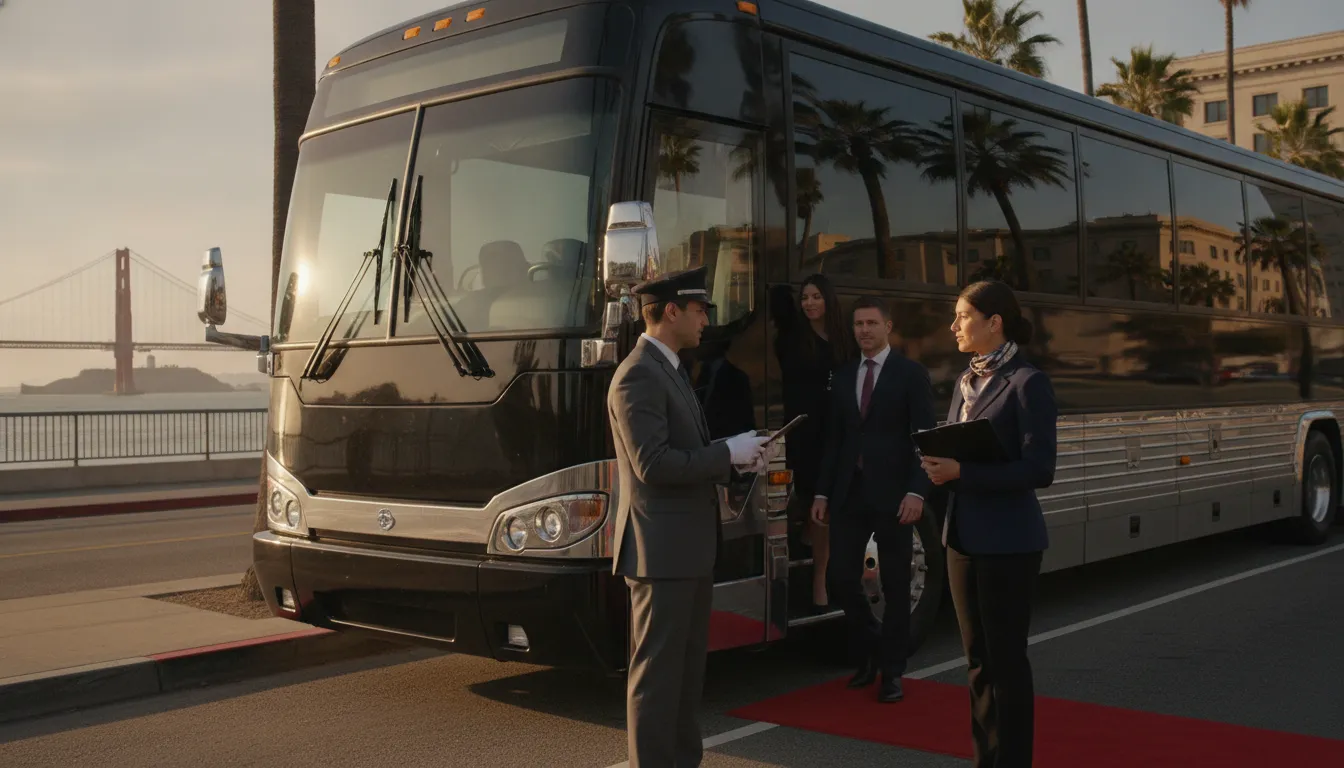
Large vehicles need a safe place to load without blocking traffic or forcing guests to cross busy streets. Work with each venue to identify the correct entrance, waiting area, and staging instructions. If curb space is limited, organize guests indoors and release them only when the vehicle is ready.
Share loading information with guests in advance. A clear message should include the pickup location, boarding time, vehicle description, and organizer contact. For groups using several hotels, name each route or vehicle so guests can quickly identify the correct departure.
Build a timeline that protects the event schedule
A reliable transportation timeline works backward from the moment guests must be inside the venue. Include unloading, walking time, check-in, security, and a practical buffer. If a keynote starts at 9:00 a.m., a coach arriving at the curb at 8:58 a.m. is late even if the drive itself stayed on schedule.
Separate arrival time from program time
Define the required venue arrival time first. Then calculate departure time using the provider’s route estimate, boarding duration, and buffer. Tell guests when boarding opens and when the vehicle leaves. Clear deadlines reduce delays caused by people arriving at the pickup point at the final minute.
Create a day-of communication chain
Name one lead planner and one backup who can make decisions. Provide their mobile numbers to the transportation team. For complex events, assign a greeter at major pickup points and a coordinator at the venue. This structure prevents drivers from receiving conflicting instructions from several people.
Use a group text, event app, or email update for guest-facing notices. Messages should be brief and operational. If a departure point changes, send the exact new location and effective time instead of a vague warning.
What affects an event transportation quote?
Epic Limousine uses quote-based pricing because every large-group itinerary is different. A useful quote reflects the operating plan, not just the number of seats. Providing complete details early helps the transportation team recommend the right fleet and prepare a more accurate scope.
Key quote variables
- Vehicle type and quantity: The number and size of vehicles needed for each movement.
- Service duration: Pickup windows, event hours, waiting time, and return schedule.
- Route and mileage: Travel distance, multiple stops, and any repositioning between trips.
- Staging and parking: Venue access, parking arrangements, and loading requirements.
- Passenger requirements: Luggage, accessibility needs, and special group considerations.
Share the complete itinerary when requesting a quote, including any uncertain details. A provider can explain which choices affect the plan and where flexibility may simplify service. Do not rely on fabricated flat rates or assume two events with the same guest count will cost the same.
Request a custom quote from Epic Limousine or call 415-366-4440 with your date, group size, and route.
Keep large-group transportation coordinated on event day
On event day, the plan should be easy for every participant to follow. Send a final transportation brief to staff, venue contacts, and the provider. Include the latest itinerary, route names, passenger counts, phone numbers, and a clear escalation path.
Run a short pre-event check
Use this final sequence before the first vehicle moves:
- Confirm pickup locations, loading rules, and venue access with every site contact.
- Verify passenger counts, accessibility needs, route names, and departure windows against the current manifest.
- Make sure greeters know where vehicles will stop and how guests will identify the correct route.
- Confirm the lead planner, backup contact, and transportation provider have the same final itinerary.
This brief check catches small mismatches while there is still time to correct them. If the event has several routes, verify that signs and staff instructions use the same names as the manifest.
Prepare for changes without improvising
Flights can be delayed, programs can run long, and traffic can affect departure times. Discuss likely changes with the provider before the event and agree on who can approve adjustments. A defined process is faster and safer than having guests or staff give drivers individual requests.
How should you evaluate an event transportation provider?
Choose a provider that can explain how it will operate the trip, not one that only lists vehicle sizes. Ask about fleet fit, chauffeur standards, communication, local route knowledge, and how the team handles changes. A clear planning process is a strong sign that the provider understands the stakes of a large event.
Epic Limousine is family-owned, has served the Bay Area since 2012, and maintains a 4.9-star reputation. Its professional chauffeurs and broad fleet support corporate, academic, tourism, and special-event groups. Explore its tourism and special-event transportation options for additional group travel needs.
Frequently asked questions about event transportation
How far in advance should I book event transportation?
Start planning as soon as the venue and expected guest count are known. Early planning provides more vehicle options and gives your team time to confirm routes, loading areas, and airport arrival details. Peak dates and complex multi-stop plans benefit most from an early start.
How much does event transportation cost for a large group?
Pricing depends on vehicle type, passenger count, service hours, route distance, stops, parking, and staging requirements. Epic Limousine prepares custom quotes rather than publishing a fabricated one-size-fits-all rate.
What information is needed for an event transportation quote?
Share the event date, passenger count, pickup and drop-off locations, schedule, number of stops, luggage needs, accessibility needs, and an on-site contact. Note any details that are still tentative so the provider can explain how changes may affect the plan.
Can one provider coordinate several Bay Area pickup locations?
Yes. A provider can design a coordinated plan for hotels, airports, offices, venues, and other pickup points. The best route structure depends on passenger groups, timing, vehicle access, and the event’s required arrival time.
Plan a polished arrival for every guest
Thoughtful event transportation supports the entire guest experience. When routes, vehicles, timing, and communication work together, planners can focus on the event instead of solving curbside problems. Epic Limousine can build a quote-based Bay Area transportation plan around your group and schedule.
Request your event transportation quote or call 415-366-4440 to start planning.