
Do charter buses have bathrooms? Most full-size motor coaches do, along with passenger amenities such as Wi-Fi and power outlets. However, equipment varies by vehicle, so planners should confirm every required feature before signing a transportation agreement. That simple verification can prevent an inconvenient surprise during a long Bay Area itinerary.
Request a quote from Epic Limousine or call 415-366-4440 to match your group with an appropriately equipped vehicle.
For an event planner, travel coordinator, or school administrator, amenities are more than optional comforts. A restroom can reduce unplanned stops, while reliable charging access helps attendees remain productive and reachable. This guide explains what to expect, which vehicle types usually include each feature, and how to confirm the details that matter to your group.
Do charter buses have bathrooms?
Direct answer: Most full-size motor coaches have a compact onboard restroom, but smaller minibuses and passenger vans typically do not. Because fleet equipment varies, confirm the restroom on the specific vehicle included in your quote before finalizing a long or time-sensitive itinerary.
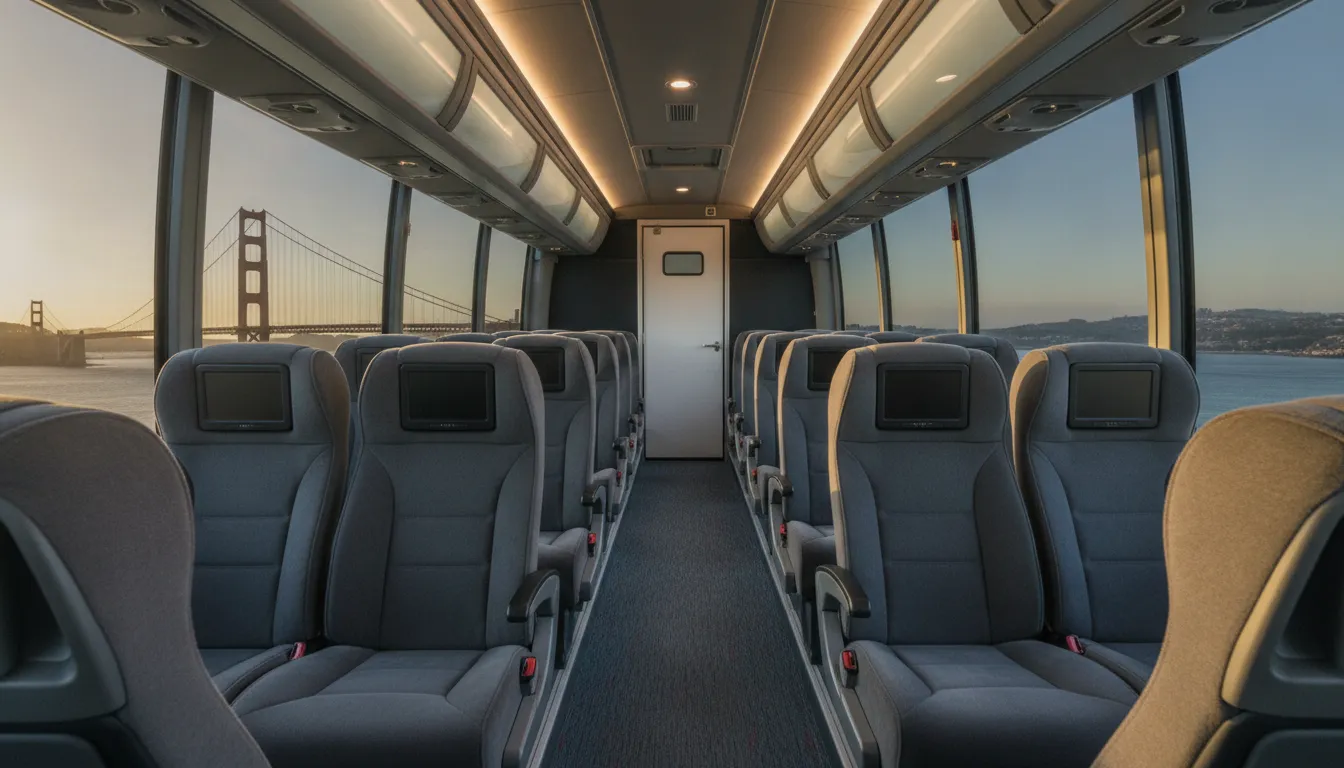
Most full-size charter buses include a compact restroom at the rear of the passenger cabin. These coaches commonly seat between 36 and 56 passengers and are designed for longer journeys, making an onboard restroom a practical feature. Smaller shuttle buses, minibuses, and passenger vans generally do not include one because their shorter bodies leave less room for a dedicated lavatory.
An onboard restroom is best understood as a convenience rather than a substitute for scheduled comfort stops. The compartment is compact and usually contains a toilet, hand-sanitizing provision, interior light, and locking door. It rarely offers running water or the spacious layout travelers might expect in a building.
When a restroom matters most
A restroom is especially valuable on long highway segments, wine-country itineraries, conference transfers, and academic trips. It gives passengers an option between planned stops and helps a coordinator keep a time-sensitive schedule moving. Groups with children, older adults, or travelers who may need more frequent access should make this feature a booking priority.
Why smaller vehicles often do not have one
Vehicle design requires a tradeoff between passenger capacity, luggage storage, maneuverability, and amenities. A minibus that works well for a compact urban route may not have enough cabin space for a restroom. For a short transfer, that tradeoff may be reasonable; for a multi-hour trip, a full-size coach or planned rest stops may be the better choice.
What should passengers expect from an onboard restroom?
Direct answer: Expect a private but compact lavatory intended for occasional use between scheduled stops. It commonly includes a toilet, interior light, locking door, and hand sanitizer. Travelers should not expect the space, sink, or running water available in a building restroom.
A charter bus restroom is designed for occasional use while traveling. Its limited dimensions support convenience without consuming substantial passenger or luggage space. Passengers should expect a functional, private compartment rather than a full-service bathroom.
Use the restroom safely and considerately
Passengers can generally use the restroom while the coach is moving, but they should use handrails and return to their seats promptly. Sudden braking, curves, and uneven pavement can affect balance. When road conditions are difficult, waiting until the next stop may be the safer choice.
Coordinators can also improve the experience by setting expectations before departure. Remind travelers that the facility is compact, ask them to dispose of waste appropriately, and schedule comfort stops on longer routes. These measures keep the cabin pleasant and provide passengers with opportunities to stretch, wash their hands, and purchase refreshments.
Ask about accessibility requirements in advance
Standard onboard restrooms may be difficult to navigate for passengers with limited mobility. If anyone in the group has an accessibility requirement, explain it during the quote process rather than assuming a particular coach will be suitable. The transportation team can discuss vehicle options, boarding needs, and a route plan with appropriate stops.
Do charter buses have Wi-Fi and power outlets?
Direct answer: Many modern charter buses include Wi-Fi, electrical outlets, USB charging ports, or a combination of these amenities. They are not universal, and Wi-Fi quality depends on cellular coverage. Confirm the assigned coach’s equipment and the location of available ports before departure.
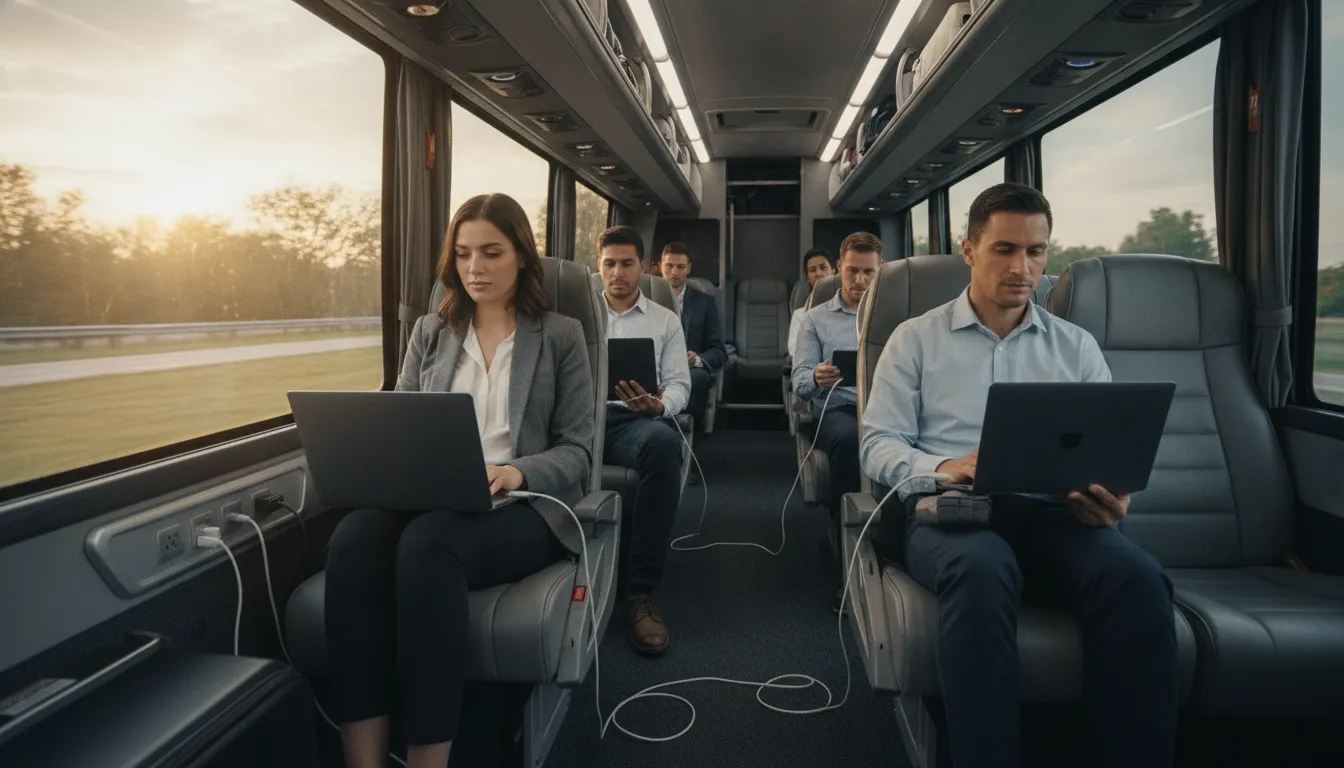
Many modern charter buses offer Wi-Fi, electrical outlets, USB charging ports, or a combination of these features. Availability still depends on the specific vehicle, and service quality can vary with network coverage. A coach may have excellent connectivity in San Francisco and weaker service on a rural or mountainous segment.
Epic Limousine identifies onboard Wi-Fi and power ports among the amenities available for select transportation services. Planners who consider connectivity essential should request it explicitly and confirm how charging access is distributed throughout the cabin.
Wi-Fi supports work and communication
For corporate groups, Wi-Fi can turn travel time into productive time. Attendees may review presentations, respond to messages, or coordinate arrival details while en route. For academic and leisure groups, connectivity supports communication and entertainment. Because mobile networks are not equally reliable along every route, planners should avoid promising uninterrupted service to passengers.
Power access requires specific questions
Ask whether the coach provides standard electrical outlets, USB ports, or both. It is also useful to confirm whether each row has access or whether ports are shared among several seats. A group carrying laptops may have different power requirements than passengers who only need to recharge phones.
Entertainment systems vary as well
Some coaches include overhead monitors, a public-address system, or audio controls. These features may benefit a tour, student group, or company presentation, but compatibility should be verified before departure. If a presentation or video is central to the trip, discuss the file format, connection method, and audio requirements during booking.
Charter bus amenities by vehicle type
Direct answer: Full-size motor coaches are the most likely to include restrooms, luggage bays, and premium passenger amenities. Minibuses and passenger vans trade those features for maneuverability and efficient local service. Match the vehicle to your route, group size, accessibility needs, and required equipment.
The right vehicle depends on more than passenger count. Route length, luggage volume, accessibility needs, pickup conditions, and required amenities all influence the selection. The following comparison provides a useful starting point, but the assigned vehicle’s specifications remain the final authority.
| Vehicle type | Typical restroom availability | Common amenities | Best suited for |
|---|---|---|---|
| Full-size motor coach | Commonly available | Reclining seats, climate control, luggage bays, Wi-Fi or power on select vehicles | Long-distance travel, large events, conferences, and academic trips |
| Minibus or shuttle bus | Usually not available | Climate control, comfortable seating, and select connectivity features | Local transfers, venue loops, and smaller groups |
| Passenger van or Sprinter-style vehicle | Generally not available | Premium seating and convenient urban access | Executive transfers and compact groups |
Planners comparing options can review Epic Limousine’s overview of Bay Area transportation services. For a deeper look at coach selection, the charter bus rental guide explains how group needs shape the booking decision.
How to confirm amenities before booking
Direct answer: Give the transportation provider a prioritized requirement list, then ask for written confirmation that each essential amenity applies to the assigned vehicle. Include passenger count, luggage, accessibility needs, route details, restroom requirements, Wi-Fi, power, and presentation equipment.
A professional reservation process should connect every essential requirement to the specific vehicle being quoted. Avoid relying on general descriptions or assumptions based on vehicle size. Instead, provide a prioritized list of needs and ask the transportation provider to confirm them in writing.
Build a practical requirement list
- Passenger and luggage capacity: Include the expected headcount and any oversized equipment.
- Restroom: State whether it is required or simply preferred.
- Connectivity: Specify Wi-Fi, standard outlets, USB ports, and any presentation needs.
- Accessibility: Describe mobility devices, boarding assistance, and other accommodations.
- Route details: Share every pickup, stop, venue, and timing constraint.
- Onboard comfort: Ask about climate control, seat configuration, and storage.
Confirm the assigned vehicle, not just the category
A fleet may contain several coaches in the same general class with different equipment. Ask whether the quoted amenities apply to the vehicle scheduled for your trip. If a feature is mission-critical, request written confirmation and ask how substitutions would be handled if the original vehicle became unavailable.
Share the itinerary early
A detailed itinerary helps the transportation team recommend a suitable vehicle and plan realistic travel times. Bay Area traffic, loading zones, venue access, and driver-hour rules can all affect the schedule. Early coordination also makes it easier to include appropriate comfort stops when the selected vehicle does not have a restroom.
Planning a professional or executive trip? Explore Epic Limousine’s corporate charter bus guidance, then request a tailored quote for your itinerary.
Seven steps for a smoother charter bus trip
Direct answer: A smooth group trip starts with accurate passenger and itinerary details, a clear list of essential amenities, and final confirmation before service. Brief passengers, identify group leaders, carry dispatch contact information, and coordinate realistic loading and comfort-stop plans.
Once the vehicle and amenities are confirmed, operational preparation helps the trip run as planned. A coordinator can use this sequence for a conference transfer, school outing, wedding, or longer group journey.
- Finalize the passenger count. Allow for late changes and tell the provider about luggage, mobility devices, or equipment that may affect capacity.
- Confirm every address and time. Include loading locations, venue entrances, scheduled stops, and a reliable onsite contact.
- Prioritize essential amenities. Distinguish requirements such as a restroom or accessible boarding from preferences such as Wi-Fi or entertainment screens.
- Review the route plan. Discuss traffic-sensitive segments, loading restrictions, and appropriate comfort stops with the transportation team.
- Brief passengers before departure. Share the meeting point, boarding time, luggage rules, and onboard restroom expectations.
- Carry the dispatch contact details. The trip coordinator should know whom to contact if an itinerary detail changes.
- Verify the final schedule. Reconfirm the itinerary and essential vehicle features before the service date.
This preparation is particularly important when several vehicles serve the same event. Assigning a group leader to each coach and sharing consistent instructions can reduce boarding delays. It also gives passengers a clear point of contact when questions arise during the trip.
Which trips benefit most from onboard amenities?
Direct answer: Restrooms, connectivity, and charging access deliver the most value on longer, traffic-sensitive, or professionally managed trips. Corporate events, academic travel, weddings, and multi-stop itineraries benefit when amenities protect the schedule and help passengers stay comfortable, reachable, and productive.
Every group appreciates a comfortable vehicle, but certain itineraries place a higher value on restrooms, connectivity, and charging access. Reviewing the passenger experience from departure through arrival helps planners decide which features deserve priority.
Corporate events and conference transportation
Corporate travelers often need to remain reachable between a hotel, conference center, airport, and off-site event. Wi-Fi and charging access can support productivity, while a restroom adds flexibility when traffic extends the journey. A public-address system may also help a coordinator deliver schedule updates to the entire group.
Academic transportation
Schools and universities must balance comfort with supervision, safety, and scheduling. A full-size coach with a restroom may be helpful for longer journeys, but organizers should still plan structured breaks and communicate usage expectations. Epic Limousine’s academic bus rental service provides more context for school and university transportation planning.
Weddings, celebrations, and group outings
Special-event transportation often involves formal clothing, multiple venues, and a schedule that leaves little room for delays. Climate control, sufficient storage, and comfortable seating may matter as much as connectivity. For a longer transfer, an onboard restroom can help the group arrive together and on time.
Long-distance and multi-stop itineraries
The longer or more complex the route, the more valuable thoughtful amenities become. Restroom access can reduce unscheduled interruptions, while power and Wi-Fi help passengers use travel time effectively. Even on a well-equipped coach, scheduled breaks remain important for comfort and driver compliance.
Frequently asked questions
Direct answer: The most important planning questions concern whether the assigned bus has a restroom, how passengers can use it safely, and whether Wi-Fi and power are available. The answers depend on vehicle type and equipment, so confirm essential features during the quote process.
Do all charter buses have bathrooms?
No. Most full-size motor coaches have a compact onboard restroom, while minibuses, shuttle buses, and passenger vans usually do not. Confirm the feature on the specific vehicle included in your quote.
How do charter bus bathrooms work?
A charter bus bathroom is a small, self-contained lavatory designed for occasional passenger use. It commonly includes a toilet, light, locking door, and hand-sanitizing provision. Operators service the restroom between trips.
Can passengers use the bathroom while the bus is moving?
Passengers can generally use it while the coach is moving, but they should exercise caution and follow the driver’s instructions. Using handrails and returning to a seat promptly reduces the risk created by sudden movement.
Do charter buses always have Wi-Fi and outlets?
No. These amenities are common on many modern coaches but are not universal, and connectivity depends on cellular coverage. Ask which features are installed on the assigned vehicle and whether power access is available at every row.
How should I choose the right charter bus?
Start with passenger count, luggage, route length, accessibility needs, and essential amenities. Then discuss the itinerary with a transportation provider that can recommend an appropriate vehicle. This approach is more reliable than selecting a bus based on seating capacity alone.
Reserve a charter bus with the amenities your group needs
Direct answer: The right charter bus is the vehicle that supports your passenger count, route, accessibility requirements, and must-have amenities. Share those details with Epic Limousine to receive a customized, quote-based recommendation for your Bay Area group trip.
The answer to “do charter buses have bathrooms?” is usually yes for full-size coaches, but the best booking decision comes from confirming every requirement. Epic Limousine is a family-owned Bay Area transportation provider with professional chauffeurs and vehicle options for corporate events, academic travel, celebrations, and group outings.
Request a customized charter bus quote or call 415-366-4440 to discuss your passenger count, itinerary, and required amenities.